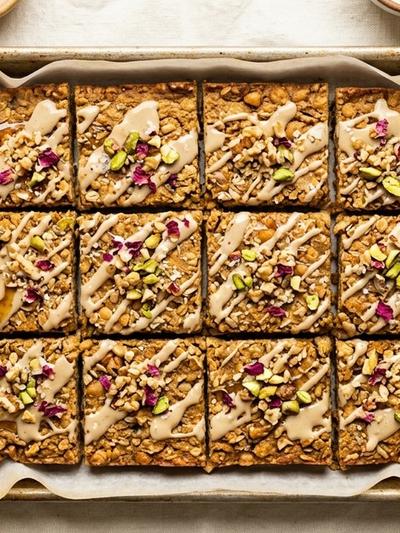
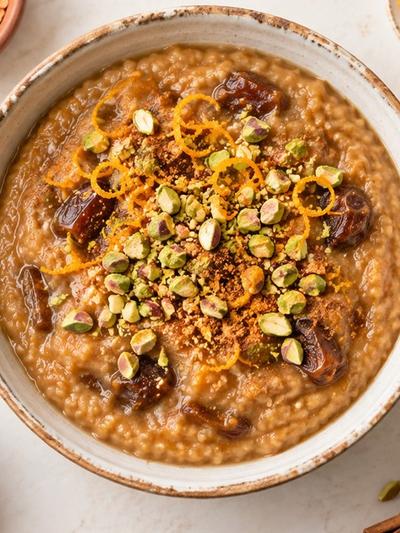
Each serving of these Mediterranean-inspired protein bars delivers roughly 27 grams of protein from a combination of cannellini white beans, protein powder, eggs, and Greek yogurt. A quarter cup of pistachios adds healthy fats and a distinctly nutty crunch, while tahini rounds out the mineral profile with iron and calcium. The bars are naturally sweetened with honey and a touch of dark chocolate, keeping added sugars moderate at under 10 grams per serving.
Fresh orange zest and a drizzle of tahini give these bars an unmistakably Mediterranean character — warm, fragrant, and a little earthy. The white bean base creates a dense, fudgy texture similar to a blondie, with the pistachios adding satisfying contrast in every bite. A light dusting of flaky sea salt on top bridges the sweet and savory elements in a way that makes you reach for another piece.
For GLP-1 users, these bars solve the common problem of wanting something sweet without the blood sugar spike or digestive discomfort that comes with traditional baked goods. The sheet-pan format produces 12 bars at once, making portion control effortless — you simply grab one or two from the fridge. The combination of bean fiber and slow-digesting protein keeps you satisfied without feeling overly full.
Why This Works on GLP-1
Each bar delivers approximately 27 grams of protein, primarily from white beans and protein powder, with eggs and Greek yogurt adding complete amino acid coverage. This level of protein matters because GLP-1 medications like Mounjaro can lead to muscle loss alongside fat loss when protein intake drops too low. Research consistently shows that spreading 25–30 grams of protein across meals and snacks helps preserve lean mass during weight loss. Having a protein-rich sweet option means you do not have to choose between satisfying a craving and meeting your daily protein target.
The white bean base provides gentle, soluble fiber that supports digestion without the bloating that high-fiber bars made with chicory root or inulin can cause. Cannellini beans are among the most easily digested legumes, especially when blended smooth, making them a smart choice when gastric emptying is already slowed by your medication.
The moderate calorie count of roughly 378 per serving fits comfortably within a reduced-calorie framework, while the fat content stays relatively low at 13 grams — mostly from tahini and pistachios, which provide monounsaturated fats linked to better cardiovascular markers. The natural sweetness from honey and orange zest means these bars taste indulgent without relying on artificial sweeteners that can trigger GI discomfort in some GLP-1 users.
Ingredients (serves 4)
For the bar batter:
- 1 can (15 oz / 425g) cannellini white beans, drained and rinsed
- 2 scoops (60g) vanilla protein powder (plant-based or whey)
- 2 large eggs
- 3/4 cup (180g) nonfat plain Greek yogurt
- 3/4 cup (65g) oat flour (or blend rolled oats into flour)
- 2 tablespoons (30g) tahini
- 2 tablespoons (40g) honey
- Zest of 1 large orange (about 1 tablespoon)
- 1 teaspoon vanilla extract
- 1/2 teaspoon ground cinnamon
- 1/4 teaspoon fine sea salt
For the topping:
- 1/4 cup (30g) shelled pistachios, roughly chopped
- 1 tablespoon (15g) dark chocolate chips (70% cacao or higher)
- Flaky sea salt for finishing
Instructions
Prepare the batter:
Preheat your oven to 350°F (175°C). Line an 8×8 inch (20×20 cm) baking pan with parchment paper, leaving overhang on two sides so you can lift the bars out cleanly after baking.
Add the drained white beans to a food processor or high-powered blender and pulse until mostly smooth — a few small chunks are fine and add texture. Scrape down the sides as needed.
Add the eggs, Greek yogurt, tahini, honey, orange zest, vanilla extract, cinnamon, and salt to the food processor. Blend for 20–30 seconds until the mixture is uniform and creamy.
Transfer the batter to a mixing bowl. Fold in the protein powder and oat flour with a spatula, stirring until just combined. The batter will be thick and slightly sticky, similar to brownie batter. Avoid overmixing, which can make the bars tough.
Bake on the sheet pan:
Pour the batter into the prepared pan and spread it evenly with a spatula or the back of a spoon. The layer should be roughly 3/4 inch (2 cm) thick.
Scatter the chopped pistachios evenly across the top, pressing them gently into the batter so they adhere during baking. Distribute the dark chocolate chips across the surface as well.
Bake for 22–26 minutes, until the top is set and lightly golden and a toothpick inserted in the center comes out with just a few moist crumbs — not wet batter. The bars will continue to firm up as they cool, so do not overbake or they will become dry.
Cool and cut:
Remove from the oven and sprinkle flaky sea salt lightly over the top while still warm. This step is what elevates the bars from good to genuinely craveable, as the salt crystals highlight the orange and tahini flavors.
Let the bars cool in the pan for at least 20 minutes, then use the parchment overhang to lift the entire slab onto a cutting board. Cut into 12 even bars (3 rows by 4 columns). Three bars make one serving.
Nutrition per Serving
| Nutrient | Amount (approx.) |
|---|---|
| Calories | ~378 kcal |
| Protein | ~27g |
| Fat | ~13g |
| Carbohydrates | ~37g |
| Fiber | ~5g |
Estimates based on cannellini beans, two scoops of standard vanilla protein powder (24g protein per scoop), nonfat Greek yogurt, and the listed quantities of tahini, pistachios, and honey.
Practical Notes
Meal prep storage. These bars keep in an airtight container in the refrigerator for up to 5 days. They actually taste better chilled — the texture firms up and becomes more fudgy. You can also freeze them individually wrapped in parchment for up to 2 months; thaw in the fridge overnight.
Protein powder matters. The brand and type of protein powder will affect both taste and texture. A smooth vanilla whey isolate gives the lightest texture, while a plant-based pea-rice blend creates a denser, more rustic bar. Either works well — just avoid protein powders with thickening gums like xanthan, which can make the bars gummy.
Oat flour substitution. If you do not have oat flour, pulse rolled oats in a blender for 15–20 seconds until powdery. Almond flour also works but will increase the fat content by about 4 grams per serving and change the texture to more crumbly. For a nut-free version, use sunflower seed flour.
Start with one bar if you are new to GLP-1. During the first weeks on medication, when appetite suppression is strongest and nausea is most common, a single bar (roughly 130 calories, 9g protein) may be all you want. That is perfectly fine — you can always eat another later. The individual bars are designed to be flexible portions.
Orange zest is not optional. Fresh orange zest provides the signature Mediterranean flavor that makes these bars special. It also contains d-limonene, a compound some studies associate with reduced nausea — a welcome side benefit for GLP-1 users. Avoid bottled orange extract, which tastes artificial. One large navel orange provides more than enough zest.
Frequently Asked Questions
Will these bars upset my stomach while on Ozempic or a similar GLP-1 medication?
Can I make these completely plant-based without eggs or dairy?
How should I store and reheat these bars?
What if I can only eat very small portions right now?
Can I use a different pan size for thinner or thicker bars?
This article provides general food and nutrition guidance only. It does not constitute medical advice. Always consult your healthcare provider regarding your GLP-1 medication and individual nutritional needs.