These golden, lightly crispy donut holes pack a surprising 26 grams of plant-based protein per five-piece serving, built on a base of chickpeas, tahini, and vanilla plant protein powder. Each bite delivers a complete amino acid profile alongside meaningful fiber from both the chickpeas and oat flour. The combination of protein and moderate complex carbohydrates from the dates and oats creates a satisfying dessert that supports stable blood sugar rather than spiking it.
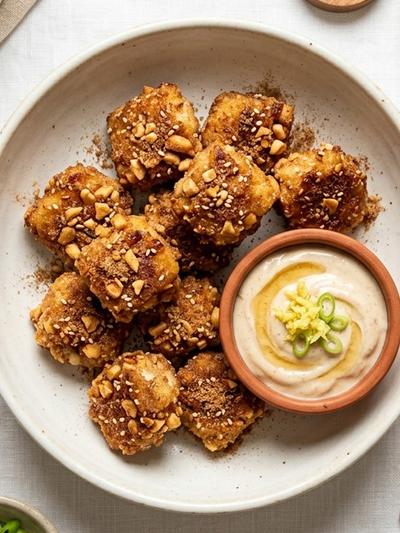
The flavor is distinctly Mediterranean — warm tahini nuttiness paired with bright lemon zest and a whisper of orange blossom water that perfumes each bite without overwhelming it. Inside, the texture is dense and fudgy, almost like a cross between a cake donut and halvah. Chopped pistachios on top add a satisfying crunch and that signature green contrast that makes these look as appealing as they taste.
For GLP-1 users, these donut holes solve the dessert dilemma perfectly. Five small bites feel like a genuine treat without the volume that can cause discomfort when appetite is reduced. The air fryer creates a crisp exterior with just a light misting of oil, keeping fat content well below traditional fried donuts while delivering the golden texture your brain associates with indulgence.
Why This Works on GLP-1
Each serving delivers 26 grams of complete plant protein from the combination of chickpeas, tahini, and plant protein powder — a level that meaningfully supports muscle preservation during GLP-1-assisted weight loss. Muscle loss is a documented concern for people on medications like Mounjaro and Wegovy, particularly when caloric intake drops significantly. By building protein into desserts, you create additional opportunities to hit daily protein targets without relying solely on savory meals. The plant-based protein blend also tends to digest more gently than whey, which matters when gastric emptying is already slowed.
The fiber from chickpeas and oat flour — about 6 grams per serving — adds gentle bulk without the bloating risk of high-fiber raw vegetables. This moderate fiber level supports the digestive regularity that GLP-1 medications can sometimes disrupt, particularly in the early weeks of treatment.
At 374 calories per serving, these donut holes fit comfortably within the reduced caloric windows that most GLP-1 users experience. The balanced macronutrient profile — protein, complex carbs, and healthy fats from tahini — promotes satiety that lasts well beyond what you would get from a conventional sugar-heavy dessert of similar size.
Ingredients (serves 4)
For the donut holes:
- 1 can (15 oz / 425g) chickpeas, drained and rinsed
- 3 scoops (90g) vanilla plant-based protein powder
- 3 tablespoons (45g) tahini
- 1/4 cup (30g) oat flour
- 4 Medjool dates, pitted and roughly chopped (~80g)
- 1 tablespoon lemon zest (about 2 lemons)
- 1 teaspoon orange blossom water
- 1/2 teaspoon ground cinnamon
- 1/4 teaspoon fine sea salt
- Olive oil cooking spray
For the lemon-tahini drizzle:
- 1 tablespoon (15g) tahini
- 1 tablespoon fresh lemon juice
- 1 teaspoon maple syrup
- 1–2 teaspoons warm water, to thin
For topping:
- 2 tablespoons (15g) shelled pistachios, finely chopped
Instructions
Prepare the dough:
- Add the drained chickpeas and chopped dates to a food processor. Pulse 8–10 times until the chickpeas are broken down into a coarse, slightly sticky meal — you want some small pieces remaining for texture, not a smooth purée.
- Add the tahini, protein powder, oat flour, lemon zest, orange blossom water, cinnamon, and salt. Process for 20–30 seconds until the mixture comes together into a thick, slightly tacky dough. If it feels too dry and crumbly, add 1 teaspoon of water at a time and pulse again. The dough should hold its shape when squeezed.
Shape the donut holes:
- Using a tablespoon measure or small cookie scoop, portion the dough into 20 equal balls (about 1 tablespoon each). Roll each portion between your palms to form a smooth sphere. If the dough sticks to your hands, dampen them lightly with water — this is normal with chickpea-based doughs.
- Place the shaped balls on a plate or small baking sheet. They can sit at room temperature while you preheat the air fryer.
Air fry:
- Preheat your air fryer to 350°F (175°C) for 3 minutes. This preheating step ensures the exterior sets quickly, creating that characteristic donut-hole crust rather than a dry, baked texture.
- Lightly spray the air fryer basket with olive oil cooking spray. Arrange the donut holes in a single layer with about 1/2 inch of space between each — they will not spread, but air circulation is key to even browning. Work in two batches if your air fryer is small.
- Spray the tops of the donut holes lightly with cooking spray. Air fry for 10–12 minutes, shaking the basket gently at the 6-minute mark to rotate them. They are done when the exterior is golden brown and firm to the touch, with a slight give when pressed in the center.
Make the drizzle and finish:
- While the donut holes cook, whisk together the tahini, lemon juice, and maple syrup in a small bowl. Add warm water one teaspoon at a time until you reach a drizzleable consistency — it should flow slowly off the whisk in a thin ribbon.
- Transfer the warm donut holes to a serving plate. Drizzle the lemon-tahini sauce over the top in thin lines, then scatter the chopped pistachios over everything. The warmth of the donut holes will slightly melt the drizzle, helping the pistachios adhere.
Nutrition per Serving
| Nutrient | Amount (approx.) |
|---|---|
| Calories | ~374 kcal |
| Protein | ~26g |
| Fat | ~13g |
| Carbohydrates | ~38g |
| Fiber | ~6g |
Estimates based on canned chickpeas, a standard vanilla pea protein powder (21g protein per 30g scoop), and full-fat tahini. Actual values will vary by brand.
Practical Notes
These store beautifully for meal prep. Keep the donut holes and drizzle separate in airtight containers. The undressed bites last 4 days in the refrigerator or up to 6 weeks in the freezer. Reheat in the air fryer at 300°F for 3–4 minutes to restore crispness, then add the drizzle fresh.
Choose your protein powder carefully. A vanilla or unflavored pea-rice blend works best here — it has a neutral enough taste to let the tahini and lemon shine through. Avoid protein powders with strong artificial sweeteners, which can develop a bitter aftertaste when heated. If your powder is very sweet, reduce the dates to 3.
Serve two or three bites if you are in early GLP-1 treatment. When your appetite is at its lowest, two donut holes still deliver over 10 grams of protein — a meaningful contribution to your daily intake. You can always come back for more later when the medication effect eases between doses.
Orange blossom water varies enormously by brand. Start with half a teaspoon and taste the raw dough before adding more. Cortas and Nielsen-Massey are widely available brands with consistent strength. If you cannot find orange blossom water, substitute 1/4 teaspoon pure vanilla extract plus 1/2 teaspoon finely grated orange zest.
For a nut-free version, swap the pistachios for hemp hearts. Hemp hearts add a similar earthy crunch and contribute extra protein and omega-3s. You can also replace the tahini entirely with sunflower seed butter if sesame is a concern — the flavor shifts slightly but remains delicious.
Frequently Asked Questions
Will these cause digestive issues while taking GLP-1 medication?
Can I use a different type of bean instead of chickpeas?
How should I reheat frozen donut holes?
What if I can only eat a very small amount due to reduced appetite?
Can I bake these in a regular oven instead of an air fryer?
This article provides general food and nutrition guidance only. It does not constitute medical advice. Always consult your healthcare provider regarding your GLP-1 medication and individual nutritional needs.