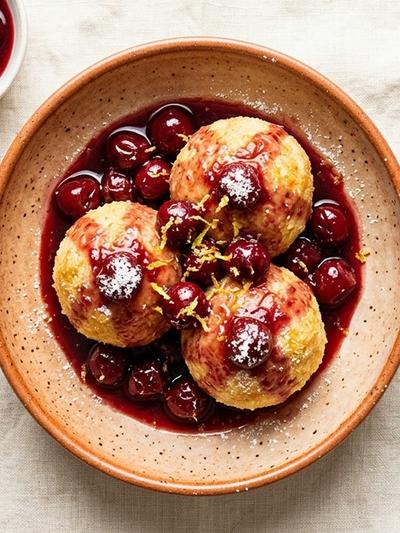
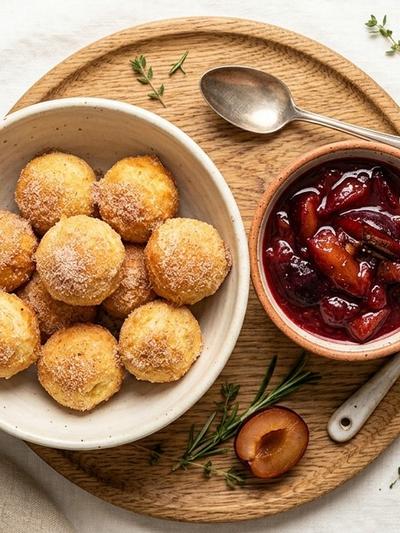
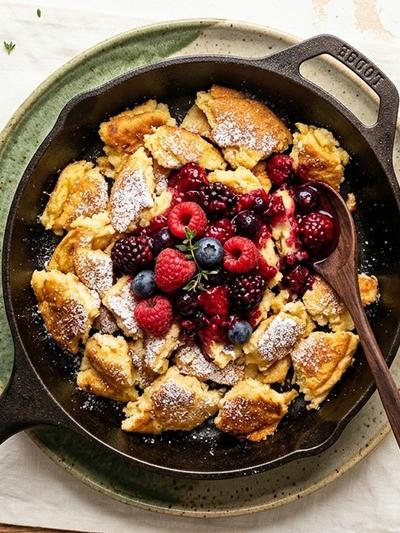
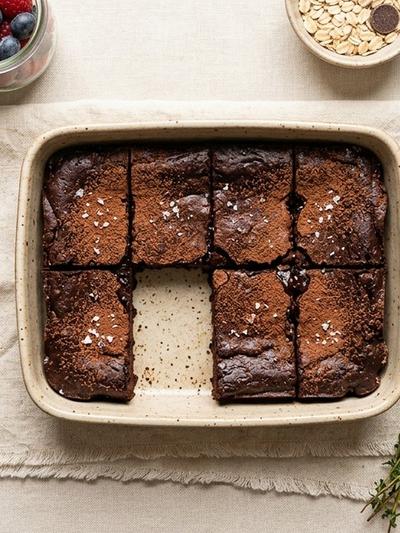
Each square of this French-inspired baked custard delivers 28 grams of protein from a combination of whole eggs and blended cottage cheese, making it one of the most protein-dense desserts you can pull from a single sheet pan. The base draws on the traditional far breton — a custardy Breton cake studded with fruit — but replaces most of the flour with cottage cheese for a dramatically higher protein count. You get a genuine dessert with meaningful nutritional substance, not a protein bar pretending to be one.
The flavor is pure French patisserie: real vanilla bean paste against a backdrop of lightly caramelized honey, with pockets of warm, jammy prunes that burst with sweetness in every other bite. Lemon zest lifts the custard and keeps it from feeling heavy, while a thin golden crust develops on the edges during baking. The texture sits between a firm crème brûlée and a Dutch baby pancake — set enough to slice cleanly, soft enough to feel indulgent.
For anyone on GLP-1 medication, this format is particularly practical. Each square is a compact, satisfying portion that does not require a large volume of food to feel complete. The custard base is exceptionally gentle on digestion — no raw fiber, no dense starches, no heavy fats — and the sheet pan approach means you bake once and have four ready-to-eat dessert portions waiting in the fridge.
Why This Works on GLP-1
Preserving lean muscle mass is one of the most important nutritional goals during GLP-1-assisted weight loss, and that requires consistent protein intake even at dessert. Each square provides 28 grams of complete protein from eggs and cottage cheese — two of the most bioavailable protein sources available. For Mounjaro users experiencing significantly reduced appetite, fitting this much protein into a small, appealing dessert portion means less pressure to eat large savory meals. The protein is also slow-digesting, which complements the delayed gastric emptying that GLP-1 medications already produce.
The custard format is one of the gentlest ways to consume protein. There are no tough fibers, no chewy textures, and no large volumes of food to navigate. Prunes contribute modest soluble fiber and natural sorbitol, which can help with the constipation that some Wegovy and Ozempic users experience as a side effect.
At 338 calories per generous square, this dessert fits comfortably within a calorie-conscious framework without requiring you to skip dessert entirely. The fat content stays moderate at 11 grams per serving — mostly from egg yolks, which also supply choline, vitamin D, and B12. These are nutrients that can be harder to get in adequate amounts when overall food intake is reduced.
Ingredients (serves 4)
For the custard base:
- 6 large eggs
- 1½ cups (340g) low-fat cottage cheese (2% milkfat)
- 1 scoop (30g) vanilla protein powder (whey or casein blend)
- 3 tablespoons (45ml) honey
- 1 tablespoon (15ml) vanilla bean paste or pure vanilla extract
- Zest of 1 medium lemon
- ¼ cup (30g) oat flour
- 2 tablespoons (14g) ground flaxseed
- Pinch of fine sea salt
For the honeyed prunes:
- ½ cup (85g) pitted prunes, quartered
- 1 tablespoon (15ml) honey
- 1 tablespoon (15ml) warm water
- ½ teaspoon ground cinnamon
For finishing:
- Light cooking spray or 1 teaspoon butter for the pan
- 1 teaspoon powdered sugar for dusting (optional)
Instructions
Prepare the honeyed prunes:
- Combine the quartered prunes with one tablespoon of honey, warm water, and cinnamon in a small bowl. Toss to coat and set aside while you make the custard — soaking softens the prunes so they melt into the batter during baking rather than staying chewy.
Make the custard base:
Preheat your oven to 340°F (170°C). Line a quarter sheet pan (9×13 inches / 23×33 cm) with parchment paper and lightly grease the parchment with cooking spray or butter. This prevents sticking without adding significant fat.
Add the cottage cheese to a blender or food processor and blend for 60 seconds until completely smooth with no visible curds. This is the key step — unblended cottage cheese will leave grainy pockets in the finished custard.
Add the eggs one at a time, blending briefly after each addition. Then add the honey, vanilla bean paste, lemon zest, oat flour, ground flaxseed, and salt. Blend for another 30 seconds until the batter is uniform and pourable, like thin pancake batter.
Pour the batter into the prepared sheet pan. Scatter the honeyed prunes evenly across the surface, pressing them gently into the batter so they sit just below the surface. This ensures they bake inside the custard rather than drying out on top.
Bake the custard squares:
Bake for 28 to 32 minutes until the custard is set around the edges and just barely jiggles in the center when you gently shake the pan. The center will firm up as it cools — overbaking will make the texture rubbery rather than silky.
Remove from the oven and let the custard cool in the pan on a wire rack for at least 20 minutes. The squares are best served at room temperature or chilled. Once cooled, use a sharp knife to cut into four equal squares.
Dust with a whisper of powdered sugar before serving, if desired. This is purely aesthetic — it adds less than 5 calories per square.
Nutrition per Serving
| Nutrient | Amount (approx.) |
|---|---|
| Calories | ~338 kcal |
| Protein | ~28g |
| Fat | ~11g |
| Carbohydrates | ~32g |
| Fiber | ~3g |
Estimates based on 2% cottage cheese, large eggs (50g each), and a standard whey-casein vanilla protein powder at 25g protein per scoop.
Practical Notes
Meal prep and storage. These squares refrigerate beautifully for up to four days in an airtight container, separated by parchment paper. They actually taste better cold — the texture firms up and becomes more like a cheesecake. Pull one out after dinner for a ready-made dessert that requires zero effort.
Cottage cheese matters. Use 2% low-fat cottage cheese, not fat-free. The small amount of fat contributes to the custard's smooth texture and prevents it from tasting chalky. Full-fat cottage cheese works too but will add about 30 calories and 3 grams of fat per serving.
Protein powder selection. A casein or casein-whey blend works best here because casein thickens when heated, giving the custard more body. Pure whey isolate will work but produces a slightly softer set. Avoid plant-based protein powders with gritty textures — pea protein in particular can taste bitter when baked.
Fruit substitutions. Replace the prunes with fresh pitted cherries for a classic far breton, or use fresh apricot halves placed cut-side-down for an Austrian twist. Frozen berries work but release extra liquid — pat them dry with paper towels before scattering. Adjust honey slightly depending on the sweetness of your chosen fruit.
Serving size for smaller appetites. If you are in the early weeks of your GLP-1 medication and your appetite is very small, cut the pan into six pieces instead of four. Each smaller square still provides about 19 grams of protein and roughly 225 calories — enough to count as a meaningful protein contribution without overwhelming a reduced appetite.
Frequently Asked Questions
Can I eat this as a breakfast instead of a dessert while on GLP-1 medication?
Can I make this without protein powder?
How long do these keep, and can I freeze them?
I am in the first month of Ozempic and can only eat very small amounts. How should I approach this recipe?
Why does the recipe use such a low oven temperature compared to other baked goods?
This article provides general food and nutrition guidance only. It does not constitute medical advice. Always consult your healthcare provider regarding your GLP-1 medication and individual nutritional needs.