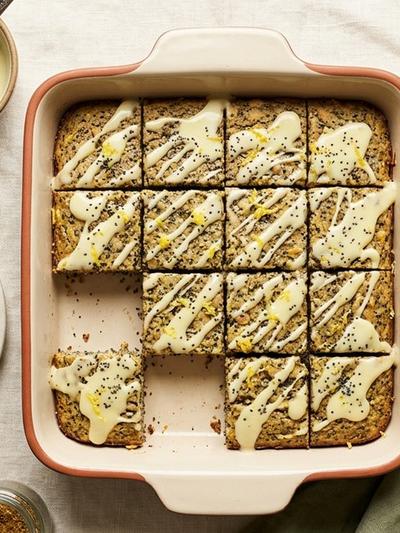
Each serving of these Austrian-inspired protein squares delivers roughly 28 grams of protein from a combination of whole eggs, low-fat cottage cheese, and part-skim ricotta — a triple-dairy protein stack that provides all essential amino acids. With around 348 calories per two-square serving and just 12 grams of fat, these baked treats offer a genuinely satisfying dessert without the caloric density of traditional Viennese pastries. Rolled oats contribute slow-digesting complex carbohydrates and a gentle chew, while ground flaxseed adds omega-3 fatty acids alongside a small but meaningful fiber boost.
The flavor profile here draws from Austria's Topfenkuchen tradition — a baked cottage cheese cake beloved across Central Europe. Lemon zest brightens the creamy custard base, while a touch of cinnamon and real vanilla extract create warmth without relying on excess sugar. Chopped dried apricots — a fruit deeply rooted in Austrian baking — provide concentrated pockets of tangy sweetness and a soft, almost jammy texture against the smooth, set custard.
These squares are designed specifically as a meal-prep dessert for GLP-1 users. The batch yields eight squares that store beautifully in the refrigerator for up to five days, giving you a ready-made, portion-controlled sweet treat whenever a craving strikes. The soft, custard-like texture is gentle on digestion, and the moderate serving size respects the reduced appetite that comes with GLP-1 therapy.
Why This Works on GLP-1
Each two-square serving provides approximately 28 grams of complete protein, drawn from five whole eggs, cottage cheese, ricotta, and a scoop of vanilla protein powder. This level of protein is essential during GLP-1-assisted weight loss, as it helps preserve lean muscle mass even as your body draws on fat stores for energy. For people on Mounjaro or similar GLP-1 medications, muscle preservation directly supports basal metabolic rate — meaning your body continues burning calories efficiently as you lose weight. Having a protein-rich dessert option makes it far easier to hit daily protein targets when your overall food intake has naturally decreased.
The cottage cheese and ricotta base makes these squares exceptionally easy to digest. Unlike dense, butter-heavy European pastries, the protein here comes from soft dairy and eggs — foods that break down gently in the stomach, reducing the nausea and heaviness that GLP-1 users sometimes experience with rich desserts. The oats provide soluble fiber that supports steady blood sugar rather than a sharp spike and crash.
The combination of casein protein from dairy and albumin from eggs creates a slow-releasing protein profile that promotes extended satiety. This is particularly useful in the evening, when a small, protein-rich dessert can prevent late-night snacking without overwhelming a reduced appetite. At under 400 calories per serving, these squares fit comfortably into a calorie-conscious eating plan.
Ingredients (serves 4)
For the custard base:
- 5 large eggs
- 1½ cups (340g) low-fat cottage cheese
- ½ cup (125g) part-skim ricotta
- 1 scoop (30g) vanilla protein powder
- 2 tablespoons (40g) honey
- 1 teaspoon pure vanilla extract
- Zest of 1 lemon
- ¼ teaspoon ground cinnamon
- Pinch of fine sea salt
For the oat layer:
- 1 cup (90g) rolled oats
- 2 tablespoons (14g) ground flaxseed
- ⅓ cup (55g) dried apricots, finely diced
For the pan:
- Nonstick cooking spray or a thin layer of coconut oil
Instructions
Prepare the pan and preheat the oven:
- Preheat your oven to 325°F (165°C). Line an 8×8-inch (20×20cm) baking pan with parchment paper, leaving a slight overhang on two sides for easy removal. Lightly spray the parchment with nonstick spray. The lower temperature is intentional — it allows the custard to set evenly without browning too quickly on top, which keeps the texture silky rather than rubbery.
Blend the custard base:
- In a blender or food processor, combine the cottage cheese, ricotta, eggs, protein powder, honey, vanilla extract, lemon zest, cinnamon, and salt. Blend on medium speed for 30 to 45 seconds until completely smooth. Blending the cottage cheese eliminates any graininess, creating a texture closer to traditional Austrian Topfenkuchen. Scrape down the sides once and pulse again briefly.
Combine with the oat layer:
- In a large mixing bowl, stir together the rolled oats, ground flaxseed, and diced dried apricots. Pour the blended custard mixture over the dry ingredients and fold gently with a spatula until everything is evenly distributed. The oats will absorb some liquid as the squares bake, giving the finished product a pleasantly firm, sliceable texture rather than a loose custard.
Bake the squares:
Pour the batter into the prepared pan and spread it evenly with the spatula. Tap the pan firmly on the counter two or three times to release any trapped air bubbles — this prevents uneven rising and ensures a smooth top surface.
Bake for 38 to 42 minutes, until the center is set and a toothpick inserted comes out clean or with just a few moist crumbs. The edges will be lightly golden and may pull slightly away from the parchment. The squares will appear slightly puffed when hot but will settle as they cool — this is normal and creates a denser, more satisfying texture.
Cool and portion:
Allow the squares to cool in the pan on a wire rack for at least 20 minutes. Then lift the slab out using the parchment overhang and transfer to a cutting board. Slice into 8 equal squares using a sharp knife wiped clean between cuts. Cooling fully before cutting ensures clean edges rather than crumbly slices.
Arrange the squares in airtight containers, separating layers with small pieces of parchment paper if stacking. Refrigerate immediately. The squares taste best chilled or at cool room temperature, and their flavor actually deepens after a night in the refrigerator as the lemon and vanilla meld with the dairy.
Nutrition per Serving
| Nutrient | Amount (approx.) |
|---|---|
| Calories | ~348 kcal |
| Protein | ~28g |
| Fat | ~12g |
| Carbohydrates | ~33g |
| Fiber | ~3g |
Estimates based on large eggs, low-fat cottage cheese, part-skim ricotta, and standard vanilla whey protein powder. Actual values may vary by brand.
Practical Notes
Refrigerator storage and shelf life. These squares keep well in an airtight container in the refrigerator for up to five days. They actually improve in flavor after the first night as the oats soften further and the lemon-vanilla notes intensify. For longer storage, freeze individual squares wrapped in cling film for up to six weeks — thaw overnight in the refrigerator.
Protein powder selection matters. Use a vanilla whey or whey-casein blend for the best texture. Plant-based protein powders can work but may produce a slightly grittier result — if using plant protein, let the batter rest for 10 minutes before pouring into the pan so the powder hydrates fully. Avoid collagen protein, which will not set properly during baking.
Apricot substitutions. If dried apricots are unavailable, dried sour cherries or dried plums work beautifully and keep with the Central European flavor profile. Fresh blueberries (about ½ cup) can replace the dried fruit entirely — scatter them over the top of the batter before baking rather than folding them in, which prevents sinking and purple streaking.
Eating on sensitive GLP-1 days. If you are experiencing nausea or a particularly suppressed appetite on Wegovy or another GLP-1 medication, eat just one square rather than two. One square provides roughly 14 grams of protein and 174 calories — still a meaningful nutritional contribution. Let the square come to room temperature for 10 minutes before eating, as very cold foods can sometimes trigger discomfort.
Boost the fiber if needed. To increase the fiber content, replace half the rolled oats with oat bran, which roughly doubles the soluble fiber per serving. You can also stir in 2 tablespoons of chia seeds along with the oats — they will absorb moisture and create a slightly thicker, more pudding-like texture without changing the flavor.
Frequently Asked Questions
Can I eat these squares as a breakfast option on GLP-1 medication?
Can I make these squares dairy-free?
How should I reheat these squares, or are they best cold?
I am in the first weeks of Ozempic and can barely eat. How should I approach this recipe?
Why do the squares puff up during baking and then deflate?
This article provides general food and nutrition guidance only. It does not constitute medical advice. Always consult your healthcare provider regarding your GLP-1 medication and individual nutritional needs.