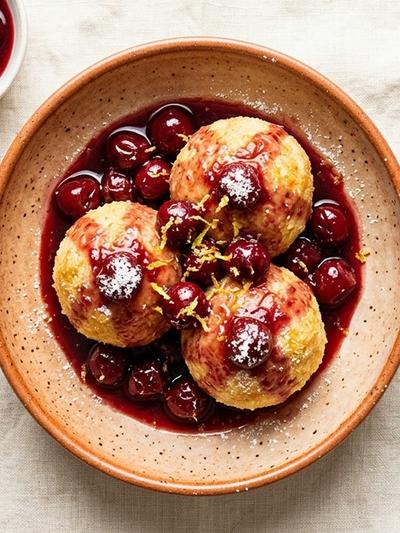
At 26 grams of protein per slice, this Czech-inspired cherry custard cake turns a traditional Eastern European dessert into a practical high-protein sweet for the entire week. Eight eggs form the structural backbone, while blended cottage cheese and Greek yogurt create the dense, creamy custard that defines a good bublanina — the homey Czech fruit cake baked across kitchens from Prague to Brno. Each portion delivers its protein from three complementary dairy and egg sources, keeping you satisfied without the sugar crash that follows most conventional desserts.
The flavor profile here is simple in the best way: bright sweet cherries nestled into a vanilla-lemon custard base with just enough honey to round the edges. Cottage cheese blended smooth gives the crumb a tender, almost cheesecake-like density, while the eggs set everything into firm, sliceable squares. The lemon zest lifts the whole cake, cutting through the richness and making each bite taste lighter than its protein content would suggest.
This is exactly the kind of dessert that works within the constraints of a reduced appetite. Each slice is compact and nutrient-dense — you get a genuine sweet experience in a modest portion. The custard texture is gentle on digestion, and because you bake the entire batch on a single Sunday afternoon, the weeknight temptation to reach for something processed disappears entirely.
Why This Works on GLP-1
The 26 grams of protein per serving comes from a deliberate layering of three sources: whole eggs, low-fat cottage cheese, and fat-free Greek yogurt. This matters because muscle preservation is one of the underappreciated challenges during GLP-1-assisted weight loss. When Mounjaro or similar medications reduce your caloric intake significantly, maintaining adequate protein across every eating occasion — including dessert — helps protect lean body mass. A sweet that contributes meaningfully to your daily protein target is more valuable than one that simply satisfies a craving.
The custard base digests gently, which is important when GLP-1 medications are already slowing gastric emptying. Unlike dense, butter-heavy cakes that can sit uncomfortably, this recipe relies on eggs and blended dairy for richness rather than added fats. The total fat content stays at 9 grams per serving — roughly a third of what you would find in a comparable slice of traditional cheesecake. The cherries provide natural sweetness alongside modest fiber, and the oat flour base adds slow-digesting carbohydrates that release energy gradually.
Managing sweet cravings without derailing nutrition goals is one of the more practical challenges people face on Wegovy or other GLP-1 medications. Having a pre-portioned, protein-rich dessert waiting in the fridge removes the friction between wanting something sweet and making a choice that supports your goals. At 275 calories per generous slice, this cake fits comfortably into most calorie budgets while delivering a genuinely indulgent experience.
Ingredients (serves 6)
For the custard batter:
- 8 large eggs
- 2 cups (450g) low-fat cottage cheese
- ¾ cup (185g) fat-free Greek yogurt
- 1 scoop (30g) vanilla whey protein powder
- ½ cup (48g) oat flour (or rolled oats pulsed in a blender)
- 2 tablespoons (40g) honey
- 1 teaspoon vanilla extract
- Zest of 1 lemon
- 1 teaspoon baking powder
- ¼ teaspoon fine salt
For the fruit layer:
- 2 cups (310g) sweet cherries, pitted (fresh or frozen and thawed)
- 1 teaspoon powdered sugar for dusting (optional)
Instructions
Prepare the custard batter:
Preheat your oven to 350°F (175°C). Line a 9×9-inch (23×23 cm) baking dish with parchment paper, leaving a slight overhang on two sides — this makes lifting the finished cake out for clean slicing much easier.
Add the cottage cheese and Greek yogurt to a blender or food processor. Blend for 60 to 90 seconds until completely smooth with no visible curds remaining. This step is essential — any lumps will create an uneven texture in the finished cake rather than the uniform custard you want.
Crack the eggs into a large mixing bowl. Add the honey, vanilla extract, and lemon zest. Whisk vigorously by hand or with an electric mixer on medium speed for about 2 minutes, until the mixture is pale and slightly frothy. The extra air you incorporate here contributes to a lighter crumb.
Pour the blended cottage cheese mixture into the egg bowl. Whisk until evenly combined.
In a small separate bowl, stir together the oat flour, protein powder, baking powder, and salt. Add the dry ingredients to the wet mixture in two additions, folding gently with a spatula each time until just incorporated. Avoid overmixing — you want a smooth, pourable batter without developing too much structure from the oat flour.
Assemble and bake:
Pour the batter into the prepared baking dish, spreading it evenly with the spatula.
If using frozen cherries, make sure they are fully thawed and patted dry with paper towels — excess moisture will create soggy pockets in the cake. Scatter the pitted cherries evenly across the surface of the batter. Press each cherry gently about halfway into the batter. They will settle further as the cake bakes.
Bake on the center rack for 38 to 42 minutes, until the top is golden and set. The cake is done when a toothpick inserted into the center comes out clean or with just a few moist crumbs — not wet batter. The edges will pull away slightly from the pan.
Remove from the oven and let the cake cool completely in the pan on a wire rack. This takes about 45 minutes. The custard firms significantly as it cools, so resist cutting into it early.
Portion and store:
Once fully cooled, use the parchment overhang to lift the cake out of the pan. Place on a cutting board and cut into 6 equal portions (2 rows by 3 columns). Each piece will be approximately 4.5 × 3 inches.
Dust lightly with powdered sugar if desired. Transfer portions to individual airtight containers for the week ahead.
Nutrition per Serving
| Nutrient | Amount (approx.) |
|---|---|
| Calories | ~275 kcal |
| Protein | ~26g |
| Fat | ~9g |
| Carbohydrates | ~23g |
| Fiber | ~2g |
Estimates based on USDA data for large eggs, 2% cottage cheese, fat-free Greek yogurt, vanilla whey protein powder, oat flour, honey, and fresh sweet cherries. Actual values may vary with specific brands used.
Practical Notes
Meal prep storage. Store individual portions in airtight containers in the refrigerator for up to 5 days. The custard texture actually improves after a day in the fridge as the flavors meld and the structure firms. Eat cold straight from the fridge for a cheesecake-like experience, or warm individual slices in the microwave for 20 to 25 seconds for a softer, more traditional custard feel.
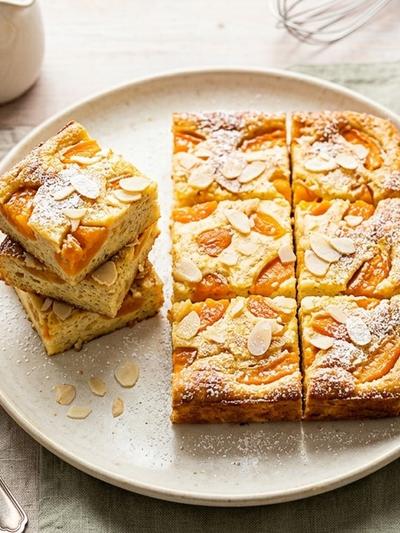
Cherry substitutions. Sweet cherries are traditional in Czech bublanina, but this works beautifully with other fruits. Pitted apricot halves, fresh blueberries, or sliced plums are excellent alternatives that maintain the Central European character. If using very juicy fruits like raspberries, reduce quantity to 1½ cups and toss them in a teaspoon of oat flour before scattering over the batter to absorb excess liquid.
Protein powder flexibility. Vanilla whey works best here because it complements the lemon and cherry flavors without competing. If you use a plant-based protein powder, choose one with a neutral or vanilla flavor and expect a slightly denser texture. Casein-based powders will make the cake thicker and more pudding-like — not a bad result, just different. If you prefer to skip protein powder entirely, add two additional egg whites and increase the Greek yogurt to 1 cup; protein per serving will drop by about 3 grams.
Pair it with extra protein if needed. For a more substantial snack, serve alongside a small glass of milk or a few tablespoons of Greek yogurt on the side. This bumps the total protein closer to 35 grams, which is useful if this cake is replacing a meal rather than serving as a dessert course.
Early GLP-1 phase adjustment. If your appetite is very suppressed during the first weeks of treatment, cut the cake into 9 portions instead of 6. Each smaller piece will still provide about 17 grams of protein — meaningful for a dessert — and the reduced volume may be more manageable. You can always have a second piece later if your appetite allows.
Frequently Asked Questions
Can a dessert really help manage sweet cravings on GLP-1 medication?
Can I use quark or ricotta instead of cottage cheese?
Can I freeze individual portions for longer storage?
What if I can only eat very small amounts right now?
How do I know when the custard cake is done without overbaking it?
This article provides general food and nutrition guidance only. It does not constitute medical advice. Always consult your healthcare provider regarding your GLP-1 medication and individual nutritional needs.