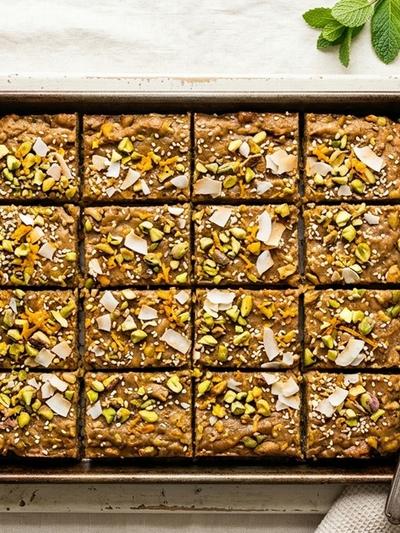
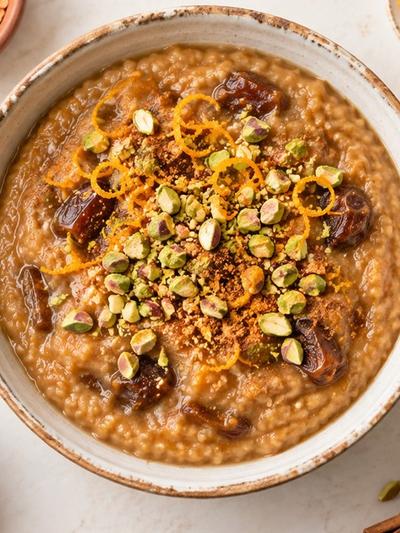
These baklava-inspired protein squares pack 27 grams of protein per serving by combining chickpeas, plant-based protein powder, and Greek yogurt into a dense, satisfying bar. Each square delivers the warm cinnamon-walnut-honey flavors of traditional baklava while keeping calories under 360 — a fraction of the pastry shop original. The chickpea base provides steady-release complex carbohydrates alongside the protein, making these squares genuinely filling rather than a sugar spike followed by a crash.
Orange blossom water is the secret ingredient that transforms this from a protein bar into something that tastes like a real Mediterranean dessert. The combination of toasted walnuts, warm cinnamon, a touch of cardamom, and fragrant honey creates layers of flavor that rival the phyllo-wrapped original. The texture lands between a blondie and a dense flapjack — slightly chewy in the center with lightly crisp edges from the sheet-pan bake.
For people on GLP-1 medications, these squares solve the dessert problem elegantly. They are satisfying in a single small portion, gentle on digestion thanks to the mashed chickpea base, and provide meaningful protein rather than empty calories. The sheet-pan format means you bake once and have portioned treats ready for the entire week.
Why This Works on GLP-1
Each square delivers 27 grams of protein from three complementary sources: chickpeas, plant-based protein powder, and Greek yogurt. That level of protein in a dessert is significant for anyone on Mounjaro or similar GLP-1 medications, where preserving lean muscle mass during weight loss depends on consistent protein intake throughout the day — including at snack time. Most conventional sweets offer virtually zero protein, which means they consume part of your reduced calorie budget without contributing to your daily protein target. These squares flip that equation entirely.
The chickpea base provides roughly 6 grams of fiber per serving, which supports the slower gastric emptying that GLP-1 medications already promote. The combination of soluble fiber from oats and resistant starch from the chickpeas creates a gentle, sustained energy release rather than the blood sugar rollercoaster that traditional baklava triggers.
The fat content stays moderate at 14 grams per serving, with most of it coming from walnuts and tahini — both sources of heart-healthy unsaturated fats. Walnuts contribute alpha-linolenic acid, a plant-based omega-3 that supports cardiovascular health, which is particularly relevant for people managing metabolic conditions alongside their GLP-1 therapy.
Ingredients (serves 4)
For the chickpea base:
- 1 can (15 oz / 425g) chickpeas, drained and rinsed
- 3 scoops (90g) vanilla plant-based protein powder
- 1/2 cup (45g) rolled oats
- 1/3 cup (80g) plain Greek yogurt (2% fat)
- 2 tbsp (30g) tahini
- 2 tbsp (40g) honey
- 1 tsp ground cinnamon
- 1/4 tsp ground cardamom
- 1 tbsp orange blossom water
- 1 tsp vanilla extract
- Pinch of fine sea salt
For the walnut topping:
- 1/3 cup (40g) walnut pieces, roughly chopped
- 1 tsp honey
- 1/4 tsp ground cinnamon
For the honey drizzle:
- 1 tbsp (20g) honey
- 1 tsp warm water
- 1/2 tsp orange blossom water
Instructions
Prepare the chickpea batter:
Preheat your oven to 350°F (175°C). Line an 8×8 inch (20×20 cm) baking pan with parchment paper, leaving overhang on two sides for easy removal later.
Pat the drained chickpeas thoroughly dry with a clean kitchen towel or paper towels. Removing surface moisture is important — wet chickpeas create a gummy texture rather than the dense, blondie-like consistency you want.
Add the dried chickpeas to a food processor and pulse 8–10 times until they break down into a coarse, crumbly meal. Scrape down the sides. You want a texture similar to wet sand, not a smooth paste — some small pieces are fine and add pleasant texture.
Add the protein powder, oats, Greek yogurt, tahini, honey, cinnamon, cardamom, orange blossom water, vanilla extract, and salt to the food processor. Process for 20–30 seconds until a thick, cohesive batter forms. It will be dense and slightly sticky, which is correct. If it seems too dry to hold together, add 1 tablespoon of water and pulse again.
Assemble and bake:
Transfer the batter to the prepared pan and press it into an even layer using the back of a spoon or damp hands. The batter is thick, so take your time to ensure uniform thickness — this guarantees even baking and consistent portions.
Toss the walnut pieces with 1 teaspoon of honey and 1/4 teaspoon of cinnamon in a small bowl. Scatter the coated walnuts evenly across the top of the batter and press them gently into the surface so they adhere during baking.
Bake for 22–25 minutes, until the edges are golden and slightly pulling away from the parchment. The center should feel firm to the touch but will still have a slight give — it continues to set as it cools. Overbaking makes these dry and crumbly rather than pleasantly dense.
Finish and portion:
While the squares cool, whisk together the honey drizzle: 1 tablespoon of honey, 1 teaspoon of warm water, and 1/2 teaspoon of orange blossom water. Stir until smooth and pourable.
Let the squares cool in the pan for 15 minutes, then drizzle the honey mixture evenly over the top. Allow to cool completely — at least another 20 minutes — before lifting out by the parchment overhang and cutting into 8 squares (2 squares per serving).
Nutrition per Serving
| Nutrient | Amount (approx.) |
|---|---|
| Calories | ~358 kcal |
| Protein | ~27g |
| Fat | ~14g |
| Carbohydrates | ~33g |
| Fiber | ~6g |
Estimates based on standard canned chickpeas, a typical vanilla plant-based protein powder (30g protein per 3 scoops), 2% Greek yogurt, and raw walnut pieces.
Practical Notes
Store for the week. These squares keep well in an airtight container in the refrigerator for up to 5 days, or in the freezer for up to 6 weeks. They actually improve overnight as the oats absorb moisture and the flavors meld. Let frozen squares thaw at room temperature for 15 minutes before eating.
Choose the right protein powder. A vanilla-flavored plant-based protein powder (pea, rice, or blend) works best here. Whey protein also works if you are not strictly plant-based. Avoid protein powders with artificial sweeteners like sucralose, which can taste bitter when baked. Check that your powder provides at least 20 grams of protein per scoop for the nutrition numbers to hold.
Find orange blossom water easily. It is available in the international aisle of most supermarkets, at Middle Eastern grocery stores, or online. If you cannot find it, substitute 1/2 teaspoon of rose water or simply use an extra teaspoon of vanilla extract plus the zest of half an orange. The orange blossom water is what makes these taste like baklava rather than a generic protein bar, so it is worth seeking out.
Adjust sweetness for Wegovy or Ozempic taste changes. Many GLP-1 users find their sweet tooth diminishes over time. Start with the honey amounts listed, but know you can reduce the total honey by half and the squares still hold together and taste good. The cinnamon and orange blossom do a lot of the flavor work.
Eat slowly and with intention. One serving is two squares — roughly the size of two small brownies. For people early in their GLP-1 journey, start with a single square and wait 15 minutes before deciding if you want the second. These are dense and protein-rich, so they register as satisfying faster than you might expect.
Frequently Asked Questions
Can I eat these if I experience nausea on my GLP-1 medication?
Can I make these nut-free for allergies?
How should I reheat these, or are they best eaten cold?
What if I am in the early weeks of Zepbound and can only eat tiny portions?
Why do the chickpeas need to be dried so thoroughly before processing?
This article provides general food and nutrition guidance only. It does not constitute medical advice. Always consult your healthcare provider regarding your GLP-1 medication and individual nutritional needs.