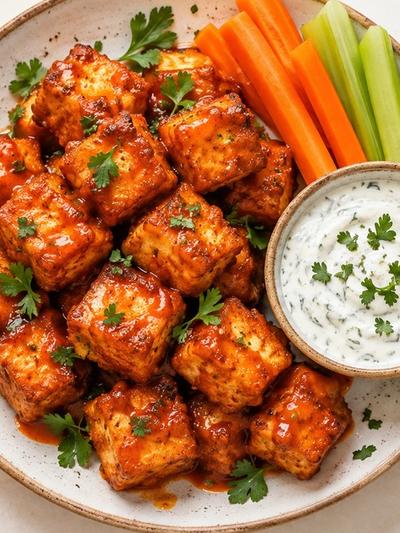
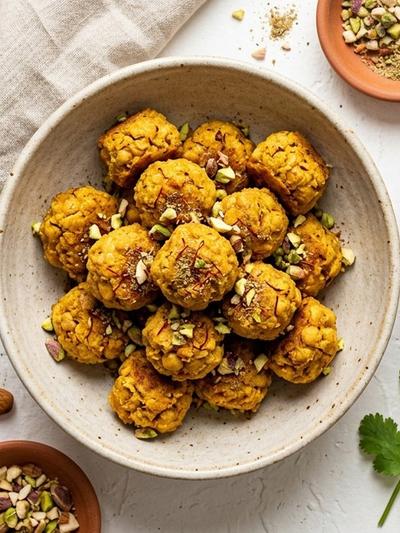
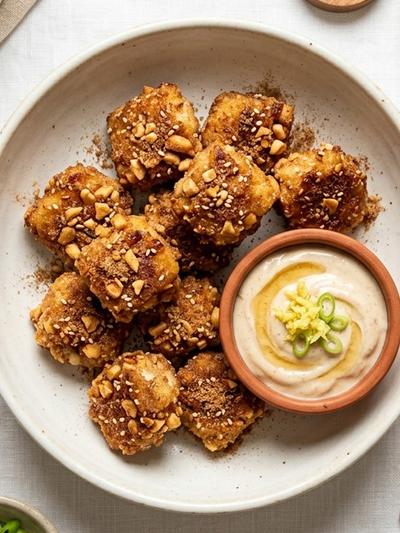
Each serving of these air fryer protein bites delivers 26 grams of protein from a triple stack of cannellini beans, plant-based protein powder, and Greek yogurt — all packed into four fudgy, golden-edged bites. At just 312 calories per serving, they hit the sweet spot between satisfying treat and smart nutrition, with 7 grams of fiber to support steady blood sugar. The white beans provide the dense, creamy base that makes these bites taste far more indulgent than their macro profile suggests.
The flavor here is pure American comfort: ripe banana and natural peanut butter do most of the sweetening work, backed by a touch of maple syrup, warm cinnamon, and vanilla. The texture lands somewhere between a soft cookie and a banana bread muffin top — dense and fudgy in the center with lightly crisp edges from the air fryer's circulating heat. A sprinkle of flaky salt on top before cooking pushes the peanut butter flavor forward and keeps these from tasting like a protein bar pretending to be dessert.
For GLP-1 users, portion-controlled sweets solve a real problem: you want something sweet after dinner but a full slice of cake feels like too much. Four small bites are easy to eat even when appetite is reduced, and the high protein content means you are actually supporting your nutritional needs rather than just filling a craving. The air fryer keeps cooking time under 15 minutes with no preheating fuss.
Why This Works on GLP-1
With 26 grams of protein per serving, these bites contribute meaningfully to the daily protein targets that matter most during GLP-1-assisted weight loss. Maintaining muscle mass while losing fat requires consistent protein intake throughout the day — including at snack and dessert occasions that typically contribute zero protein. For people on Mounjaro or similar GLP-1 medications, hitting 80 to 120 grams of protein daily can be challenging when appetite is significantly reduced, so every eating occasion needs to pull its weight. The combination of cannellini beans, Greek yogurt, and plant-based protein powder creates a complete amino acid profile without any meat.
The 7 grams of fiber per serving comes primarily from the white beans and oats, both of which are gentle on the digestive system. This matters because GLP-1 medications already slow gastric emptying, and high-fiber foods that are too rough — raw vegetables, bran cereals, large salads — can cause discomfort. The beans here are blended smooth, making their fiber easy to tolerate even on sensitive days.
At 312 calories and only 10 grams of fat per serving, these bites satisfy a sweet craving without the caloric density of traditional baked goods. The natural sugars from banana and maple syrup provide quick energy, while the protein and fiber slow absorption and prevent the blood sugar spike that can trigger nausea in Zepbound users who are sensitive to rapid glucose changes.
Ingredients (serves 4)
For the batter:
- 1 can (15 oz / 425g) cannellini beans, drained and rinsed
- 1 medium ripe banana (about 4 oz / 120g)
- ¼ cup (64g) natural peanut butter, no sugar added
- 1 cup (245g) nonfat plain Greek yogurt
- 2 scoops (62g) vanilla plant-based protein powder
- ⅓ cup (27g) rolled oats
- 1 tablespoon (15ml) pure maple syrup
- 1 teaspoon vanilla extract
- ½ teaspoon ground cinnamon
- ¼ teaspoon fine sea salt
For finishing:
- Nonstick cooking spray
- Flaky sea salt, for sprinkling
- 2 tablespoons (20g) mini dark chocolate chips (optional)
Instructions
Blend the batter:
Add the drained cannellini beans and banana to a food processor or high-powered blender. Pulse 8 to 10 times until the beans are broken down and the mixture is mostly smooth — a few small bean pieces are fine and add texture to the finished bites.
Add the peanut butter, Greek yogurt, protein powder, maple syrup, vanilla extract, cinnamon, and salt. Process for 20 to 30 seconds until everything is combined into a thick, scoopable batter. Scrape down the sides once if needed. The batter should hold its shape on a spoon — if it is too wet, add one additional tablespoon of oats.
Add the rolled oats and pulse 3 to 4 times to incorporate them without fully grinding them. The oats should remain in visible pieces, which gives the bites a pleasantly chewy texture after air frying. If using chocolate chips, fold them in by hand with a spatula.
Shape and air fry:
Line your air fryer basket with a piece of parchment paper cut to fit, or use silicone muffin cups if you have them. Lightly spray with cooking spray.
Using a 2-tablespoon cookie scoop or two spoons, portion the batter into 16 mounds. Gently flatten each one to about ¾ inch (2 cm) thick — this ensures the center cooks through before the edges over-brown. Space them about ½ inch apart. You will likely need to cook in 2 batches depending on your air fryer size.
Sprinkle a few flakes of sea salt over the tops. Air fry at 325°F (165°C) for 10 to 12 minutes, until the tops are set and the edges are golden brown. The centers will still feel slightly soft — they firm up significantly as they cool. Do not overcook or they will dry out.
Let the bites cool in the basket or on a wire rack for at least 10 minutes before handling. They go from fragile to perfectly fudgy as they rest. The texture at room temperature should be dense and chewy, not cakey.
Nutrition per Serving
| Nutrient | Amount (approx.) |
|---|---|
| Calories | ~312 kcal |
| Protein | ~26g |
| Fat | ~10g |
| Carbohydrates | ~38g |
| Fiber | ~7g |
Calculated based on 4 servings of 4 bites each, using cannellini beans, natural peanut butter, nonfat Greek yogurt, and plant-based vanilla protein powder. Adding optional chocolate chips adds approximately 25 calories and 1.5g fat per serving.
Practical Notes
Best protein powder choice for this recipe. A vanilla or vanilla-chai flavored plant-based protein powder works best here — pea protein blends tend to have the most neutral taste when combined with peanut butter and banana. Avoid whey concentrate if you experience dairy-related bloating on GLP-1 medications, as plant-based blends are typically gentler on the stomach. Chocolate-flavored powder also works if you want a peanut butter cup vibe.
Meal prep and storage. Store cooled bites in an airtight container in the refrigerator for up to 5 days, separating layers with parchment paper. They taste excellent cold straight from the fridge — the texture becomes even fudgier. For longer storage, freeze on a sheet pan until solid, then transfer to a freezer bag for up to 2 months.
Reheating tip for the best texture. If you prefer warm bites, pop them back in the air fryer at 300°F (150°C) for 3 to 4 minutes. The microwave works in a pinch but softens the edges. From frozen, air fry at 325°F for 5 to 6 minutes without thawing first.
Adjusting sweetness to your taste. The banana and maple syrup keep added sugar minimal, but if you prefer a less sweet bite — common during the early weeks of GLP-1 treatment when taste preferences shift — you can omit the maple syrup entirely. The banana provides enough natural sweetness on its own. Conversely, if your banana is not very ripe, add an extra teaspoon of maple syrup.
Nut-free substitution. Replace the peanut butter with sunflower seed butter for a fully nut-free version. The flavor changes slightly — sunflower butter is a bit earthier — but the protein content stays nearly identical. Tahini also works and gives a slightly more sophisticated, nutty flavor that pairs well with the cinnamon.
Frequently Asked Questions
Can I eat these if I feel nauseous on my GLP-1 medication?
Can I make these without a food processor?
How should I store these for weekly meal prep?
What if I can only eat one or two bites at a time?
Why do you air fry at 325°F instead of the typical 350°F or higher?
This article provides general food and nutrition guidance only. It does not constitute medical advice. Always consult your healthcare provider regarding your GLP-1 medication and individual nutritional needs.