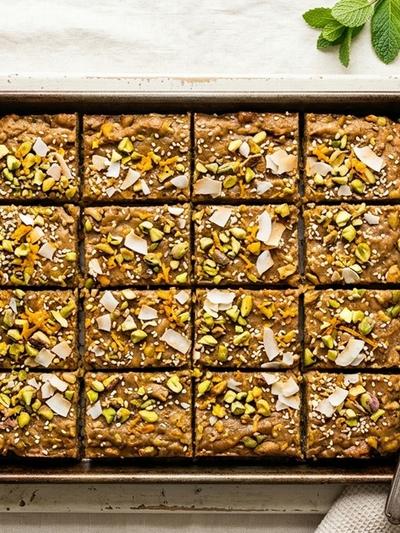
Each serving of these honey-lemon bars delivers 26 grams of protein from a combination of eight whole eggs, part-skim ricotta, and nonfat Greek yogurt — a protein trio that keeps you satisfied without any heaviness. The bars clock in at just 345 calories per serving with 16 grams of fat, making them one of the leaner dessert options you can batch-bake on a single sheet pan. A light scattering of sliced almonds on top adds crunch and a small boost of heart-healthy monounsaturated fats.
The flavor here is unmistakably Greek: bright lemon zest cuts through the richness of ricotta, while raw honey adds a floral sweetness that doesn't overwhelm. A base of rolled oats and almond flour gives the bars a tender, slightly chewy texture — closer to a baked custard bar than a dense protein block. Vanilla extract rounds everything out, and the golden top that forms during baking adds a faint caramelized note that makes these taste like an actual dessert rather than a health-food compromise.
For GLP-1 users, these bars solve the common problem of wanting something sweet without triggering nausea or sitting too heavily in a slower-emptying stomach. The texture is soft and easy to digest, the portions are naturally small, and the high protein content ensures your treat is doing real nutritional work. Sheet pan baking means you cut once and have four days of dessert ready to go.
Why This Works on GLP-1
Each serving provides 26 grams of complete protein, primarily from eggs and dairy — two of the most bioavailable protein sources available. For people on Mounjaro or similar GLP-1 medications, maintaining adequate protein intake is critical to preserving lean muscle mass during weight loss. These bars make that easy by turning dessert into a meaningful protein opportunity rather than empty calories. Having a grab-and-go sweet that contributes a quarter of your daily protein target can make the difference between hitting your macros and falling short.
The soft, custard-like texture is important for digestive comfort. GLP-1 medications slow gastric emptying, which means heavy, greasy, or overly fibrous desserts can cause discomfort. These bars are light on fat, use easily digestible dairy proteins, and contain just enough oats and almond flour to provide structure without bulk. The lemon and honey combination also tends to be well tolerated, unlike very rich chocolate or heavy cream-based sweets.
The combination of protein and moderate complex carbohydrates from oats supports steady blood sugar levels rather than the spike-and-crash pattern that simple sugar desserts create. This matters especially for Zepbound users, as stable glucose helps the medication work more effectively. The calcium from ricotta and yogurt also supports bone health — an underappreciated concern during any significant weight loss period.
Ingredients (serves 4)
For the bar base:
- 8 large eggs
- 1 cup (246g) part-skim ricotta cheese
- ¾ cup (170g) nonfat Greek yogurt
- ¼ cup (28g) almond flour
- ⅓ cup (30g) rolled oats
- 2 tablespoons (42g) raw honey
- Zest of 2 lemons
- 1 tablespoon fresh lemon juice
- 1 teaspoon vanilla extract
- ¼ teaspoon fine sea salt
For the topping:
- 2 tablespoons (14g) sliced almonds
- 1 teaspoon raw honey, for drizzling
- Pinch of flaky sea salt
Instructions
Prepare the batter:
- Preheat your oven to 325°F (160°C). Line a 9×13-inch (23×33 cm) sheet pan or quarter sheet pan with parchment paper, leaving a slight overhang on two sides for easy lifting later.
- In a large bowl, whisk the eggs until fully blended and slightly frothy — about 30 seconds of vigorous whisking. This incorporates air for a lighter texture.
- Add the ricotta and Greek yogurt to the eggs. Whisk until the mixture is smooth with no large ricotta lumps remaining. Small curds are fine and will melt during baking.
- Stir in the almond flour, rolled oats, honey, lemon zest, lemon juice, vanilla, and salt. Mix until everything is evenly distributed. The batter will be thin and pourable — this is correct.
Bake the bars:
- Pour the batter into the prepared pan and spread it evenly with a spatula. The layer will be about ¾ inch (2 cm) thick.
- Scatter the sliced almonds evenly over the top. The almonds will toast during baking, so there is no need to pre-toast them.
- Bake for 30–35 minutes, until the top is golden and set. The center should have a very slight jiggle when you tap the pan — it will firm up as it cools. A toothpick inserted in the center should come out clean or with just a trace of moisture.
- Remove from the oven and immediately drizzle the remaining teaspoon of honey over the surface in thin lines. Sprinkle with a pinch of flaky sea salt.
Cool and cut:
- Let the bars cool in the pan for 15 minutes, then use the parchment overhang to lift the entire slab onto a cutting board. Allow to cool for another 10 minutes — cutting too early will result in crumbly bars.
- Cut into 8 equal bars (2 bars per serving). The bars will be firm enough to pick up but still have a tender, custard-like interior.
Nutrition per Serving
| Nutrient | Amount (approx.) |
|---|---|
| Calories | ~345 kcal |
| Protein | ~26g |
| Fat | ~16g |
| Carbohydrates | ~28g |
| Fiber | ~2g |
Estimates based on large eggs, Galbani part-skim ricotta, Fage 0% Greek yogurt, Bob's Red Mill almond flour and rolled oats, and raw wildflower honey.
Practical Notes
Meal prep and storage. These bars keep well in an airtight container in the refrigerator for up to 5 days. They actually taste better cold or at room temperature the next day, once the flavors have melded and the texture has fully set. Stack them with small sheets of parchment between layers to prevent sticking.
Freezing for longer storage. Wrap individual bars tightly in plastic wrap, then store in a freezer bag for up to 6 weeks. Thaw overnight in the refrigerator. They do not need reheating — room temperature is ideal for both texture and flavor.
Ricotta matters. Use part-skim ricotta, not whole-milk or fat-free. Whole-milk ricotta adds unnecessary fat and makes the bars greasy, while fat-free ricotta produces a rubbery texture. Part-skim gives you the best balance of creaminess, protein, and structure.
Sweetness adjustments. If you prefer a sweeter bar, increase the honey by one tablespoon — this adds about 20 calories and 5 grams of carbs per serving. You can also fold in 2 tablespoons of dried currants or chopped dried apricots for a fruitier variation that stays within the Mediterranean flavor profile.
Serving size for smaller appetites. If you are early in your GLP-1 journey and eating very small portions, cut the slab into 12 pieces instead of 8. Each smaller bar will provide about 17 grams of protein and 230 calories — still a meaningful contribution to your daily intake without overwhelming a reduced appetite.
Frequently Asked Questions
I feel nauseous after sweets on my GLP-1 medication — will these bars be tolerable?
Can I make these dairy-free?
How should I store and reheat these bars?
What if I can only eat very small amounts right now?
Can I use a different pan size?
This article provides general food and nutrition guidance only. It does not constitute medical advice. Always consult your healthcare provider regarding your GLP-1 medication and individual nutritional needs.