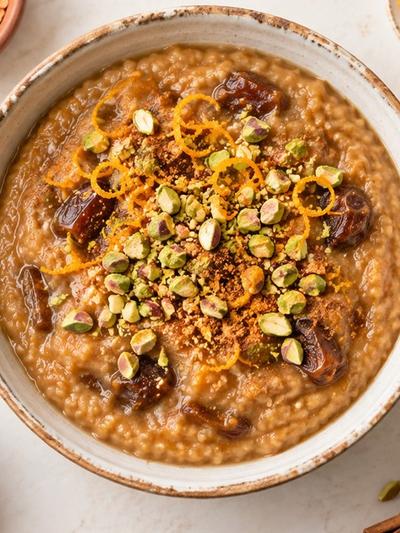
Each bowl of this adapted ashure delivers 26 grams of plant-based protein from three complementary sources: chickpeas, cannellini beans, and pearl barley. That triple-legume-and-grain combination also provides 12 grams of fiber per serving, supporting the sustained blood sugar stability that matters during GLP-1-assisted weight management. A scoop-and-a-half of vanilla plant protein powder rounds out the amino acid profile without adding heaviness, keeping total calories under 400 per generous portion.
Ashure — sometimes called Noah's Pudding — is one of the oldest desserts in the Eastern Mediterranean. The traditional Turkish version simmers grains, legumes, and dried fruits together until everything melds into a thick, fragrant porridge studded with chewy textures. Rose water lifts the warm backdrop of cinnamon and cloves, while diced dried apricots and golden raisins provide pockets of natural sweetness without excess sugar. Topped with jewel-toned pomegranate seeds and crushed pistachios, each bowl is as beautiful as it is satisfying.
This pudding works exceptionally well for GLP-1 users because it is naturally dense in protein and fiber, so even a modest bowl feels complete. The soft, porridge-like texture is gentle on digestion, and because ashure is traditionally served at room temperature or chilled, you can prepare it on a cooler evening and eat it throughout the week without any reheating required.
Why This Works on GLP-1
With 26 grams of protein per serving, this pudding provides meaningful support for lean muscle preservation — the single most important dietary priority during GLP-1-assisted weight loss. Medications like Ozempic and Mounjaro reduce appetite so effectively that many users struggle to consume enough protein in smaller meals. Desserts that double as protein delivery systems help close that gap without forcing another savory dish into an already-reduced eating window. The protein here comes from whole-food legumes and grains, supplemented with plant-based powder for a complete amino acid profile.
The 12 grams of fiber per serving promote steady glucose response and support the gut microbiome, which research increasingly links to metabolic health. Pearl barley contributes beta-glucan, a soluble fiber that slows carbohydrate absorption — a useful complement to GLP-1 medication's effect on gastric emptying. The soft-cooked texture means this fiber is gentle rather than harsh on a sensitive stomach.
Chickpeas and cannellini beans also supply iron, folate, and magnesium — micronutrients that can become insufficient when overall food intake drops significantly. Because ashure is served cold or at room temperature, it avoids the hot-food nausea some GLP-1 users experience, making it a practical option on days when warm meals feel unappealing.
Ingredients (serves 4)
For the pudding:
- 1/2 cup (85g) pearl barley, rinsed
- 1 can (15 oz / 425g) chickpeas, drained and rinsed
- 1 can (15 oz / 425g) cannellini beans, drained and rinsed
- 3 tablespoons (35g) Arborio or other short-grain rice
- 3 1/2 cups (840ml) water
- 1/2 cup (120ml) unsweetened almond milk, divided
- 2 scoops (60g) vanilla plant-based protein powder
- 1 1/2 tablespoons (30g) honey
- 1 tablespoon (8g) cornstarch
- 1 teaspoon ground cinnamon
- 1/4 teaspoon ground cloves
- 1/4 teaspoon fine sea salt
- 3 tablespoons (25g) dried apricots, finely diced
- 2 tablespoons (18g) golden raisins
- 1 tablespoon rose water
For the topping:
- 3 tablespoons (25g) shelled pistachios, roughly chopped
- 1/3 cup (50g) pomegranate seeds
- Ground cinnamon for dusting
Instructions
Cook the barley base:
Combine the pearl barley and water in a medium saucepan. Bring to a boil over high heat, then reduce to a gentle simmer. Cook uncovered for 20 minutes, stirring occasionally, until the barley is nearly tender but still has a slight chew — it will continue cooking with the other ingredients.
Add the chickpeas, cannellini beans, rice, dried apricots, golden raisins, cinnamon, cloves, and salt. Pour in half the almond milk (1/4 cup / 60ml). Stir well, making sure the rice doesn't clump at the bottom, and return to a gentle simmer.
Build the pudding:
Cook uncovered for 18 to 20 minutes, stirring every few minutes to prevent sticking. The rice will break down and release starch, thickening the mixture naturally. You are looking for a consistency like loose oatmeal — it will thicken further as it cools.
In a small bowl, whisk the cornstarch with 2 tablespoons of cold water until smooth. Pour the slurry into the simmering pudding and stir continuously for 2 minutes. The pudding should noticeably thicken. Remove the pot from heat.
Finish off heat:
Let the pudding cool in the pot for 5 minutes — this prevents the protein powder from clumping on contact with boiling liquid. While it rests, whisk the protein powder into the remaining 1/4 cup (60ml) almond milk in a separate small bowl until no lumps remain.
Fold the protein mixture into the warm pudding along with the honey and rose water. Stir gently until everything is evenly incorporated. The pudding should be thick and porridge-like, with clearly visible whole chickpeas, beans, and barley grains throughout.
Divide among four bowls or airtight containers. If serving chilled, press a piece of plastic wrap directly onto the surface to prevent a skin from forming, and refrigerate for at least 2 hours. The pudding can also be served warm or at room temperature.
Top and serve:
- Just before serving, scatter the chopped pistachios and pomegranate seeds over each bowl. Dust lightly with ground cinnamon. The contrast of crunchy nuts, juicy pomegranate, and creamy pudding is what makes ashure memorable.
Nutrition per Serving
| Nutrient | Amount (approx.) |
|---|---|
| Calories | ~395 kcal |
| Protein | ~26g |
| Fat | ~6g |
| Carbohydrates | ~62g |
| Fiber | ~12g |
Estimates based on canned chickpeas and cannellini beans (drained weight), unsweetened almond milk, and a typical pea-based vanilla protein powder providing 24g protein per 30g scoop.
Practical Notes
Make it ahead and eat all week. Ashure is traditionally a batch dessert meant to be shared over several days. Store covered portions in the refrigerator for up to 5 days. The pudding thickens considerably when chilled — stir in a splash of almond milk before eating if you prefer a looser consistency. Add toppings fresh each time you serve rather than storing them in the pudding.
Swap the grain if needed. Pearl barley is the most practical choice because it requires no soaking and cooks in under 30 minutes. For a more traditional version, use wheat berries — soak them overnight in cold water, then drain and add them with an extra 10 minutes of initial cooking time. Hulled (not pearled) farro also works well, with a similar cook time to barley.
Start with half a bowl if you are early in your GLP-1 journey. This pudding is nutrient-dense, and a full serving may be more than your reduced appetite allows. A half portion still delivers 13 grams of protein. Pair it with a small glass of kefir or a few bites of Greek yogurt to round out the meal without overwhelming your stomach.
Choose the right protein powder. A vanilla-flavored pea or pea-rice blend works best here — the vanilla complements the rose water and cinnamon without competing. Avoid whey-based powders if you experience dairy-related digestive issues on GLP-1 medication, as many users report increased lactose sensitivity. If you skip the protein powder entirely, each serving drops to about 14 grams of protein.
Use real rose water, not rose extract. Rose extract is concentrated and can turn the pudding perfume-like with just a few drops too many. Rose water — sold in Middle Eastern grocery stores and the international aisle of most supermarkets — is far more forgiving. Start with 1 tablespoon and add more to taste. If you cannot find it, substitute 1/2 teaspoon of pure vanilla extract and 1/4 teaspoon of orange blossom water for a different but equally Mediterranean finish.
Frequently Asked Questions
Can I eat this pudding if I experience nausea on GLP-1 medication?
Can I make this nut-free or substitute different legumes?
How should I store and reheat leftover ashure?
What if I can only eat very small portions on my current GLP-1 dose?
Why does the protein powder go in off heat instead of during cooking?
This article provides general food and nutrition guidance only. It does not constitute medical advice. Always consult your healthcare provider regarding your GLP-1 medication and individual nutritional needs.