 By Gerald
Each bowl of this ful medames delivers roughly 27 g of protein, with the majority coming from fava beans and a meaningful boost from the soft-boiled egg on top. Fourteen grams of fiber per serving come almost entirely from the legumes themselves, supplying folate, iron, and potassium in the process. At around 420 calories and only 13 g of fat, the dish is substantially leaner than the olive-oil-drenched versions served in many Egyptian breakfast shops, yet it loses none of the richness.
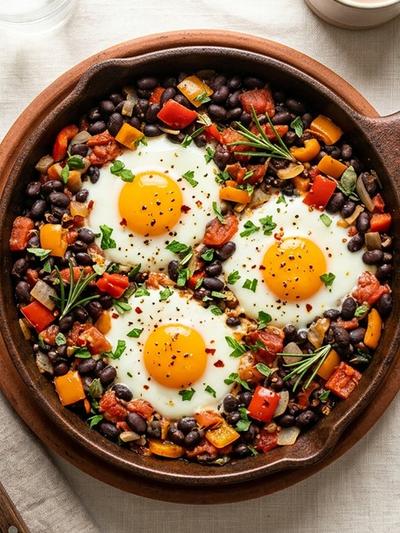
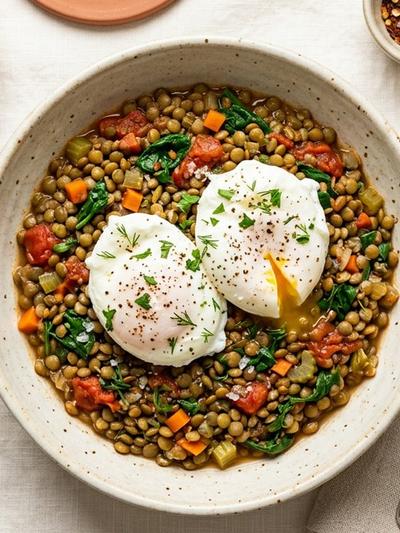
Ful medames is one of the oldest continuously eaten dishes in the Mediterranean basin — mashed fava beans seasoned with garlic, cumin, and lemon, finished with tahini and whatever fresh vegetables the morning market offers. The cumin and smoked paprika build a warm, earthy base, the lemon juice cuts through with bright acidity, and the tahini rounds everything into a creamy, almost savory-sweet finish. A scattering of whole chickpeas adds crunch against the soft beans, while diced tomato and cucumber keep each spoonful cool and fresh.
For anyone on GLP-1 medication, ful medames is an ideal format: it is nutrient-dense in a compact volume, gentle on the stomach because the beans are already soft and well cooked, and easy to portion into a small bowl when appetite is limited. The warm, thick texture feels substantial without requiring a large plateful, and leftovers reheat in under two minutes.
Why This Works on GLP-1
Preserving lean muscle mass is one of the central dietary goals during GLP-1-assisted weight loss. Each serving here provides 27 g of complete protein when you account for the complementary amino acids in fava beans, chickpeas, and egg together — a combination that covers all essential amino acids without relying on animal muscle meat. For anyone taking Ozempic, Wegovy, Mounjaro, or Zepbound, hitting at least 25 g of protein at breakfast helps set the tone for the day's intake, since reduced appetite often means fewer eating occasions overall.
The 14 g of fiber per bowl comes primarily from the fava beans and chickpeas, both soluble-fiber sources that form a gel in the digestive tract and slow glucose absorption. This is particularly useful alongside GLP-1 medications, which already delay gastric emptying — the fiber reinforces that effect gently rather than adding bulk that might cause discomfort. Keeping fat moderate at 13 g further reduces the risk of nausea, a common early side effect.
Fava beans are also one of the richest plant sources of L-DOPA, a dopamine precursor, and they supply meaningful amounts of iron (roughly 25 % of the daily value per serving) and folate. The lemon juice in the recipe does double duty: it brightens the flavor and improves non-heme iron absorption from the beans, making this a practical choice for anyone whose overall food intake has decreased.
Ingredients (serves )
For the beans:
- 2 cans (15 oz / 425g each) fava beans (broad beans), drained and rinsed
- 2 cloves garlic, minced
- 1½ tsp ground cumin
- ½ tsp smoked paprika
- Juice of 1 lemon (about 3 tbsp / 45ml)
- ½ tsp fine salt, plus more to taste
- ¼ tsp black pepper
- ¼ tsp red pepper flakes (optional)
- ¼ cup (60ml) water
For serving:
- 2 large eggs
- 1 tbsp (15g) tahini, stirred with 2 tsp warm water until pourable
- ⅓ cup (55g) canned chickpeas, drained
- 1 small tomato, diced
- 3 oz (85g) English cucumber (about a 3-inch piece), diced
- 2 tbsp chopped fresh flat-leaf parsley
- 1 tsp extra-virgin olive oil
- Lemon wedges
Instructions
Amounts in the method are for 2 servings.
Boil the eggs:
- Place the eggs in a small saucepan, cover with cold water by about 1 inch (2.5 cm), and bring to a rolling boil over high heat. Once boiling, reduce the heat to medium-low, cook for exactly 7 minutes for a jammy center, then transfer the eggs to a bowl of ice water. This runs in parallel with the beans below, so start both at the same time.
Cook the beans:
While the eggs cook, place the drained fava beans in a medium saucepan with the water over medium heat. Using a potato masher or the back of a fork, crush roughly half the beans — you want a thick, chunky base with plenty of whole beans still visible. This texture is what distinguishes ful medames from hummus: part mash, part stew.
Stir in the garlic, cumin, smoked paprika, salt, pepper, and red pepper flakes if using. Let the mixture simmer gently for 6 to 8 minutes, stirring occasionally, until the garlic is fragrant, the spices have bloomed, and the beans have thickened into a porridge-like consistency. If the mixture gets too thick, add a splash of water — you are looking for a texture that mounds in a bowl rather than flowing flat.
Remove from the heat and stir in the lemon juice. Taste and adjust the salt; fava beans absorb seasoning generously, so it may need more than you expect.
Assemble the bowls:
Divide the warm beans between two bowls. Peel the eggs and halve them lengthwise, placing two halves on each bowl. Scatter the chickpeas over the beans for texture.
Drizzle the thinned tahini over each bowl in a zigzag. Top with the diced tomato, cucumber, and parsley, then finish with half a teaspoon of olive oil per bowl. Serve immediately with lemon wedges on the side — a final squeeze at the table lifts everything.
Nutrition per Serving
| Nutrient | Amount (approx.) |
|---|---|
| Calories | ~420 kcal |
| Protein | ~27g |
| Fat | ~13g |
| Carbohydrates | ~48g |
| Fiber | ~14g |
Calculated from USDA data for canned fava beans, large eggs, tahini, canned chickpeas, and olive oil. Exact values vary by brand.
Practical Notes
Fava bean substitutes. If your store does not carry canned fava beans (sometimes labeled "broad beans" or "ful medames"), canned butter beans or large lima beans are the closest swap — they have a similar creamy texture and mild flavor. Cannellini beans also work but will taste slightly different. Avoid small white beans; they lack the starchy body this dish needs.
Meal prep friendly. The bean base keeps well in the refrigerator for up to four days in an airtight container. Reheat gently in a saucepan with a splash of water to loosen it back up. Boil the eggs and prep the fresh toppings the morning you eat — the contrast between warm beans and cool vegetables is what makes the dish work. Do not freeze the assembled bowls; the egg texture suffers.
Scaling for very small appetites. If your appetite is still adjusting in the early weeks of GLP-1 medication, serve half a portion in a smaller bowl and save the rest. Even half a bowl delivers roughly 14 g of protein and 7 g of fiber, which is a strong nutritional start to the day. The thick texture means a few spoonfuls feel like more than they are.
Boost the protein further. For a higher-protein version, use two eggs per bowl instead of one, bringing the total to about 33 g of protein per serving with only 70 additional calories. You can also stir a tablespoon of hemp seeds into each bowl for an extra 5 g of plant protein without changing the flavor noticeably.
The lemon juice is not optional. Fava beans on their own taste flat and starchy — the acid from the lemon is what transforms them into something bright and craveable. Add it off the heat so it stays vibrant rather than cooking out. If your lemons are small, use two.
Frequently Asked Questions
Is ful medames easy to digest on GLP-1 medication?
Can I make this vegan?
How long does the bean base keep, and can I freeze it?
What if I can only eat a very small amount in the morning?
Can I use dried fava beans instead of canned?
This article provides general food and nutrition guidance only. It does not constitute medical advice. Always consult your healthcare provider regarding your GLP-1 medication and individual nutritional needs.