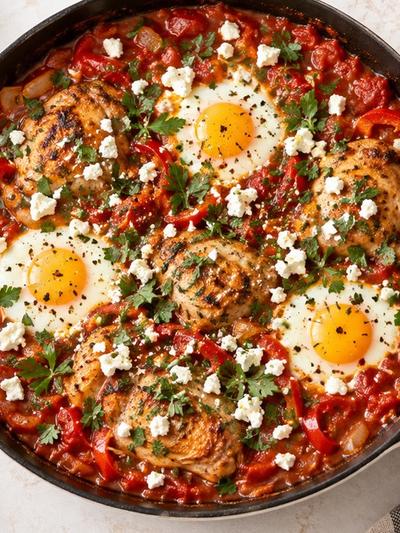
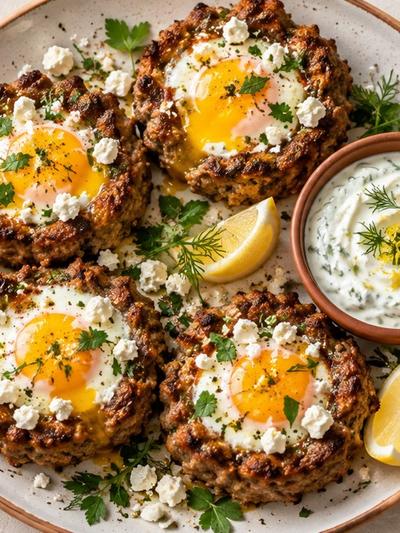
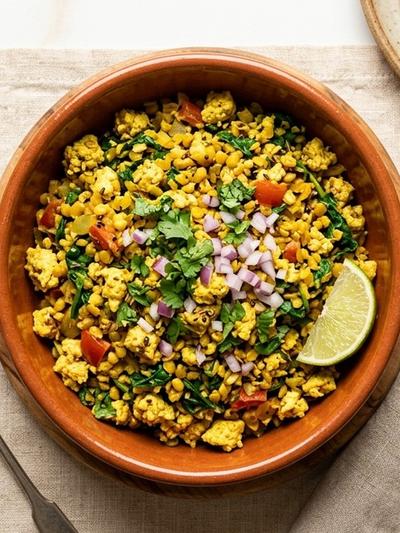
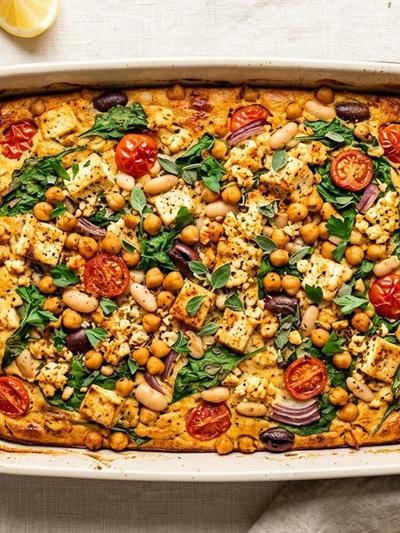
This Provençal black bean and egg skillet packs 26 grams of protein into a single pan that comes together in under 20 minutes. Black beans deliver a complete amino acid profile when paired with eggs, while herbes de Provence and a splash of white wine vinegar give the dish a distinctly Southern French character. Each serving provides 9 grams of fiber alongside generous iron and folate from the beans — nutrients that GLP-1 users often need more of during active weight loss.
The flavor here is warm and savory without being heavy. Shallots soften in a thin slick of olive oil before cherry tomatoes burst and collapse into a quick sauce, which becomes the braising liquid for the beans. Herbes de Provence — that classic blend of thyme, rosemary, savory, and lavender — perfumes the entire skillet. Eggs nestle into the beans and steam under a lid until the whites set but the yolks stay just runny, adding richness when broken over the warm beans.
For anyone on Wegovy, Ozempic, or a similar GLP-1 medication, this breakfast hits the right notes. The portion is modest but deeply satisfying — protein and fiber together create lasting satiety. The soft textures and gentle seasoning sit well even on mornings when appetite is minimal, and the one-pan format means you spend less time cooking and more time actually eating while the food is warm.
Why This Works on GLP-1
Each serving delivers 26 grams of protein from two complementary sources: eggs provide all essential amino acids along with choline and B12, while black beans contribute lysine and additional plant protein. During GLP-1-assisted weight loss, maintaining adequate protein intake is critical for preserving lean muscle mass. This breakfast covers roughly 30–40% of most users' daily protein target in a single meal, setting up the rest of the day on a strong foundation.
Black beans are one of the gentler legume options for GLP-1 users. Their 9 grams of fiber per serving supports healthy digestion and blood sugar regulation without the aggressive bloating that larger beans like kidney or lima can sometimes cause. The soluble fiber in black beans also slows glucose absorption, complementing the blood sugar benefits many Mounjaro and Zepbound users already experience from their medication.
The calorie density is well-calibrated at under 400 calories per serving. This means even on days when your appetite window is narrow, you can consume a nutritionally complete meal without feeling overly full. The combination of protein, fiber, and complex carbohydrates from the beans provides steady energy rather than the spike-and-crash pattern of toast or cereal-based breakfasts.
Ingredients (serves 2)
For the skillet:
- 1 can (15 oz / 425g) black beans, drained and rinsed
- 4 large eggs
- 1 cup (150g) cherry tomatoes, halved
- 2 medium shallots, thinly sliced
- 2 cups (60g) baby spinach
- 2 cloves garlic, minced
- 1 teaspoon herbes de Provence
- 1 teaspoon white wine vinegar
- 2 teaspoons extra-virgin olive oil
- ¼ teaspoon fine sea salt
- Freshly ground black pepper
For finishing:
- 1 oz (28g) crumbled chèvre (soft goat cheese)
- 1 tablespoon fresh chives, finely snipped
- Pinch of flaky sea salt (such as fleur de sel)
Instructions
Prepare the aromatics and beans:
Heat the olive oil in a 10-inch (25cm) skillet over medium heat. Add the sliced shallots and cook for 2–3 minutes, stirring occasionally, until they turn translucent and just begin to soften. Keeping the heat at medium prevents browning, which would add bitterness rather than the sweet, mellow flavor you want here.
Add the minced garlic and herbes de Provence. Stir for 30 seconds until fragrant — the dried herbs bloom in the warm oil, releasing far more flavor than they would if added later to liquid.
Add the halved cherry tomatoes, cut side down. Let them cook undisturbed for 2 minutes so they blister and release their juices. This concentrated tomato liquid becomes the foundation of the sauce.
Stir in the drained black beans, white wine vinegar, salt, and a few grinds of black pepper. Toss everything together and cook for 2 minutes until the beans are heated through and coated in the tomato-herb mixture. The vinegar adds brightness that keeps the dish from tasting flat.
Wilt the spinach and cook the eggs:
Scatter the baby spinach over the beans. It will look like too much, but it wilts dramatically. Stir gently for about 1 minute until the leaves just collapse.
Use the back of a spoon to create 4 small wells in the bean mixture. Crack one egg into each well. Season the eggs with a small pinch of salt and pepper.
Reduce the heat to medium-low and cover the skillet with a lid or sheet of aluminum foil. Cook for 4–5 minutes until the egg whites are fully set but the yolks are still soft and slightly jiggly. If you prefer firmer yolks, cook for an additional 1–2 minutes. The trapped steam cooks the tops of the eggs evenly without needing to flip them.
Finish and serve:
- Remove the lid and crumble the chèvre over the skillet. Scatter the snipped chives on top and add a pinch of fleur de sel over the eggs. Serve directly from the pan, dividing the skillet in half so each person gets 2 eggs and an equal portion of beans.
Nutrition per Serving
| Nutrient | Amount (approx.) |
|---|---|
| Calories | ~395 kcal |
| Protein | ~26g |
| Fat | ~15g |
| Carbohydrates | ~34g |
| Fiber | ~9g |
Based on 2 servings per skillet using standard canned black beans, large eggs, and 0.5 oz chèvre per serving. Exact values vary by brand.
Practical Notes
This recipe meal preps well for two days. Cook the bean base (steps 1–5) in a larger batch and refrigerate. In the morning, reheat a portion in a skillet over medium heat, then crack fresh eggs into it. Pre-cooked eggs lose their texture, but the bean mixture actually improves overnight as the herbs deepen.
Scale protein up easily. If you need more than 26 grams per serving, add an extra egg white or two to each well before cracking in the whole egg. Two additional whites add roughly 7 grams of protein with minimal calories and no change to cooking time.
Adapt for very small appetites. Divide the skillet into 3 portions instead of 2 for roughly 17 grams of protein and 265 calories each — still a nutritionally meaningful breakfast for early-phase GLP-1 users who cannot manage full portions. Refrigerate the third portion for next-day reheating.
Substitute the goat cheese freely. Crumbled feta works if you prefer a sharper, saltier finish. For dairy-free meals, skip the cheese entirely and add a teaspoon of nutritional yeast for umami depth — the protein difference is negligible.
Use dried herbs de Provence, not fresh. The dried blend is traditional and actually works better here than fresh herbs would. The gentle heat of the skillet rehydrates the herbs and releases their essential oils slowly, giving the dish its characteristic Provençal fragrance. Look for blends that include lavender — it makes a noticeable difference.
Frequently Asked Questions
Will the black beans cause bloating while I'm on GLP-1 medication?
Can I make this with a different type of bean?
How should I store and reheat leftovers?
I can only eat very small amounts in the morning on my GLP-1 medication. Is this still worth making?
Can I use a different cooking fat instead of olive oil?
This article provides general food and nutrition guidance only. It does not constitute medical advice. Always consult your healthcare provider regarding your GLP-1 medication and individual nutritional needs.