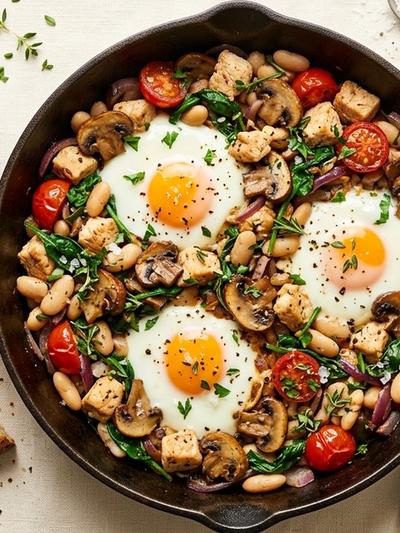
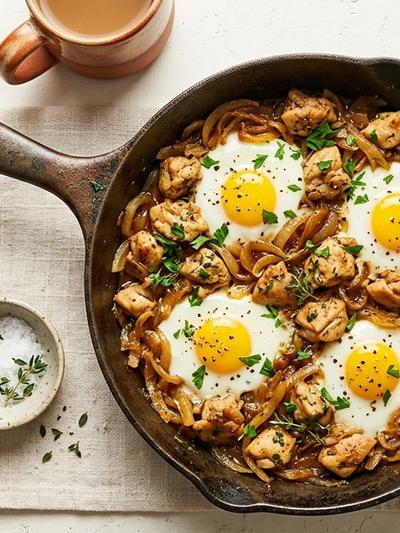
Each serving of this Japanese chicken and egg breakfast bowl delivers 34 grams of protein from two complementary sources — lean chicken breast poached in seasoned dashi broth and a soft-set egg draped over the top. With just 348 calories per bowl, you get a complete morning meal that covers nearly half of most daily protein targets without excess fat or heaviness. The gentle cooking method keeps the chicken tender and the egg silky, making every bite easy to eat even when your appetite is modest.
Oyakodon is one of Japan's most beloved comfort foods, and there is good reason it has endured for over a century. Sweet mirin balances savory soy sauce while dashi provides a clean umami backbone that ties everything together. Thinly sliced onions melt into the broth and a handful of baby spinach wilts in during the last minute, adding color and a touch of iron without changing the dish's gentle character.
This is a natural fit for GLP-1 users because the broth-based cooking keeps the dish light and hydrating while the protein-to-calorie ratio is exceptionally efficient. The small portion of rice provides just enough carbohydrate energy for the morning without triggering the heavy, overfull feeling that larger grain servings can cause when gastric emptying is slowed. From start to finish, the entire bowl comes together in one skillet in under twenty minutes.
Why This Works on GLP-1
Preserving lean muscle mass is one of the most important nutritional goals during GLP-1-assisted weight loss, and that requires consistent, adequate protein at every meal. This oyakodon delivers 34 grams per serving from chicken breast and egg — two of the most bioavailable protein sources available. For people taking Mounjaro or similar GLP-1 medications who struggle with low morning appetite, a warm, broth-based bowl is often far easier to eat than dry or dense breakfast options. The protein is distributed through liquid and soft textures, making it gentle to consume even on difficult appetite days.
The dashi broth adds meaningful hydration to your morning meal, which matters because GLP-1 medications can sometimes contribute to mild dehydration through reduced food and fluid intake. Baby spinach provides folate and iron without adding significant fiber bulk, keeping this dish easy on a digestive system that is already working more slowly. The modest 3 grams of fiber per serving is intentional — enough to support regularity without risking bloating.
At only 9 grams of fat per serving, this bowl sits well below the threshold where high-fat meals can worsen the nausea some GLP-1 users experience. The carbohydrates from rice are moderate and come alongside protein and broth, which slows glucose absorption and provides steady energy through your morning. This is functional nutrition designed around how your body actually processes food on these medications.
Ingredients (serves 4)
For the seasoned broth:
- 1½ cups (360ml) dashi stock (prepared from instant dashi powder or homemade)
- 3 tablespoons (45ml) low-sodium soy sauce
- 2 tablespoons (30ml) mirin
- 1 teaspoon (5ml) rice vinegar
- 1 teaspoon sugar
For the skillet:
- 1 lb (450g) boneless, skinless chicken breast, thinly sliced against the grain
- 1 medium yellow onion, halved and thinly sliced into half-moons
- 2 cups (60g) baby spinach
- 4 large eggs
- 2 scallions, thinly sliced (green and white parts separated)
For serving:
- 2 cups (320g) cooked short-grain or sushi rice (from about ¾ cup / 150g dry)
- 1 teaspoon toasted sesame seeds
- Shichimi togarashi, optional, for a gentle kick
Instructions
Prepare the ingredients:
- Slice the chicken breast into thin strips, about ¼ inch (6mm) thick, cutting against the grain so they cook quickly and stay tender. Pat dry with a paper towel.
- Halve and thinly slice the onion. Separate the white and green parts of the scallions. Crack the eggs into a bowl and break them gently with chopsticks or a fork — you want the whites and yolks loosely mixed, not uniformly beaten, so they set in distinct streaks.
Build the broth and cook the chicken:
- In a large nonstick skillet or shallow sauté pan (10–12 inch), combine the dashi stock, soy sauce, mirin, rice vinegar, and sugar. Set over medium heat and stir until the sugar dissolves.
- Add the sliced onion and scallion whites to the broth. Cook for 3–4 minutes until the onion softens and becomes translucent. The onion releases natural sweetness that rounds out the soy and dashi flavors.
- Arrange the chicken slices in a single layer in the simmering broth. Cook for 4–5 minutes, turning once, until the chicken is just cooked through. The thin slices cook quickly — do not let them boil hard or they will toughen.
Add the egg and spinach:
- Scatter the baby spinach over the chicken and onion. It will wilt in about 30 seconds from the steam and broth heat.
- Slowly pour the loosely beaten eggs over the entire surface of the skillet in a circular motion. Cover the skillet immediately with a lid and reduce heat to low. Cook for exactly 90 seconds to 2 minutes — the eggs should be just set on the edges but still slightly soft and custardy in the center. This is the signature texture of oyakodon and it is essential to the dish.
- Remove the lid and take the skillet off the heat. The residual warmth will continue setting the egg gently.
Assemble the bowls:
- Divide the cooked rice among four bowls, about ½ cup (80g) per bowl. Slide a quarter of the chicken, egg, and broth mixture over each portion of rice using a spatula.
- Garnish with sliced scallion greens, a pinch of toasted sesame seeds, and shichimi togarashi if desired. Serve immediately while the egg is still soft.
Nutrition per Serving
| Nutrient | Amount (approx.) |
|---|---|
| Calories | ~348 kcal |
| Protein | ~34g |
| Fat | ~9g |
| Carbohydrates | ~30g |
| Fiber | ~3g |
Estimates based on 4 oz cooked chicken breast, 1 large egg, ½ cup cooked sushi rice, and measured sauce ingredients per serving.
Practical Notes
This reheats better than most egg dishes. Store individual portions in airtight containers for up to 3 days in the refrigerator. Reheat gently in a covered skillet with a splash of water or dashi — the microwave works but can make the egg rubbery if overheated. Thirty seconds on medium power, stir, then another twenty seconds is the safest approach.
Use instant dashi for weekday speed. Instant dashi granules (like Shimaya or Ajinomoto Hon-Dashi) dissolve in hot water in seconds and produce a perfectly good weekday broth. If you keep homemade dashi or chicken bone broth in the freezer, that works beautifully too — just adjust the soy sauce since bone broth has more inherent salt.
The egg technique matters — do not over-beat. Breaking the eggs loosely with chopsticks rather than whisking them smooth is what creates the characteristic ribbons of white and yolk throughout the dish. A uniformly beaten egg will set into a flat, dense layer instead of the soft, custard-like texture that makes oyakodon special.
Swap the rice for cauliflower rice to cut carbs further. If you are in an early phase of GLP-1 treatment and eating very small portions, replacing the sushi rice with 80 grams of steamed cauliflower rice drops each serving to roughly 260 calories while keeping protein the same. The broth soaks into cauliflower rice nicely.
Scale down for a solo breakfast. Quarter the recipe using a small 8-inch skillet — one chicken breast quarter, one egg, and a quarter of the broth. The cooking times stay the same since the skillet size changes but the ingredient thickness does not. This is one of the most practical solo breakfast formats because nothing is wasted.
Frequently Asked Questions
Is oyakodon safe to eat with the egg still slightly soft on GLP-1 medications?
Can I use chicken thighs instead of breast?
How long does this keep in the refrigerator and can I freeze it?
What if I can only eat a few bites in the morning on my GLP-1 medication?
What can I use instead of mirin if I do not have it?
This article provides general food and nutrition guidance only. It does not constitute medical advice. Always consult your healthcare provider regarding your GLP-1 medication and individual nutritional needs.