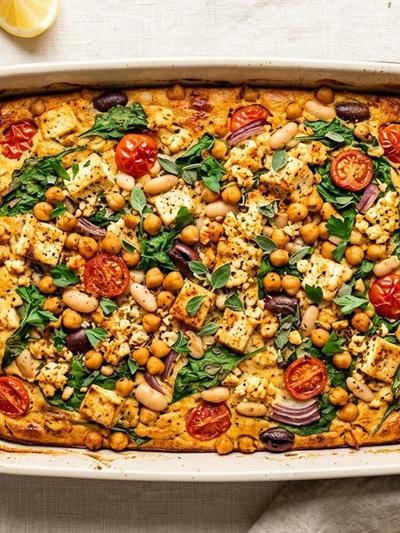
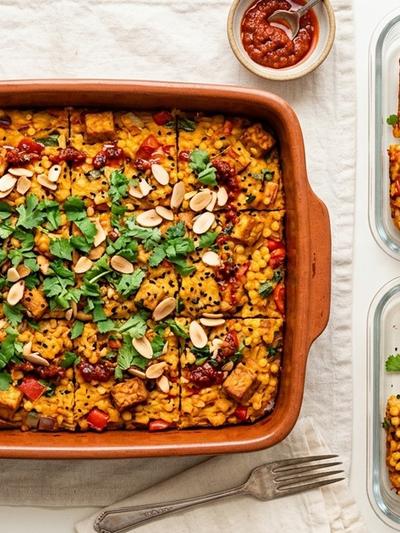
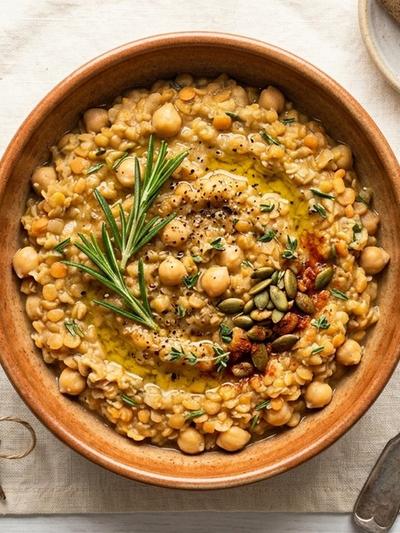
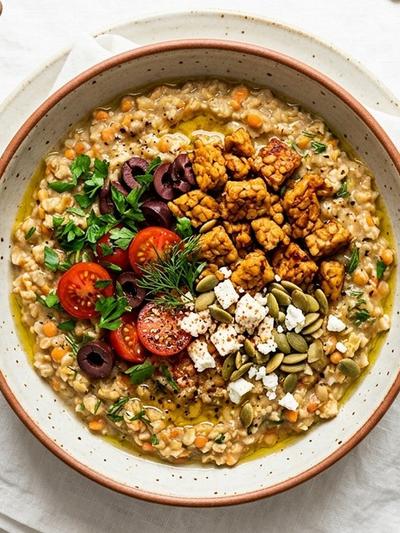
Each bowl in this Mediterranean tofu scramble meal prep delivers 28 grams of plant-based protein from a combination of extra-firm tofu and cannellini beans, reinforced with nutritional yeast for a complete amino acid profile. You also get 9 grams of gentle fiber per serving, primarily from the beans and spinach, plus a solid dose of iron and B vitamins. At just 385 calories per portion, these bowls hit the kind of macro balance that makes mornings effortless — especially when your appetite is unpredictable.
The flavor profile draws from the eastern Mediterranean pantry: oil-packed sun-dried tomatoes bring a concentrated sweetness and umami depth, while Kalamata olives add briny contrast. Nutritional yeast gives the tofu a savory, almost cheesy quality that makes the scramble taste far richer than its calorie count suggests. A squeeze of lemon juice at the end brightens everything and ties the bowl together with that distinctly Mediterranean freshness.
This is a genuine batch-prep recipe — you cook once on Sunday and eat well through Thursday. The portions are deliberately moderate, designed for the smaller appetite that comes with GLP-1 treatment. Each bowl reheats in under two minutes and tastes just as good on day four as day one, which matters when you need to eat consistently even when hunger signals are quiet.
Why This Works on GLP-1
Each serving provides 28 grams of complete plant-based protein, which is critical for preserving lean muscle mass during the weight loss that medications like Mounjaro and Ozempic facilitate. Tofu and cannellini beans together supply all essential amino acids, making this a reliable protein source even without animal products. The nutritional yeast adds another 4 grams per serving while contributing B12 — a nutrient that some GLP-1 users find harder to maintain when overall food intake drops. Having pre-portioned bowls ready in the fridge eliminates the temptation to skip breakfast entirely.
The 9 grams of fiber per serving come from gentle, soluble sources — primarily cannellini beans and baby spinach — rather than harsh insoluble fiber that can aggravate the slower gastric emptying common with GLP-1 medications. Sun-dried tomatoes contribute lycopene and additional micronutrients without adding significant volume to the meal.
The fat content stays moderate at 14 grams, mostly from heart-healthy monounsaturated sources in the olive oil and olives. This matters because high-fat meals can intensify nausea for some GLP-1 users, particularly in the early weeks of treatment. The bowl is calorie-dense enough to sustain energy through the morning without sitting heavily in the stomach.
Ingredients (serves 4)
For the tofu scramble:
- 1 block (14 oz / 400g) extra-firm tofu, drained and pressed
- 2 cans (15 oz / 425g each) cannellini beans, drained and rinsed
- 1/3 cup (15g) nutritional yeast
- 1/2 cup (70g) oil-packed sun-dried tomatoes, drained and roughly chopped
- 5 oz (140g) baby spinach
- 1 medium red bell pepper, diced (about 150g)
- 1/3 cup (50g) Kalamata olives, pitted and halved
- 4 cloves garlic, minced
- 1 tablespoon extra-virgin olive oil
- 1 teaspoon ground turmeric
- 1 teaspoon smoked paprika
- 1/2 teaspoon ground cumin
- 1/2 teaspoon dried oregano
- Juice of 1 lemon (about 2 tablespoons)
- 1/2 teaspoon fine sea salt
- Freshly ground black pepper to taste
For serving (optional, add fresh when reheating):
- Fresh basil or parsley
- Cherry tomatoes, halved
- Extra lemon wedges
Instructions
Press and prepare the tofu:
- Wrap the tofu block in a clean kitchen towel and press it under a heavy pan or cutting board for at least 15 minutes. This removes excess moisture so the tofu browns properly and absorbs the spices rather than steaming in its own liquid.
- Once pressed, crumble the tofu into rough, uneven pieces with your hands — you want a mix of small crumbles and larger chunks to mimic the texture of scrambled eggs.
Build the scramble base:
- Heat the olive oil in a large nonstick skillet or well-seasoned cast iron pan over medium-high heat. Add the diced red bell pepper and cook for 3 minutes until it begins to soften and develop light color at the edges.
- Add the garlic and cook for 30 seconds, stirring constantly, until fragrant but not browned.
- Add the crumbled tofu, turmeric, smoked paprika, cumin, oregano, and salt. Stir well to coat every piece evenly — the turmeric gives the scramble its golden breakfast color while the smoked paprika adds depth without heat.
- Cook for 5–6 minutes, stirring occasionally, letting the tofu develop some golden-brown spots on the bottom of the pan. Resist the urge to stir constantly; a bit of contact time with the hot pan creates texture.
Add the beans and finishing ingredients:
- Add the drained cannellini beans and sun-dried tomatoes to the skillet. Stir gently and cook for 2 minutes until the beans are warmed through. The beans are already cooked, so you just need to bring them to temperature and let them absorb some of the spice mixture.
- Add the baby spinach in two batches, folding it into the scramble until wilted — this takes about 1 minute per batch. The spinach will reduce dramatically in volume.
- Scatter the Kalamata olives over the mixture and sprinkle the nutritional yeast evenly across the top. Fold everything together gently.
- Remove from heat, squeeze the lemon juice over the entire pan, and season with black pepper. Taste and adjust salt if needed.
Portion for the week:
- Divide the scramble evenly among four airtight meal prep containers. Allow the bowls to cool completely at room temperature — about 20 minutes — before sealing the lids, which prevents condensation from making the tofu soggy.
- Store in the refrigerator for up to 4 days. Do not freeze, as the tofu texture changes significantly after thawing.
Nutrition per Serving
| Nutrient | Amount (approx.) |
|---|---|
| Calories | ~385 kcal |
| Protein | ~28g |
| Fat | ~14g |
| Carbohydrates | ~32g |
| Fiber | ~9g |
Estimates based on standard extra-firm tofu, canned cannellini beans, and oil-packed sun-dried tomatoes. Actual values may vary by brand.
Practical Notes
Tofu pressing is not optional. Skipping this step leaves too much water in the scramble, which turns the mixture soggy by day two of meal prep. If you make this recipe regularly, a tofu press is a worthwhile investment — it cuts prep time and produces better texture every time.
Reheat with a splash of water. Microwave each bowl for 90 seconds, adding a tablespoon of water before covering loosely. The steam re-moistens the beans and spinach without drying out the tofu. If you have access to a stovetop, a quick warm-up in a skillet over medium heat for 2–3 minutes produces the best texture.
Boost protein further if needed. If you are aiming for 35+ grams of protein per meal, add 2 tablespoons of hemp seeds to each bowl when serving — that adds roughly 7 grams of protein and 90 calories per portion without changing the flavor significantly.
Start with half a bowl in your first weeks on GLP-1. Many people beginning Wegovy or Zepbound find their appetite dramatically reduced in the first month. A half portion still delivers 14 grams of protein and around 190 calories, which is better than skipping breakfast entirely. You can always eat the second half an hour or two later.
Swap the beans to change the flavor profile. Chickpeas work as a direct substitute and keep the Mediterranean character. White kidney beans are another option with a slightly creamier texture. Avoid red kidney beans — their stronger flavor competes with the sun-dried tomatoes and olives.
Frequently Asked Questions
Will this scramble cause bloating on GLP-1 medication?
Can I make this soy-free?
How long do these bowls last in the fridge?
What if I can only eat a few bites in the morning on GLP-1?
Can I cook the scramble in a bigger batch for more servings?
This article provides general food and nutrition guidance only. It does not constitute medical advice. Always consult your healthcare provider regarding your GLP-1 medication and individual nutritional needs.