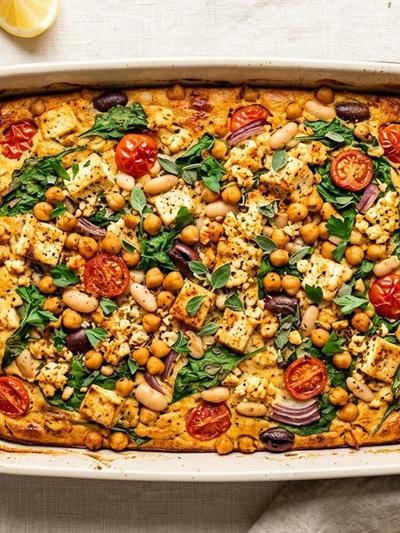
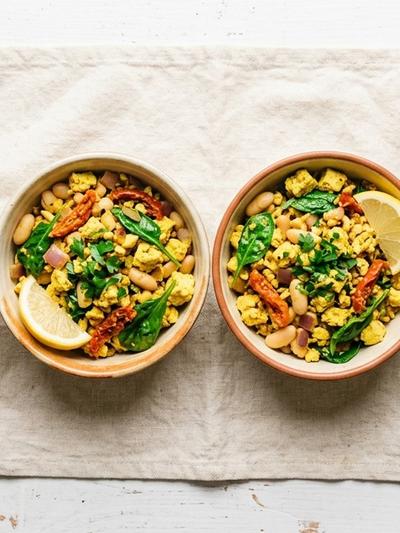
This Mediterranean breakfast hash delivers 32 grams of plant-based protein per serving by pairing oregano-roasted tempeh with crispy oven-baked chickpeas. Each plate also provides 15 grams of fiber from the dual legume base and a generous spread of roasted vegetables, making it one of the more nutrient-dense ways to start a morning. The combination of zucchini, cherry tomatoes, and red bell pepper adds vitamins C and A alongside potassium, while keeping the overall calorie count under 500.
The flavor here is distinctly Mediterranean without being complicated. Smoked paprika and a touch of cumin give the tempeh a warm, slightly smoky depth, while dried oregano ties everything to the sun-baked flavors of the region. The chickpeas turn golden and crunchy at the edges during roasting, creating a textural contrast against the tender vegetables and the firm, almost meaty bite of the tempeh. A squeeze of lemon right out of the oven brightens the entire pan and pulls all the flavors together.
For people on GLP-1 medications, this breakfast hits a practical sweet spot. The high protein and fiber content means a smaller portion feels genuinely satisfying, which matters when your appetite is already reduced. Everything roasts on a single lined sheet pan, so there is minimal cleanup and almost no active cooking time beyond chopping vegetables.
Why This Works on GLP-1
Preserving lean muscle mass is one of the most important nutritional goals during GLP-1-assisted weight loss, and this breakfast addresses it directly with 32 grams of complete and complementary plant protein. Tempeh provides all essential amino acids from whole fermented soybeans, while chickpeas contribute lysine-rich legume protein that rounds out the amino acid profile. For anyone on Mounjaro or a similar tirzepatide medication, hitting 25 to 40 grams of protein at breakfast helps counteract the muscle loss that can accompany rapid weight reduction. Starting the day with substantial protein also helps sustain energy through a morning when appetite signals may be muted.
The 15 grams of fiber per serving come from a combination of tempeh, chickpeas, zucchini, and bell pepper. This is a gentle, well-distributed fiber load rather than a single high-fiber ingredient that might overwhelm a sensitive stomach. For GLP-1 users who experience delayed gastric emptying, this gradual fiber approach supports regularity without causing the bloating or discomfort that concentrated fiber supplements sometimes trigger.
Tempeh offers an additional advantage that other plant proteins lack: its fermentation process produces beneficial probiotics and makes the soy protein easier to digest. People taking Wegovy or other semaglutide medications sometimes report digestive sensitivity, and fermented foods tend to be better tolerated than their unfermented counterparts. The moderate fat content of 22 grams per serving, mostly from the soybeans themselves plus a small amount of olive oil, provides enough satiety without the heaviness that high-fat breakfasts can cause when gastric motility is already slowed.
Ingredients (serves 2)
For the tempeh and chickpeas:
- 8 oz (227g) tempeh, cut into 3/4-inch (2cm) cubes
- 1 cup (170g) canned chickpeas, drained and rinsed
- 1 tbsp (15ml) extra-virgin olive oil
- 1 tbsp (15ml) fresh lemon juice
- 2 cloves garlic, minced
- 1 tsp dried oregano
- 1/2 tsp smoked paprika
- 1/4 tsp ground cumin
- 1/4 tsp fine sea salt
- Freshly ground black pepper
For the vegetables:
- 1 pint (300g) cherry tomatoes, halved
- 1 medium zucchini (200g), cut into 1/2-inch (1.5cm) dice
- 1 medium red bell pepper (150g), cut into 1/2-inch (1.5cm) pieces
- 1/4 medium red onion (40g), thinly sliced
To finish:
- 2 tbsp fresh flat-leaf parsley, roughly chopped
- 1 tbsp fresh lemon juice
- Lemon wedges for serving
Instructions
Prepare the oven and sheet pan:
- Preheat your oven to 425°F (220°C) and line a large rimmed sheet pan with parchment paper. The parchment prevents the chickpeas and tempeh from sticking and makes cleanup effortless.
Season the tempeh and chickpeas:
In a large mixing bowl, combine the olive oil, lemon juice, minced garlic, oregano, smoked paprika, cumin, salt, and several grinds of black pepper. Stir to form a rough paste.
Add the tempeh cubes and drained chickpeas to the bowl. Toss gently until every piece is evenly coated. The lemon juice serves a dual purpose here: it adds brightness and helps the dried spices adhere to the tempeh surface.
Spread the seasoned tempeh and chickpeas in a single layer across one side of the prepared sheet pan, leaving space between pieces so they roast rather than steam.
Prepare and arrange the vegetables:
Add the halved cherry tomatoes, diced zucchini, red bell pepper pieces, and sliced red onion to the same bowl. Any residual oil and seasoning left in the bowl will lightly coat the vegetables, which is all they need. Toss briefly.
Spread the vegetables in a single layer on the other side of the sheet pan. Keep the tomatoes cut-side up so they caramelize rather than release all their juice downward.
Roast:
- Place the sheet pan on the center rack and roast for 22 to 25 minutes. At the 12-minute mark, use a spatula to flip the tempeh cubes and shake the chickpeas so they brown evenly. The vegetables can stay as they are. The hash is done when the tempeh is golden brown at the edges, the chickpeas are crisp on the outside, and the tomatoes have softened and begun to collapse.
Finish and serve:
Remove the pan from the oven and squeeze 1 tablespoon of fresh lemon juice over everything while it is still hot. The heat releases the lemon aroma immediately.
Scatter the chopped parsley over the top. Divide between two plates or shallow bowls and serve with lemon wedges on the side.
Nutrition per Serving
| Nutrient | Amount (approx.) |
|---|---|
| Calories | ~470 kcal |
| Protein | ~32g |
| Fat | ~22g |
| Carbohydrates | ~44g |
| Fiber | ~15g |
Estimates based on standard USDA values for tempeh, canned chickpeas, and raw vegetables. Actual values may vary slightly depending on tempeh brand and exact vegetable sizes.
Practical Notes
This reheats well for weekday mornings. Store leftovers in an airtight container in the refrigerator for up to 3 days. Reheat in a 375°F (190°C) oven for 8 to 10 minutes to restore crispness, or microwave for 90 seconds if time is short. The chickpeas lose some crunch in the microwave but the flavor stays intact.
Steam the tempeh first if you find it bitter. Some people detect a slight bitterness in tempeh, especially less familiar brands. Steaming the cubed tempeh for 10 minutes before seasoning mellows the flavor considerably and also helps it absorb the marinade more deeply. This adds time but is worth it if you are new to cooking with tempeh.
Scale up for a full week of meal prep. Double the recipe and use two sheet pans, rotating them halfway through roasting. Four servings will carry you through most of the work week. Label containers with the date so you use the oldest portions first.
Start with a half portion if your appetite is very low. During the first weeks on a GLP-1 medication, breakfast appetite is often minimal. Plate half a serving and save the rest. Even 16 grams of protein and a modest amount of fiber at breakfast is better than skipping the meal entirely, and you can always eat the second half mid-morning when hunger arrives.
Swap the vegetables based on what you have. Diced eggplant, sliced fennel, or quartered artichoke hearts all work in place of the zucchini or bell pepper. Keep the cherry tomatoes if you can, since they provide a burst of moisture and acidity that balances the drier roasted elements.
Frequently Asked Questions
Can I eat this breakfast if I just started taking a GLP-1 medication?
What can I use instead of tempeh if I cannot find it?
How should I store and reheat this for meal prep?
Is this filling enough as a standalone breakfast on GLP-1?
Why do you roast the tempeh and vegetables on separate sides of the pan?
This article provides general food and nutrition guidance only. It does not constitute medical advice. Always consult your healthcare provider regarding your GLP-1 medication and individual nutritional needs.