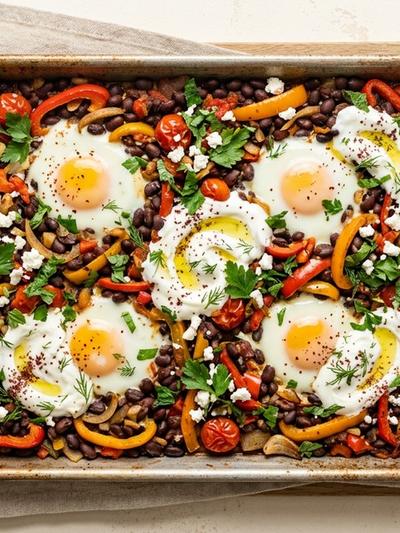
Each serving of this warm lentil bowl delivers 31 grams of protein and 11 grams of fiber from a combination of green lentils, poached eggs, and a generous handful of wilted spinach. The lentils provide slow-digesting plant protein and resistant starch, while two perfectly poached eggs add complete animal protein with all essential amino acids. A light shower of Parmigiano-Reggiano ties the Italian flavors together without adding excessive fat. At 385 calories per bowl, this is a nutrient-dense lunch that earns its place on any GLP-1 meal rotation.
The flavor here is quietly impressive. Green lentils hold their shape when simmered in a base of soffritto — onion, celery, and carrot — with crushed San Marzano tomatoes and a bay leaf lending depth. Fresh thyme and a splash of good red wine vinegar at the end brighten everything, cutting through the earthy legumes in a way that keeps each bite interesting. The runny yolk from the poached eggs creates its own sauce, pooling into the lentils and making the whole bowl feel richer than its modest fat content suggests.
For anyone on Mounjaro or Wegovy, this format works particularly well. The combination of lentil fiber and egg protein creates lasting satiety from a reasonably small portion, so even if your appetite limits you to half a bowl, you are still getting meaningful nutrition. The soft textures throughout — tender lentils, silky eggs, wilted greens — are gentle on a digestive system that may be more sensitive during GLP-1 treatment.
Why This Works on GLP-1
Protein preservation is one of the most important nutritional priorities during GLP-1-assisted weight loss, and this bowl addresses it from two complementary sources. The 31 grams per serving comes from roughly 18 grams via green lentils and 13 grams from two poached eggs plus Parmigiano-Reggiano. Lentil protein is rich in lysine but lower in methionine, while egg protein fills that gap perfectly — together they form a complete amino acid profile comparable to meat. This matters because maintaining lean muscle mass during caloric restriction directly supports metabolic rate and long-term weight management.
The 11 grams of fiber per serving come primarily from the lentils, which contain both soluble and insoluble fiber. Soluble fiber slows glucose absorption, which complements the blood sugar regulation already provided by GLP-1 medications like Ozempic or Zepbound. Green lentils are easier to digest than some other legume varieties because they hold their shape during cooking rather than breaking down into a starchy paste, which reduces the gas production that can cause discomfort.
Lentils are also one of the best plant sources of iron and folate, two nutrients that can become depleted during periods of reduced food intake. The vitamin C from the tomatoes in this recipe enhances non-heme iron absorption from the lentils, making this a particularly efficient combination for micronutrient coverage in a smaller meal.
Ingredients (serves 2)
For the lentils:
- 3/4 cup (150g) dried green lentils (or French Puy lentils)
- 1 tablespoon extra-virgin olive oil
- 1 small yellow onion, finely diced
- 1 celery stalk, finely diced
- 1 small carrot, finely diced
- 2 cloves garlic, minced
- 1/2 cup (120g) crushed San Marzano tomatoes
- 2 cups (480ml) low-sodium vegetable broth
- 1 bay leaf
- 1 teaspoon fresh thyme leaves (or 1/2 teaspoon dried)
- 1/4 teaspoon fine sea salt
- Freshly ground black pepper
For the poached eggs and finishing:
- 4 large eggs
- 1 tablespoon white vinegar (for poaching water)
- 2 large handfuls (60g) fresh baby spinach
- 1 teaspoon red wine vinegar
- 2 tablespoons (10g) finely grated Parmigiano-Reggiano
- Fresh parsley, roughly chopped, for garnish
Instructions
Prepare the lentils:
Rinse the green lentils under cold water and pick through them to remove any small stones or debris. Unlike dried beans, lentils do not require soaking, which makes this a genuinely quick weekday lunch.
Heat the olive oil in a medium saucepan or deep skillet over medium heat. Add the diced onion, celery, and carrot. Cook for 5 to 6 minutes, stirring occasionally, until the vegetables have softened and the onion is translucent. This soffritto base is the flavor foundation of the entire dish — do not rush it.
Add the garlic and cook for 30 seconds until fragrant. Stir in the crushed tomatoes and cook for 1 minute to concentrate their flavor slightly.
Add the rinsed lentils, vegetable broth, bay leaf, and thyme. Bring to a gentle boil, then reduce heat to a low simmer. Cover and cook for 22 to 25 minutes, until the lentils are tender but still holding their shape. Green lentils should have a slight bite — they will continue to absorb liquid off heat.
In the final 2 minutes of cooking, stir in the baby spinach and let it wilt into the lentils. Season with salt and pepper. Remove the bay leaf and stir in the red wine vinegar. The vinegar lifts the earthy lentils and brings all the flavors into focus.
Poach the eggs:
While the lentils cook, bring a medium saucepan of water to a gentle simmer — you want small bubbles rising from the bottom, not a rolling boil. Add the white vinegar to the water. The vinegar helps the egg whites set quickly around the yolk.
Crack each egg into a small ramekin or cup. Create a gentle whirlpool in the water with a spoon and slide one egg at a time into the center. Poach for 3 to 3 and a half minutes for a runny yolk, or 4 minutes for a jammy center. Remove with a slotted spoon and rest briefly on a paper towel to drain.
Assemble the bowls:
- Divide the lentil mixture between two warmed bowls. Nestle two poached eggs on top of each portion. Scatter the grated Parmigiano-Reggiano and fresh parsley over each bowl. Serve immediately — the warmth of the lentils will keep the eggs at the perfect temperature.
Nutrition per Serving
| Nutrient | Amount (approx.) |
|---|---|
| Calories | ~385 kcal |
| Protein | ~31g |
| Fat | ~9g |
| Carbohydrates | ~42g |
| Fiber | ~11g |
Based on 2 servings using 3/4 cup dried green lentils, 4 large eggs, and the stated quantities of vegetables and Parmigiano-Reggiano.
Practical Notes
Use French Puy lentils if you can find them. They hold their shape better than standard green lentils and have a slightly peppery, earthy flavor that pairs beautifully with the Italian aromatics. Regular green or brown lentils work fine — just check them a few minutes earlier, as they can turn mushy faster.
This recipe meal preps well with one adjustment. Cook the lentil base in a double batch and store it in the fridge for up to 4 days. Poach the eggs fresh when you are ready to eat — reheated poached eggs lose their appealing runny center. Reheating the lentils takes about 3 minutes on the stovetop with a splash of broth to loosen them.
If nausea is an issue, start with the lentils only. On days when eggs feel too rich or the smell is off-putting, the lentil base alone still provides 18 grams of protein per serving. You can add a dollop of plain Greek yogurt instead for extra protein without the egg factor.
The red wine vinegar is not optional. It might seem like a small detail, but the acidity transforms the bowl from flat and earthy to bright and layered. If you do not have red wine vinegar, sherry vinegar or a squeeze of fresh lemon juice will do the same job.
Freeze the lentil base in individual portions. Cooked lentils freeze exceptionally well for up to 3 months. Portion into single-serving containers, thaw overnight in the fridge, and reheat on the stovetop. This gives you a high-protein lunch base ready in minutes on days when cooking feels like too much effort.
Frequently Asked Questions
Will lentils cause bloating while I'm on GLP-1 medication?
Can I make this vegan by skipping the eggs?
How long do the cooked lentils keep, and can I reheat them?
What if I can only eat a very small portion right now?
My poached eggs always fall apart — any tips for this recipe?
This article provides general food and nutrition guidance only. It does not constitute medical advice. Always consult your healthcare provider regarding your GLP-1 medication and individual nutritional needs.