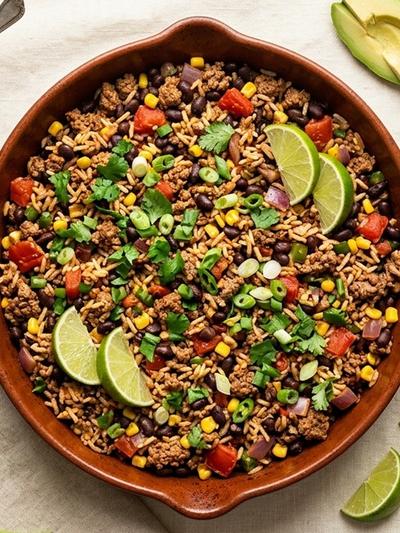
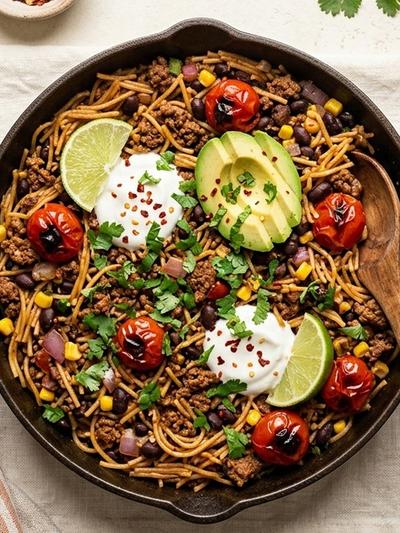
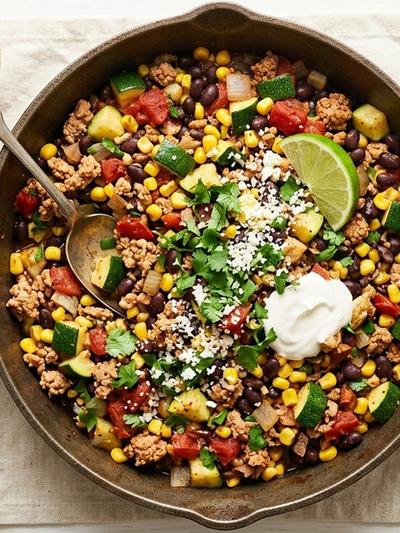
This one-pan Mexican skillet delivers 31 grams of protein per serving from a straightforward combination of eggs, black beans, and queso fresco simmered in a smoky chipotle-tomato sauce. Each portion provides 10 grams of fiber alongside iron from both the eggs and the beans, making it one of the most nutrient-dense lunches you can pull together in under 25 minutes. The dish comes together in a single skillet, which means minimal cleanup on a busy weekday.
The flavor builds from layering finely minced chipotles in adobo into fire-roasted diced tomatoes, creating a rich, gently spicy base that infuses each egg as it cooks. Cumin and smoked paprika deepen the warmth without overwhelming, while crumbled queso fresco adds a cool, salty contrast right at the end. The result tastes far more involved than the effort suggests — the kind of lunch that makes Tuesday feel like something worth showing up for.
For GLP-1 users, this skillet strikes the right balance between satisfying and manageable. The protein-to-volume ratio means you feel genuinely full without needing a large portion, and the gentle spice from the chipotle stays well below the threshold that might irritate a sensitive stomach. One pan, 25 minutes, and everything you need nutritionally in a single midday meal.
Why This Works on GLP-1
Each serving provides approximately 31 grams of complete protein, primarily from three whole eggs and a generous portion of black beans. Maintaining adequate protein intake is one of the most critical nutritional priorities for people taking Ozempic or similar GLP-1 receptor agonists, because these medications can substantially reduce total food intake. When you eat less overall, every meal needs to carry more protein per calorie to protect against muscle loss during weight management. This skillet delivers a strong protein-to-calorie ratio — roughly 31 grams in 455 calories — so every bite pulls its weight.
The 10 grams of fiber per serving come primarily from the black beans, which offer a gentler form of fiber than raw cruciferous vegetables or high-bran cereals. Many Zepbound users report digestive sensitivity, particularly during the early weeks or after dose adjustments, and cooked legumes tend to be easier to tolerate than raw fibrous foods. The fire-roasted tomatoes contribute additional soluble fiber without the roughness that can trigger bloating or discomfort.
Eggs are among the most bioavailable protein sources available, and they contribute meaningful amounts of choline and vitamin B12 — two nutrients that support energy metabolism and may help address the fatigue some people experience during early GLP-1 therapy. The iron from both eggs and black beans is particularly relevant for women on these medications, who may already face higher risk of iron insufficiency when consistently eating smaller portions.
Ingredients (serves 2)
For the chipotle-tomato base:
- 1 teaspoon olive oil
- 1 medium yellow onion, diced (about 1 cup / 150g)
- 1 medium red bell pepper, diced (about 1 cup / 150g)
- 2 cloves garlic, minced
- 1 teaspoon ground cumin
- 1/2 teaspoon smoked paprika
- 1–2 chipotle peppers in adobo, finely minced, plus 1 teaspoon adobo sauce
- 1 can (14.5 oz / 411g) fire-roasted diced tomatoes, undrained
- 1 cup (170g) canned black beans, drained and rinsed
- 1/4 teaspoon fine salt
For the eggs:
- 6 large eggs
- Freshly ground black pepper
For serving:
- 2 oz (56g) queso fresco, crumbled
- 1/4 cup fresh cilantro, roughly chopped
- 1 lime, cut into wedges
- Hot sauce (optional)
Instructions
Build the chipotle-tomato base:
Heat the olive oil in a 10-inch or 12-inch skillet over medium heat. Add the diced onion and bell pepper and cook, stirring occasionally, until softened and just beginning to color at the edges, about 5 minutes. Cooking the aromatics thoroughly first matters — raw onion and firm bell pepper can be harder to digest for GLP-1 users than their softened versions.
Add the minced garlic, cumin, and smoked paprika. Stir constantly for about 30 seconds until the spices become fragrant and coat the vegetables evenly. Blooming the spices in the hot oil deepens their flavor without needing to add more later.
Stir in the minced chipotle peppers with the adobo sauce, the fire-roasted tomatoes with all their juices, the black beans, and the salt. Bring to a gentle simmer and cook for 5 to 7 minutes, stirring occasionally, until the sauce thickens slightly and the flavors come together. The liquid should reduce by roughly a third — you want it saucy but not watery, so the eggs have something to nestle into.
Cook the eggs:
Using the back of a spoon, create 6 small wells in the sauce, spacing them as evenly as possible. Crack one egg into each well. Season the eggs lightly with freshly ground black pepper.
Reduce the heat to medium-low and cover the skillet with a lid or a sheet of aluminum foil. Cook for 5 to 7 minutes. Check at the 5-minute mark — the whites should be fully opaque and set while the yolks remain slightly runny in the center. For fully firm yolks, continue cooking an additional 1 to 2 minutes with the lid on.
Finish and serve:
- Remove the skillet from the heat. Scatter the crumbled queso fresco and chopped cilantro evenly over the top. Serve directly from the skillet with lime wedges alongside for squeezing over each portion. Divide so each serving gets 3 eggs with half the sauce and beans beneath them.
Nutrition per Serving
| Nutrient | Amount (approx.) |
|---|---|
| Calories | ~455 kcal |
| Protein | ~31g |
| Fat | ~21g |
| Carbohydrates | ~33g |
| Fiber | ~10g |
Estimated using USDA data for large eggs, canned black beans, fire-roasted diced tomatoes, and queso fresco. Actual values may vary with specific brands and egg sizes.
Practical Notes
Make the base ahead for weekday lunches. Double the chipotle-tomato-bean sauce and refrigerate it in individual portions. When ready to eat, reheat one portion in a small skillet, crack 2 to 3 fresh eggs into it, cover, and cook for 5 to 7 minutes. The base keeps well for up to 4 days, and cooking fresh eggs each time ensures the best texture — no rubbery reheated whites.
Start with one chipotle pepper. If you are new to GLP-1 medication or currently adjusting your dose, begin with a single chipotle and taste the sauce before adding more. You can always stir in additional adobo sauce at the table for extra smokiness. Many users find their spice tolerance fluctuates during the first few months of treatment, so starting mild is a low-risk approach.
Swap queso fresco for cottage cheese. If queso fresco is hard to find in your area, spoon 1/4 cup of low-fat cottage cheese over each serving instead — it softens into the warm sauce and adds roughly 7 extra grams of protein without changing the overall flavor significantly. Crumbled feta works too, though it is saltier, so reduce or skip the added salt if you go that route.
Eat slowly and save what you cannot finish. This recipe yields a generous portion by GLP-1 standards. If three eggs feel like too much food in one sitting, serve yourself two eggs with a few spoonfuls of the bean-tomato base and refrigerate the rest. Leftover base reheats in about 3 minutes on the stovetop, and you can crack a fresh egg into it the next day.
Add a small tortilla for scooping. One 6-inch corn tortilla contributes roughly 60 calories and 13 grams of carbohydrates, giving you something sturdy to scoop the sauce with. Warm it directly over a gas burner for about 30 seconds per side, or heat it in a dry skillet until pliable and lightly charred.
Frequently Asked Questions
Can I eat this during the early weeks of GLP-1 treatment when my appetite is very small?
What can I use instead of queso fresco if I am dairy-free?
How long does the assembled skillet keep, and how should I reheat it?
I have become more sensitive to spicy food since starting Wegovy. Can I make this without the chipotle?
Do the wells in the sauce actually matter, or can I just crack the eggs on top?
This article provides general food and nutrition guidance only. It does not constitute medical advice. Always consult your healthcare provider regarding your GLP-1 medication and individual nutritional needs.