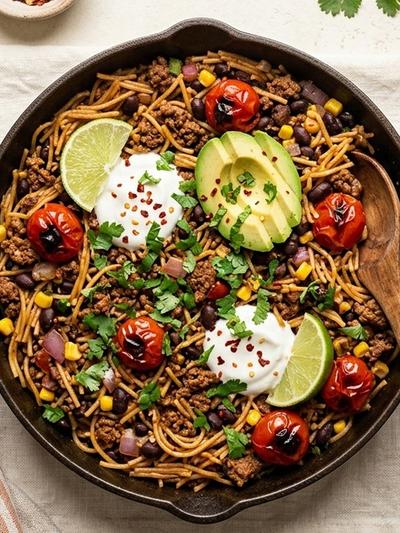
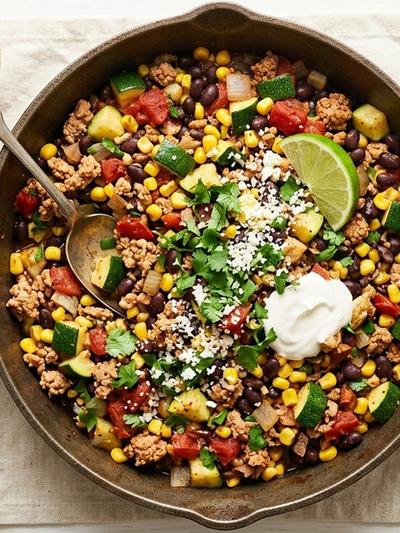
With 32 grams of protein and 9 grams of fiber per serving, this one-pot skillet delivers a complete Mexican-inspired lunch from a single pan. Lean ground beef provides the bulk of the protein while black beans round it out with additional plant-based amino acids, iron, and slow-digesting carbohydrates. The rice cooks directly in the seasoned tomato broth alongside everything else, absorbing every layer of flavor. At 385 calories, each serving hits a strong macro balance without tipping into heavy territory.
Ground cumin, smoked paprika, and a squeeze of fresh lime build a warm, earthy base that tastes far more complex than the short ingredient list suggests. Diced bell peppers add sweetness and crunch, while fire-roasted tomatoes bring a subtle smokiness that deepens as the rice absorbs the liquid. The finished dish has the satisfying chew of a well-made burrito filling — savory, bright, and deeply seasoned without any heat that might irritate a sensitive stomach.
For GLP-1 users, the one-pot format means lunch comes together in under 30 minutes with minimal cleanup — important on days when appetite is unpredictable and standing in the kitchen feels like a chore. The balanced ratio of protein, complex carbs, and fiber keeps blood sugar steady through the afternoon. Each serving is compact enough for a reduced appetite but nutrient-dense enough to prevent the energy crashes that can accompany very small meals.
Why This Works on GLP-1
Preserving lean muscle mass is one of the most important nutritional goals during GLP-1-assisted weight loss, and this skillet delivers 32 grams of protein per serving to support that. For people on Mounjaro or similar GLP-1 medications, reduced appetite often leads to unintentionally low protein intake — falling below the 25–30 gram threshold per meal that research suggests is necessary for effective muscle protein synthesis. By combining 93% lean ground beef with black beans, this recipe hits that target reliably without requiring enormous portions. A single moderate bowl covers roughly half the daily protein goal most GLP-1 users should aim for.
The 9 grams of fiber per serving come primarily from black beans and the vegetables, providing gentle bulk that supports regular digestion. GLP-1 medications slow gastric emptying, so the fiber here is moderate rather than extreme — enough to keep things moving without causing the bloating or discomfort that very high-fiber meals can trigger.
The combination of lean protein, complex carbohydrates from rice and beans, and the low fat content (10 grams per serving) makes this a meal that digests at a manageable pace. The iron from both beef and beans also addresses a common concern during calorie restriction, when micronutrient intake can drop alongside overall food volume.
Ingredients (serves 4)
For the skillet:
- 1 lb (450g) 93% lean ground beef
- 1 can (15 oz / 425g) black beans, drained and rinsed
- 1 can (14.5 oz / 410g) fire-roasted diced tomatoes, undrained
- 3/4 cup (150g) long-grain white rice, rinsed
- 1 medium red bell pepper, diced (about 1 cup / 150g)
- 1 small yellow onion, finely diced (about 3/4 cup / 115g)
- 2 cloves garlic, minced
- 1 1/2 cups (360ml) low-sodium chicken broth
- 1 1/2 tsp ground cumin
- 1 tsp smoked paprika
- 1/2 tsp dried oregano (Mexican oregano if available)
- 1/2 tsp kosher salt, plus more to taste
- 1/4 tsp black pepper
- 1 tsp olive oil
For serving:
- 2 tbsp fresh cilantro, chopped
- 1 medium lime, cut into wedges
- 2 tbsp plain nonfat Greek yogurt per serving (optional)
Instructions
Brown the beef and build the base:
Heat olive oil in a large (12-inch / 30cm) skillet or deep sauté pan over medium-high heat. Add the ground beef and break it into small crumbles using a wooden spoon. Cook for 4–5 minutes until browned through with no pink remaining. The smaller you break the crumbles, the more evenly the flavor distributes through the finished dish.
Push the beef to one side and add the diced onion and bell pepper to the cleared space. Sauté for 2–3 minutes until the onion turns translucent and the pepper softens slightly. Add the garlic and cook for 30 seconds until fragrant, then stir everything together.
Add the cumin, smoked paprika, oregano, salt, and pepper. Stir to coat the meat and vegetables evenly — toasting the spices briefly in the fat deepens their flavor significantly compared to adding them later with the liquid.
Cook the rice in the skillet:
Pour in the fire-roasted tomatoes with their juices and the chicken broth. Stir well, scraping up any browned bits from the bottom of the pan. These fond bits add umami depth to the cooking liquid.
Add the rinsed rice and stir to distribute it evenly. Bring the mixture to a boil, then immediately reduce heat to low. Cover the skillet tightly with a lid or aluminum foil.
Simmer covered for 18–20 minutes without lifting the lid. The rice needs the trapped steam to cook evenly. Resist the urge to stir — disturbing the rice releases excess starch and can make the dish gummy.
Add the beans and finish:
Remove the lid and scatter the drained black beans over the surface. Use a fork to gently fold them in without mashing the rice. Cover again and let sit for 3 minutes off the heat — this allows the beans to warm through and the rice to absorb any remaining liquid.
Fluff with a fork, taste for salt, and squeeze half a lime over the entire skillet. Divide among four bowls, top each with cilantro and a lime wedge, and add a spoonful of Greek yogurt if desired.
Nutrition per Serving
| Nutrient | Amount (approx.) |
|---|---|
| Calories | ~385 kcal |
| Protein | ~32g |
| Fat | ~10g |
| Carbohydrates | ~38g |
| Fiber | ~9g |
Estimates based on 93% lean ground beef, canned black beans, long-grain white rice, and fire-roasted diced tomatoes. Greek yogurt topping not included in base calculation.
Practical Notes
Meal prep storage. This skillet reheats exceptionally well, which makes it a strong candidate for weekday lunch prep. Divide into individual containers while still warm, refrigerate for up to 4 days, and reheat in the microwave with a splash of water to restore moisture. The rice absorbs liquid as it sits, so that added tablespoon of water prevents dryness.
Swap the grain for lower carbs. Replace the white rice with riced cauliflower for a lower-carbohydrate version that drops the dish to roughly 290 calories per serving. Add the cauliflower rice at the same stage but reduce the broth to 1 cup and the cooking time to 10 minutes. The texture changes, but the flavor base stays the same.
Small-appetite servings. If your GLP-1 medication has significantly reduced your hunger, divide this into 6 portions instead of 4. Each smaller serving still provides about 21 grams of protein and 255 calories — enough to be nutritionally meaningful without forcing volume you cannot comfortably eat.
Freeze individual portions. This recipe freezes well for up to 2 months. Let portions cool completely, then freeze in airtight containers. Thaw overnight in the refrigerator and reheat thoroughly. Having high-protein meals in the freezer prevents reaching for low-nutrient convenience foods on days when cooking feels impossible.
Add gentle vegetables. Diced zucchini or baby spinach can be stirred in during the last 3 minutes of cooking for extra volume and nutrients without significantly changing the calorie count. Both are easy to digest and absorb the Mexican spice blend well.
Frequently Asked Questions
I just started Wegovy and can barely eat half a cup at a time — is this recipe still worth making?
Can I use ground turkey or chicken instead of beef?
How long does this keep in the fridge, and does the rice get mushy?
Will the spices cause stomach discomfort on GLP-1 medication?
Do I need to rinse the rice before cooking?
This article provides general food and nutrition guidance only. It does not constitute medical advice. Always consult your healthcare provider regarding your GLP-1 medication and individual nutritional needs.