Each serving of this Tuscan-style budino provides 28 grams of protein primarily from cannellini beans, which blend into a remarkably smooth, custard-like base that tastes nothing like beans. You also get 10 grams of fiber per portion, making this one of the most nutrient-dense desserts you can pull from a slow cooker. The combination of white beans and vanilla protein powder creates a complete amino acid profile that supports muscle maintenance while keeping fat below 9 grams per serving.
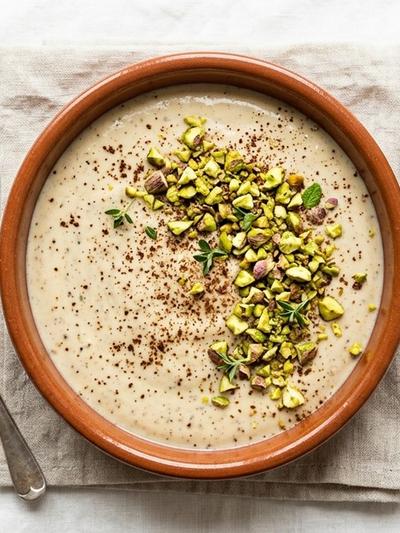
Budino is Italian for pudding, and this version borrows from Tuscany's love of simple, honest ingredients. Wildflower honey and fresh lemon zest brighten the base, ground cinnamon adds warmth without heaviness, and almond flour contributes a gentle nuttiness that rounds everything out. The texture lands somewhere between panna cotta and a baked custard, silky enough to eat with a spoon but firm enough to hold its shape when chilled.
For people on GLP-1 medications, dessert can feel like the hardest category to navigate. This budino solves the problem by delivering real sweetness in a portion that works with a reduced appetite. The slow cooker does all the heavy lifting, cooking the pudding gently over two and a half hours so you get a set custard without any of the fussiness of water baths or temperamental oven temperatures.
Why This Works on GLP-1
Muscle preservation is one of the most important nutritional priorities during GLP-1-assisted weight loss, and desserts rarely contribute meaningfully to that goal. This budino changes the math. At 28 grams of protein per serving, a single portion covers roughly half of a typical protein target for Mounjaro users. The protein comes from a blend of cannellini beans, eggs, and protein powder, each contributing a different amino acid profile that together supports muscle protein synthesis more effectively than any single source alone.
The 10 grams of fiber per serving comes almost entirely from the white beans, and it is the soluble type that forms a gentle gel in the digestive tract. This slows gastric emptying further, which complements the mechanism of GLP-1 medications rather than fighting it. Soluble fiber also helps stabilize blood sugar after eating something sweet, preventing the spike-and-crash pattern that can trigger nausea in sensitive stomachs.
At 375 calories and only 8 grams of fat, this dessert sits well below the threshold where richness becomes a problem for Zepbound users dealing with slowed digestion. The honey provides quick-release natural sugar for energy, while the beans and protein powder supply slow-digesting nutrients that keep you satisfied for hours. It is a dessert that earns its place in a calorie-conscious plan rather than borrowing against the rest of your daily intake.
Ingredients (serves 4)
For the budino base:
- 2 cans (15 oz / 425g each) cannellini beans, drained and rinsed
- 1½ cups (360ml) unsweetened almond milk
- ⅔ cup (74g) vanilla protein powder
- 2 large eggs
- 2 tablespoons (14g) almond flour
- 3 tablespoons (63g) honey
- 1 teaspoon vanilla extract
- Zest of 1 lemon
- ¼ teaspoon ground cinnamon
- Pinch of fine sea salt
- Cooking spray
For the topping:
- 2 tablespoons (14g) sliced almonds, toasted
- 1 teaspoon honey
- Pinch of flaky sea salt
Instructions
Prepare the budino base:
Add the drained cannellini beans and almond milk to a blender or food processor. Blend on high for 60 to 90 seconds until completely smooth with no visible bean pieces remaining. Scrape down the sides once during blending to catch any stray chunks. The mixture should pour like heavy cream — this step determines the final texture of your budino, so do not rush it.
Add the eggs, protein powder, almond flour, honey, vanilla extract, lemon zest, cinnamon, and salt to the blender. Pulse five or six times, then blend on medium for 20 seconds until everything is uniformly combined. Avoid over-blending at this stage, which can incorporate too much air and cause the pudding to rise and then collapse during cooking.
Lightly coat the inside of a 4-quart or 6-quart slow cooker insert with cooking spray, making sure to cover the bottom and about two inches up the sides. Pour the budino batter into the prepared insert and smooth the surface with a spatula.
Cook low and slow:
Place a folded clean kitchen towel or two layers of paper towels across the top of the slow cooker insert before setting the lid in place. This absorbs condensation that would otherwise drip onto the pudding surface and create a waterlogged top layer. Make sure the towel does not hang over the edges near the heating element.
Cook on LOW for 2 hours and 15 minutes to 2 hours and 30 minutes. The budino is done when the edges are set and pull slightly away from the sides, but the center still has a gentle jiggle when you tap the insert. It will firm up considerably as it cools. If your slow cooker runs hot, start checking at 2 hours.
Turn off the slow cooker, remove the lid and towel, and let the budino cool to room temperature in the insert, about 45 minutes. Then cover with plastic wrap pressed directly against the surface to prevent a skin from forming and refrigerate for at least 2 hours, or overnight for the best texture.
Portion and serve:
Toast the sliced almonds in a dry skillet over medium heat for 2 to 3 minutes, shaking the pan frequently, until golden and fragrant. Set aside to cool.
Scoop or slice the chilled budino into 4 portions. Top each serving with toasted almonds, a quarter-teaspoon drizzle of honey, and a small pinch of flaky sea salt. The salt is not optional — it lifts the honey and lemon flavors dramatically.
Nutrition per Serving
| Nutrient | Amount (approx.) |
|---|---|
| Calories | ~375 kcal |
| Protein | ~28g |
| Fat | ~8g |
| Carbohydrates | ~46g |
| Fiber | ~10g |
Estimates based on canned cannellini beans, standard whey-based vanilla protein powder, large eggs, and raw honey. Exact values vary by brand.
Practical Notes
Make it ahead for the full week. This budino keeps beautifully in the refrigerator for up to 5 days in individual airtight containers. The texture actually improves after 24 hours as the starches from the beans fully set. Portion it into four containers right after the initial chill so you have grab-and-go desserts ready throughout the week.
Blend the beans longer than you think. The single most common mistake with bean-based desserts is under-blending. You want zero graininess. If your blender struggles with the initial bean and milk mixture, add the liquid first, then the beans in two batches. A high-speed blender like a Vitamix works best, but a standard blender on high for 90 full seconds will get you there.
Swap the protein powder carefully. Plant-based protein powders (pea, rice, or hemp blends) work well here and keep the recipe fully vegan if you also substitute the eggs with 2 tablespoons of ground flaxseed mixed with 6 tablespoons of water. Collagen peptides dissolve cleanly but do not set as firmly. Avoid casein powder, which can become gummy in slow-cooked applications.
Adjust sweetness to your medication phase. Many people in early weeks of GLP-1 treatment find their sweet tooth diminishes significantly. Start with 2 tablespoons of honey instead of 3, taste the batter before pouring it into the slow cooker, and add more only if needed. The lemon zest and cinnamon provide enough flavor interest that the budino works even at lower sweetness levels.
Do not skip the kitchen towel trick. Slow cookers generate significant condensation on the underside of the lid, and those water droplets will fall directly onto your budino. The towel catches them, giving you a smooth, even surface. This technique works for any slow cooker dessert, from rice puddings to cheesecakes.
Frequently Asked Questions
Can I eat this budino if I experience nausea on GLP-1 medications?
What can I use instead of cannellini beans?
How should I store and reheat leftovers?
What if my appetite is very small and I cannot finish a full portion?
Can I cook this on HIGH instead of LOW to save time?
This article provides general food and nutrition guidance only. It does not constitute medical advice. Always consult your healthcare provider regarding your GLP-1 medication and individual nutritional needs.