Each serving of this slow cooker pudding delivers 28 grams of complete plant-based protein and 8 grams of fiber from a combination of red lentils, Greek yogurt, and a scoop of protein powder. Red lentils contain all the essential amino acids needed for muscle maintenance, though in lower proportions than animal sources, which is why the yogurt and protein powder round out the profile. The dish also provides iron, folate, and potassium from the lentils and dates.
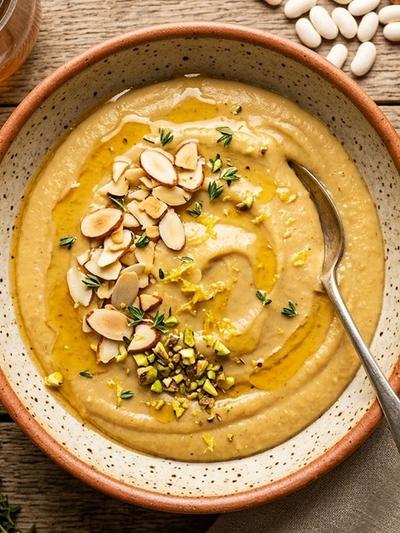
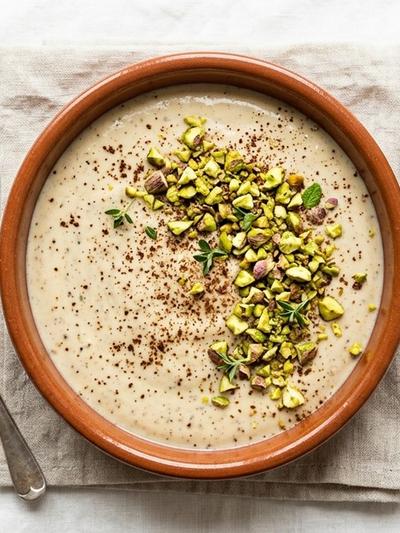
Red lentils are the secret to this pudding's texture. Unlike brown or green varieties, they have no hull and disintegrate completely during the long, gentle cook, producing a silky base that tastes more like semolina pudding than anything legume-related. Medjool dates dissolve into caramel-like pockets of sweetness, while orange zest and cardamom lift the whole bowl with fragrance. The chopped pistachios on top add the only crunch, cutting through the creaminess with a buttery, slightly resinous bite.
For GLP-1 users, a dessert that actually contributes to daily protein targets rather than working against them is worth its weight in gold. The slow cooker format means no hovering over a stove, no risk of scorching, and no temptation to taste-test your way through the batch. Set it before a workout or an errand, come back to a finished pudding, and portion it into jars for the week.
Why This Works on GLP-1
The 28 grams of protein per serving puts this dessert in the same league as a chicken breast when it comes to supporting lean muscle during weight loss. Muscle preservation is one of the primary nutritional concerns for people on medications like Mounjaro or Wegovy, because rapid fat loss can pull muscle tissue along with it if protein intake drops below about 1.2 grams per kilogram of body weight per day. A dessert that delivers nearly a third of that daily target makes it far easier to hit total protein without relying solely on savory meals.
The fiber here comes primarily from the red lentils and dates, both of which are soluble-fiber-dominant. Soluble fiber forms a gel during digestion that slows glucose absorption, which complements the blood sugar regulation already provided by GLP-1 medications. Because the lentils are fully cooked and soft, they are unlikely to cause the bloating or cramping that high-fiber raw vegetables sometimes trigger in GLP-1 users with slowed gastric emptying.
The fat content is notably low at 4 grams per serving, almost all of it from the pistachios. Low-fat desserts digest more quickly than butter-heavy alternatives, which matters when your stomach is already emptying at a reduced rate. The natural sugars from dates and honey provide sweetness without the sharp insulin spike of refined sugar, making this a metabolically gentle treat.
Ingredients (serves 4)
For the pudding:
- 1 cup (190g) dried red lentils, rinsed and drained
- 2 cups (480ml) unsweetened almond milk
- 3/4 cup (180ml) water
- 4 Medjool dates, pitted and roughly chopped
- 1 tablespoon finely grated orange zest (from 1 large orange)
- 1 teaspoon ground cinnamon
- 1/4 teaspoon ground cardamom
- 1/8 teaspoon fine sea salt
To finish:
- 1 scoop (30g) vanilla protein powder
- 1 cup (240g) plain nonfat Greek yogurt
- 1 tablespoon (21g) honey
For topping:
- 1/2 cup (120g) plain nonfat Greek yogurt
- 2 tablespoons (16g) shelled pistachios, roughly chopped
- Light drizzle of honey (optional)
Instructions
Prepare the slow cooker:
- Rinse the red lentils under cold running water in a fine-mesh sieve until the water runs clear. This removes surface starch that can make the pudding gummy rather than silky.
- Add the rinsed lentils, almond milk, water, chopped dates, orange zest, cinnamon, cardamom, and salt to the slow cooker. Stir once to distribute the dates and spices evenly.
- Cover and cook on LOW for 3 hours, stirring once at the halfway mark. The pudding is done when the lentils have completely dissolved into a thick, creamy porridge with no visible lentil pieces. If you still see intact lentil halves, continue cooking in 20-minute increments.
Finish the pudding:
- Turn off the slow cooker and remove the lid. Let the pudding cool for 10 to 15 minutes — this step matters because adding protein powder and yogurt to very hot liquid creates lumps and a chalky texture.
- In a small bowl, whisk the protein powder into the 1 cup of Greek yogurt until completely smooth. This pre-mixing step prevents the powder from clumping when it hits the warm pudding.
- Fold the yogurt-protein mixture and the honey into the pudding, stirring gently until the color is uniform. The pudding will loosen slightly from the yogurt; it will thicken again as it cools.
Serve:
- Divide the pudding among four bowls or jars. Top each portion with 2 tablespoons of the remaining Greek yogurt, a scattering of chopped pistachios, and a thin drizzle of honey if desired. Serve warm, at room temperature, or chilled — each temperature gives a slightly different experience.
Nutrition per Serving
| Nutrient | Amount (approx.) |
|---|---|
| Calories | ~375 kcal |
| Protein | ~28g |
| Fat | ~4g |
| Carbohydrates | ~59g |
| Fiber | ~8g |
Estimates based on USDA data for dried red lentils, nonfat Greek yogurt, Medjool dates, unsweetened almond milk, and shelled pistachios. Actual values vary by brand of protein powder and yogurt.
Practical Notes
This pudding thickens considerably as it cools. Straight from the slow cooker it pours like thick custard, but after refrigeration it sets to a scoopable consistency similar to rice pudding. If you prefer it looser for chilled servings, stir in a splash of almond milk before eating.
Meal prep storage is straightforward. Portion into four glass jars or airtight containers and refrigerate for up to 5 days. Add the pistachio topping fresh each day so it stays crunchy. The pudding does not freeze well — the yogurt separates during thawing and the texture turns grainy.
You can skip the protein powder if you prefer whole-food ingredients only. Without it, each serving drops to about 22 grams of protein. To compensate, increase the Greek yogurt stirred into the pudding to 1.5 cups (360g) and add 2 tablespoons of almond butter, which brings protein back above 25 grams while adding a toasted, nutty flavor.
Temperature affects how sweet it tastes. Cold dulls sweetness perception, so if you plan to eat this chilled, consider adding an extra teaspoon of honey or a fifth date to the slow cooker. Warm, the four dates and tablespoon of honey are plenty.
Start with a smaller portion if you are in the first weeks of GLP-1 medication. A half serving of roughly 3/8 cup still delivers 14 grams of protein and is gentle enough for a stomach still adjusting to slower gastric emptying. You can always have more if appetite allows.
Frequently Asked Questions
Will I taste the lentils in this pudding?
Can I use a different plant milk instead of almond milk?
How should I reheat refrigerated portions?
I can only eat very small amounts right now — how do I make this work?
Can I cook this on HIGH instead of LOW to save time?
This article provides general food and nutrition guidance only. It does not constitute medical advice. Always consult your healthcare provider regarding your GLP-1 medication and individual nutritional needs.