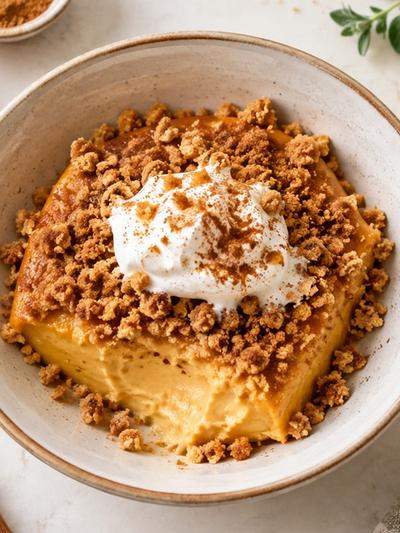
Each serving of this slow cooker carrot cake pudding packs 26 grams of protein from three complementary sources — chickpeas, low-fat cottage cheese, and vanilla protein powder — building a dessert that genuinely supports your daily protein targets. With 5 grams of fiber per portion and just 325 calories, this is the kind of sweet treat you can plan into your day without rethinking everything else you ate. The chickpeas disappear entirely when blended smooth, leaving behind a custard-like base that holds the warm spices and grated carrots beautifully.
Think of the best carrot cake you've ever had, then imagine it as a warm, scoopable pudding. Ground cinnamon, nutmeg, and ginger layer together into the same cozy warmth, while finely grated carrots add natural sweetness and pockets of moisture throughout. Golden raisins contribute small bursts of honeyed flavor, and a scattering of chopped walnuts on top delivers the crunch every good carrot cake needs. The maple syrup ties it all together with a clean, rounded sweetness that doesn't overpower.
Slow cooker desserts work especially well for GLP-1 users because the low, sustained heat creates a remarkably soft texture that's gentle on digestion. The portion — roughly three-quarters of a cup per serving — satisfies without the heaviness that larger desserts bring. You invest 15 minutes of hands-on prep, walk away for three hours, and return to a kitchen that smells like a bakery.
Why This Works on GLP-1
Muscle preservation is one of the most pressing concerns during GLP-1-assisted weight loss, and every gram of protein you can work into your day counts. This pudding delivers 26 grams per serving — roughly the same as a chicken breast — split across chickpeas, cottage cheese, and protein powder. That combination matters because each source has a different amino acid profile, improving overall protein quality. For people on Mounjaro or similar GLP-1 receptor agonists who find that main courses have shrunk considerably, having a high-protein dessert in the refrigerator means you don't have to force another savory meal to hit your targets.
The 5 grams of fiber per serving — primarily from the chickpeas and oat flour — supports steady digestion without the bloating risk that very high-fiber desserts can trigger. The warm spice blend is more than decorative: ginger has a long track record of soothing digestive discomfort, and cinnamon supports stable blood sugar responses after eating, both meaningful when your medication is already slowing gastric emptying.
At 325 calories and only 6 grams of fat, this pudding sits light. That matters during the early weeks of treatment, when many Wegovy users report that rich, fatty desserts intensify nausea. By keeping the fat moderate and the texture soft, this recipe avoids the heaviness that sends GLP-1 users reaching for an antacid instead of a second spoonful.
Ingredients (serves 4)
For the pudding base:
- 1 can (15 oz / 425g) chickpeas, drained and rinsed
- 1 cup (226g) low-fat cottage cheese (1% milkfat)
- 2 scoops (60g) vanilla protein powder
- 2 medium carrots, finely grated (~1 cup / 110g)
- 1/3 cup (40g) oat flour
- 3 tablespoons (45ml) pure maple syrup
- 1/4 cup (60ml) unsweetened almond milk
- 1/4 cup (65g) unsweetened applesauce
- 1 1/2 teaspoons ground cinnamon
- 1/2 teaspoon ground nutmeg
- 1/4 teaspoon ground ginger
- 1 teaspoon vanilla extract
- 1/4 teaspoon fine sea salt
- 2 tablespoons (20g) golden raisins
- Cooking spray
For topping:
- 2 tablespoons (15g) chopped walnuts
- Pinch of ground cinnamon
Instructions
Prepare the pudding batter:
Add the drained chickpeas, cottage cheese, and almond milk to a blender or food processor. Blend for 60 to 90 seconds until completely smooth — scrape down the sides once halfway through. This step eliminates any grainy texture and creates the custard-like foundation that makes the finished pudding feel like dessert, not a protein shake.
Transfer the blended mixture to a large mixing bowl. Add the protein powder, oat flour, maple syrup, applesauce, cinnamon, nutmeg, ginger, vanilla extract, and salt. Stir with a spatula until the batter is uniform and no dry pockets of protein powder remain. The consistency will be thick, like pancake batter.
Fold in the grated carrots and golden raisins by hand, distributing them evenly throughout. The carrots will release moisture as they cook, keeping the pudding soft in the center even after three hours of slow heat.
Slow cook the pudding:
Lightly coat the inside of a 3- to 4-quart slow cooker with cooking spray. Pour the batter in and spread it evenly with the back of the spatula.
Place a clean kitchen towel or two layers of paper towels between the lid and the slow cooker insert before closing. This absorbs the condensation that forms on the underside of the lid during cooking — without this step, water drips onto the surface and makes the top layer soggy.
Cook on LOW for 3 hours. The pudding is done when the edges are set and pulling slightly away from the sides and the center has a gentle jiggle similar to a baked custard. Avoid opening the lid during the first 2 hours, as the trapped steam is part of the cooking process.
Finish and serve:
- Turn off the slow cooker and remove the lid. Let the pudding rest uncovered for 10 minutes — it will firm up noticeably as it cools. Scoop into bowls and top each serving with chopped walnuts and a light dusting of cinnamon. Serve warm or at room temperature.
Nutrition per Serving
| Nutrient | Amount (approx.) |
|---|---|
| Calories | ~325 kcal |
| Protein | ~26g |
| Fat | ~6g |
| Carbohydrates | ~43g |
| Fiber | ~5g |
Estimates based on USDA values for canned chickpeas, 1% cottage cheese, whey-based vanilla protein powder, and standard pantry ingredients. Actual values vary by brand.
Practical Notes
This stores beautifully for meal prep. Portion the cooled pudding into four airtight containers and refrigerate for up to 4 days. Reheat individual servings in the microwave for 45 to 60 seconds. The flavor actually improves overnight as the spices meld together and the texture firms to something closer to a dense carrot cake — many people prefer day-two leftovers to the fresh batch.
Choose the right protein powder. Vanilla or vanilla bean flavor works best here and complements the warm spices without competing. Avoid protein powders with artificial sweeteners like sucralose or sugar alcohols if you're sensitive to GI side effects — many GLP-1 users report these ingredients amplify nausea. A simple whey isolate or pea protein isolate with short ingredient lists gives the cleanest result.
Adjust sweetness for your changing palate. GLP-1 medications frequently shift taste preferences, and many users discover they need far less sweetness than before treatment. Start with 2 tablespoons of maple syrup instead of 3, taste the batter, and add more only if needed. You can also replace the maple syrup with a sugar-free maple-flavored syrup to shave roughly 50 calories per serving.
Try a cream cheese drizzle for occasions. Blend 2 tablespoons of light cream cheese with 1 tablespoon of almond milk and a drop of vanilla until pourable, then drizzle over the warm pudding. It adds roughly 25 calories per serving and captures the full cream-cheese-frosting carrot cake experience — worthwhile when you want the dessert to feel celebratory.
Freeze individual portions for longer storage. This pudding freezes well for up to 2 months. Portion into freezer-safe containers, leaving a small gap at the top for expansion. Thaw overnight in the refrigerator and reheat gently. The texture after freezing is slightly denser but still very enjoyable — closer to a firm custard than the original soft pudding.
Frequently Asked Questions
Can I taste the chickpeas in the finished pudding?
Can I use plant-based protein powder instead of whey?
How should I reheat leftovers without drying them out?
I'm in my first weeks on GLP-1 and can barely eat — how do I adjust this?
Can I cook this on HIGH instead of LOW?
This article provides general food and nutrition guidance only. It does not constitute medical advice. Always consult your healthcare provider regarding your GLP-1 medication and individual nutritional needs.