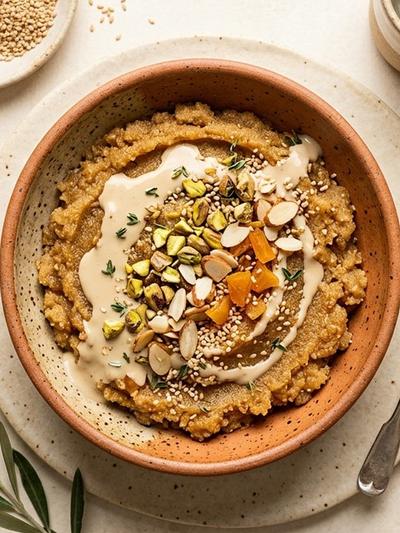
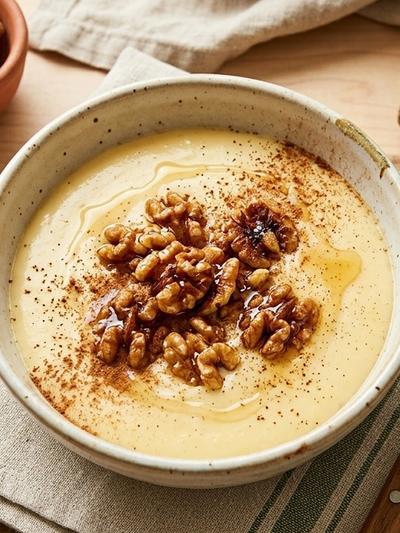
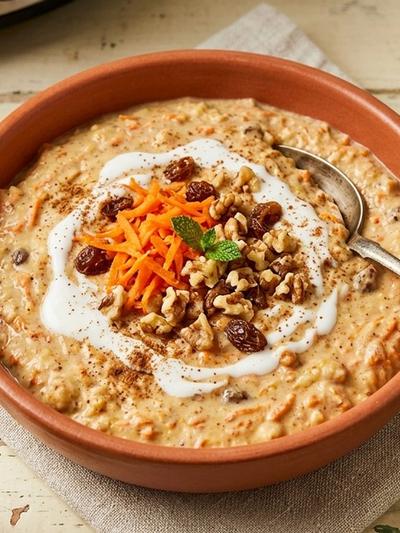
Each serving of this chilled pudding delivers 29 grams of protein from three complementary sources: chickpea flour forms the plant-based backbone with its complete amino acid profile and soluble fiber, Greek yogurt provides slow-digesting casein for sustained fullness, and vanilla protein powder fills out the remaining amino acids. At roughly 315 calories per portion, the macros sit in an ideal zone for anyone managing weight — high protein, moderate carbohydrate, and just 9 grams of fat. The saffron-gold color alone signals that this is not just another vanilla pudding.
The flavor architecture here is pure Levantine dessert tradition. Saffron blooms in warm water and threads its honeyed, almost metallic floral character through the entire pudding base. Rose water arrives off-heat, preserving its delicate perfume rather than cooking it away, while ground cardamom adds warm spice underneath. Fresh orange zest brightens the whole profile and keeps it from veering too heavy. Crushed pistachios on top provide green color contrast, nutty crunch, and healthy fats in a single ingredient.
This is a pudding built for smaller appetites. The thick, set texture created by cooked chickpea flour means three or four spoonfuls feel genuinely indulgent, not like you are eating air. There is no heavy cream, no butter, no refined sugar overload — just honest ingredients working together. The entire recipe comes together in one saucepan in about fifteen minutes of active cooking, then chills in the refrigerator while you do something else.
Why This Works on GLP-1
The 29 grams of protein per serving matter specifically because GLP-1 medications like Mounjaro suppress appetite so effectively that total daily protein intake can drop below what your body needs to maintain lean muscle mass. Muscle preservation is critical during weight loss — it keeps your resting metabolic rate stable, protects joint health, and prevents the "skinny fat" outcome that aggressive calorie restriction sometimes produces. Getting nearly 30 grams from a dessert means you can hit your daily protein target even when your main meals are smaller than they used to be. The protein here comes from three sources with different digestion rates, which provides a longer window of amino acid availability compared to a single-source protein food.
Chickpea flour contributes about 4 grams of fiber per serving, mostly soluble fiber that forms a gel in the digestive tract. For people on Wegovy or other semaglutide medications, this matters because soluble fiber tends to be gentler on the stomach than the insoluble kind found in raw vegetables and bran. The smooth, cooked texture of the pudding further reduces any digestive friction — there is nothing crunchy, raw, or hard to break down.
Saffron contains crocin and safranal, compounds studied for their mild mood-supportive and anti-inflammatory effects. While the amount in a single serving is modest, the cumulative benefit of regularly including saffron in your diet adds up over time. The low fat content also matters practically: high-fat desserts tend to sit heavily during the delayed gastric emptying that GLP-1 medications cause, but this pudding moves through the digestive system more comfortably.
Ingredients (serves 4)
For the pudding:
- 1 cup (90g) chickpea flour (also labeled besan or gram flour)
- 2½ cups (600ml) unsweetened oat milk
- 2 scoops (60g) vanilla protein powder
- ¼ tsp saffron threads
- 2 tbsp warm water
- 2 tbsp (42g) honey
- ½ tsp ground cardamom
- 1 tsp finely grated orange zest
- ¼ tsp salt
- 1 tbsp rose water
- 1½ cups (360g) plain Greek yogurt, 2% fat
For the topping:
- ¼ cup (30g) shelled pistachios, finely chopped
- Dried rose petals for garnish (optional)
Instructions
Bloom the saffron:
- Place the saffron threads in a small bowl and pour the 2 tablespoons of warm water over them. Let them steep for at least 5 minutes while you prepare everything else. Blooming extracts both color and flavor — dry saffron stirred directly into a pot releases only a fraction of its character.
Build the pudding base:
In a medium saucepan, whisk together the chickpea flour and vanilla protein powder until evenly combined. Pour in the oat milk in a slow stream, whisking constantly to prevent lumps. Take your time here — chickpea flour clumps stubbornly if the liquid hits it all at once.
Add the honey, ground cardamom, orange zest, salt, and the bloomed saffron with all of its soaking liquid. Whisk until the mixture is smooth and uniformly golden.
Set the saucepan over medium-low heat. Whisk continuously as it comes to a gentle simmer, about 4 to 5 minutes. The mixture will begin to thicken noticeably once it reaches a simmer.
Reduce the heat to low and keep whisking for another 7 to 8 minutes. The pudding is done when it coats the back of a spoon thickly and holds a brief trail when you drag your finger through it. The raw chickpea flour taste will have cooked out entirely at this point — if it still tastes beany, give it another minute or two.
Remove the saucepan from the heat and let the pudding cool for 5 minutes, stirring occasionally to release steam. This brief rest prevents the hot mixture from breaking the yogurt proteins when you fold them together.
Fold in yogurt and finish:
Add the Greek yogurt and rose water to the saucepan. Fold gently with a spatula until the mixture is completely smooth and homogeneous. The yogurt will thin the pudding slightly and add a subtle tang that balances the honey sweetness.
Divide the pudding evenly among 4 ramekins, small bowls, or glass jars. Cover each one with plastic wrap pressed directly onto the surface of the pudding — this contact prevents a skin from forming as it chills.
Refrigerate for at least 2 hours, or overnight for the best set texture.
When ready to serve, top each pudding with a tablespoon of chopped pistachios and a few dried rose petals if you have them. The pistachios should go on at the last moment to keep their crunch.
Nutrition per Serving
| Nutrient | Amount (approx.) |
|---|---|
| Calories | ~315 kcal |
| Protein | ~29g |
| Fat | ~9g |
| Carbohydrates | ~33g |
| Fiber | ~4g |
Calculated based on chickpea flour (90g), unsweetened oat milk (600ml), 2% Greek yogurt (360g), vanilla whey protein powder (60g), honey (42g), and pistachios (30g). Actual values vary by brand.
Practical Notes
Storage and meal prep. These puddings keep beautifully in the refrigerator for up to 4 days, which makes them ideal for batch dessert prep. Store with the plastic wrap pressed against the surface and add the pistachio topping only when you are ready to eat. They actually improve after a full overnight chill — the saffron flavor deepens and the texture firms to a perfect spoonable consistency.
Protein powder choice matters. Vanilla whey isolate blends most seamlessly here, but a vanilla plant-based protein powder (pea or rice blend) works if you want the entire recipe dairy-free — just swap the Greek yogurt for coconut yogurt as well. Avoid casein-heavy powders, which can turn gummy when heated. If your protein powder is already sweetened, reduce the honey to 1 tablespoon and taste before adding more.
Saffron substitution. Real saffron gives this pudding its signature color and floral depth, but it is expensive. A quarter teaspoon of ground turmeric plus an extra half teaspoon of vanilla extract creates a similar golden color with a different but still pleasant flavor profile. The turmeric version will be slightly more earthy and less perfumed.
For very small appetites. If you are in the early weeks of GLP-1 treatment and struggling with portion sizes, divide this recipe into 6 portions instead of 4. Each smaller serving still provides about 19 grams of protein — meaningful for a dessert — and you can always eat a second portion later if your appetite allows. The individual ramekin format makes this easy to scale.
Rose water intensity. Rose water brands vary wildly in concentration. Start with 1 tablespoon, taste the finished pudding before portioning, and add up to another teaspoon if the rose flavor is too subtle. Cortas and Sadaf are reliable Middle Eastern brands that work well in this quantity. If you have never cooked with rose water before, err on the side of less — it is easier to add than to fix an overly floral pudding.
Frequently Asked Questions
Can I eat this pudding if I just started Mounjaro or another GLP-1 medication?
What can I use instead of chickpea flour?
How long does this pudding keep, and can I freeze it?
I have a small appetite on Wegovy — how do I get enough protein from this?
Why do I need to let the pudding cool before adding the Greek yogurt?
This article provides general food and nutrition guidance only. It does not constitute medical advice. Always consult your healthcare provider regarding your GLP-1 medication and individual nutritional needs.