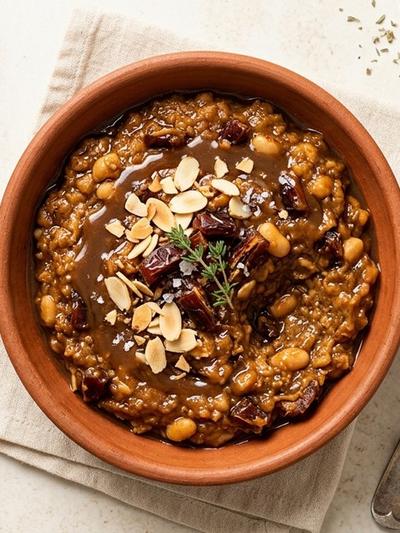
Each serving of this warm, autumn-inspired pudding provides 27 grams of complete plant-based protein, 9 grams of fiber, and only 380 calories. The protein comes from two sources working together: cannellini beans blended into a silky base and vanilla plant protein powder stirred in at the end to preserve its nutritional value. You also get a solid dose of potassium from the beans and quercetin from the apple cider, both nutrients that support cardiovascular function during active weight management.
The flavor here is unmistakably American comfort: warm apple cider simmered with diced Granny Smith apple, a generous pour of maple syrup, and layered cinnamon-nutmeg warmth that recalls the best parts of apple pie without any of the crust. The cannellini beans disappear entirely once blended, leaving behind a pudding that is thick, velvety, and naturally creamy without a drop of heavy cream. Toasted walnut pieces scattered over the top add crunch and a subtle bitterness that balances the sweetness beautifully.
This dessert is built for smaller appetites. A single bowl feels indulgent and satisfying even at a modest portion, thanks to the combination of fiber-rich beans and slow-digesting plant protein. The texture is soft and gentle on the stomach, and the natural sweetness from apple cider and maple means you need very little added sugar.
Why This Works on GLP-1
Preserving lean muscle mass is one of the most important nutritional priorities for anyone on GLP-1 medications like Mounjaro or Wegovy. When your appetite shrinks and calorie intake drops, your body can break down muscle for energy unless you consistently hit adequate protein targets. This pudding delivers 27 grams of plant-based protein per serving, contributing meaningfully toward the 1.0 to 1.2 grams per kilogram of body weight that most clinical guidelines recommend during medication-assisted weight loss. By splitting the protein between beans and protein powder, you get a broader amino acid profile than either source alone.
The 9 grams of fiber per serving come almost entirely from the cannellini beans, and it is the soluble type that forms a gentle gel in your digestive tract. This is exactly the kind of fiber that works well with GLP-1 medications: it slows gastric emptying further without causing the bloating or gas that insoluble fiber sources like raw bran sometimes trigger. The result is a dessert that keeps you feeling comfortably full without any heaviness.
At only 5 grams of fat per serving, this pudding avoids the richness that can cause nausea for many GLP-1 users, especially in the early weeks of treatment. The small amount of fat that is present comes from the toasted walnuts, which provide omega-3 alpha-linolenic acid, a plant-based fatty acid linked to reduced inflammation. This is a dessert you can eat after dinner without worrying about overnight discomfort.
Ingredients (serves 2)
For the pudding:
- 1 can (15 oz / 425g) cannellini beans, drained and rinsed
- 1 small Granny Smith apple, peeled and finely diced (about 4 oz / 120g)
- 1/2 cup (120ml) unfiltered apple cider
- 1.5 scoops (45g) vanilla plant-based protein powder
- 1 tablespoon (15ml) pure maple syrup
- 1 teaspoon ground cinnamon
- 1/4 teaspoon ground nutmeg
- 1 teaspoon pure vanilla extract
- Pinch of fine sea salt
For the topping:
- 1.5 tablespoons (10g) walnuts, toasted and roughly chopped
- Light dusting of ground cinnamon
Instructions
Simmer the fruit and beans:
Combine the apple cider and diced apple in a medium saucepan over medium heat. Bring to a gentle simmer and cook until the apple pieces are completely tender and starting to break apart, about 5 to 6 minutes. The cider will reduce slightly, concentrating its flavor and natural sweetness.
Add the drained cannellini beans to the saucepan. Stir to combine and simmer for another 3 minutes, letting the beans heat through and absorb some of the apple cider flavor. This step also softens the beans further, which makes blending easier.
Blend and finish the pudding:
Remove the saucepan from heat. Using an immersion blender, blend the mixture directly in the pot until completely smooth and creamy, about 60 to 90 seconds. Scrape down the sides once to catch any stray pieces. You want zero lumps here: the goal is a pudding with the consistency of thick custard.
Return the saucepan to low heat. Add the protein powder, maple syrup, cinnamon, nutmeg, vanilla extract, and salt. Stir continuously with a silicone spatula for 2 to 3 minutes until the pudding thickens and everything is fully incorporated. Adding the protein powder off high heat prevents it from clumping or developing a chalky texture.
Serve warm:
- Divide the pudding between two bowls. Top each with toasted walnut pieces and a light dusting of cinnamon. Serve immediately while warm.
Nutrition per Serving
| Nutrient | Amount (approx.) |
|---|---|
| Calories | ~380 kcal |
| Protein | ~27g |
| Fat | ~5g |
| Carbohydrates | ~54g |
| Fiber | ~9g |
Estimates based on cannellini beans, a standard vanilla plant-based protein powder (20g protein per 30g scoop), pure maple syrup, and Granny Smith apple. Actual values vary by protein powder brand.
Practical Notes
Store and reheat for the next day. This pudding keeps well in an airtight container in the refrigerator for up to 3 days. It thickens significantly as it cools. To reheat, add a splash of plant milk or apple cider and warm gently on the stovetop over low heat, stirring until smooth. Microwaving works too: heat in 30-second intervals, stirring between each.
No immersion blender? No problem. Transfer the simmered bean and apple mixture to a standard countertop blender and blend until smooth, then pour it back into the saucepan to finish. You can also use a potato masher for a more rustic, textured pudding, though the result will be chunkier rather than custard-smooth.
Choose your protein powder carefully. Vanilla-flavored plant protein made from pea, rice, or a pea-rice blend works best here. Avoid protein powders with strong artificial sweeteners, which can clash with the natural apple-maple flavor. If your powder is already sweetened, reduce or skip the maple syrup.
Eat this as an evening dessert, not a standalone meal. GLP-1 users often do best with a small, protein-rich sweet after dinner rather than a large dessert course. One bowl of this pudding after a lighter main provides enough protein to support overnight muscle recovery without overloading a smaller stomach.
Swap the apple variety for a different flavor. Granny Smith gives tartness that balances the maple sweetness, but Honeycrisp or Fuji apples work well if you prefer a sweeter pudding. Pink Lady apples split the difference nicely. Keep the peel off regardless of variety, as it does not blend smoothly into the pudding base.
Frequently Asked Questions
Will the beans cause bloating while I am on GLP-1 medication?
Can I use a different type of bean or skip the beans entirely?
How long does this pudding last in the fridge, and can I freeze it?
What if my appetite is very small in the early weeks of GLP-1 treatment?
Do I have to use apple cider, or can I use apple juice?
This article provides general food and nutrition guidance only. It does not constitute medical advice. Always consult your healthcare provider regarding your GLP-1 medication and individual nutritional needs.