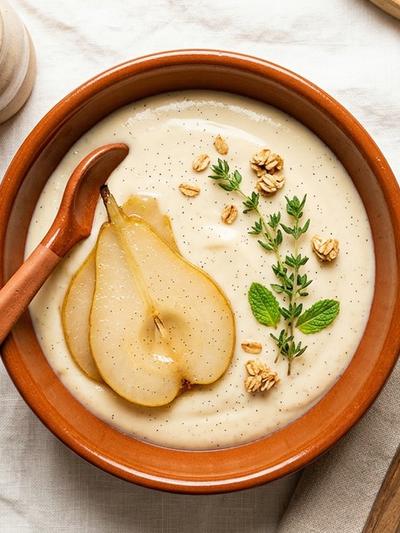
This warm stovetop pudding delivers 26 grams of protein per serving, built on a base of blended cannellini beans and vanilla protein powder that disappears completely into the silky, toffee-flavoured texture. Each portion provides 9 grams of fiber from the beans and oat flour, supporting steady blood sugar after a sweet finish to your meal. At just 348 calories per serving, this is a dessert that genuinely contributes to your daily protein target rather than working against it.
The flavour here is pure British sticky toffee — Medjool dates simmered in a saucepan create a deep, caramel-like sweetness that pairs beautifully with warm vanilla and a whisper of black treacle. A pinch of sea salt lifts all the toffee notes, while the oat flour gives the pudding a comforting, spoonable body that feels indulgent without being heavy. The result tastes remarkably close to a classic sticky toffee pudding, just lighter and far more nourishing.
For GLP-1 users, this recipe solves a common frustration: wanting something sweet after dinner but finding most desserts too rich to enjoy comfortably. The small, nutrient-dense portion satisfies without overwhelming a reduced appetite, and the gentle ingredients — soft-cooked beans, dates, oat flour — are easy on a digestive system slowed by medication. Everything cooks in one saucepan in about 25 minutes, including the quick date caramel drizzle.
Why This Works on GLP-1
Each serving provides 26 grams of complete protein from two complementary sources: cannellini beans contribute essential amino acids along with slow-digesting complex carbohydrates, while vanilla protein powder fills in any gaps and boosts the total well above the threshold needed for muscle preservation. Maintaining adequate protein intake is one of the most important nutritional priorities for people taking Wegovy or similar GLP-1 medications, since reduced calorie intake can lead to lean muscle loss if protein falls too low. Getting a meaningful portion of your daily protein from dessert — rather than empty calories — is a practical strategy that makes hitting your targets significantly easier.
The 9 grams of fiber per serving comes primarily from the white beans and oat flour, both of which are gentle, soluble-fiber sources unlikely to cause the bloating or discomfort that higher-fiber foods like raw cruciferous vegetables sometimes trigger on GLP-1 medications. This soluble fiber also helps moderate the blood sugar response to the natural sugars in the dates, preventing the sharp spike-and-crash pattern that can worsen nausea.
The Medjool dates provide natural sweetness along with potassium and magnesium — two minerals that GLP-1 users sometimes run low on, particularly if fluid intake has dropped alongside appetite. The overall fat content is very low at 4 grams per serving, which helps this pudding sit comfortably even when gastric emptying is significantly slowed.
Ingredients (serves 2)
For the pudding:
- 1 can (14 oz / 400g) cannellini beans, drained and rinsed
- 3 large Medjool dates, pitted and roughly chopped
- 1 cup (240ml) unsweetened oat milk
- 1 scoop (30g) vanilla plant-based protein powder
- 2 tablespoons (15g) oat flour
- 1 teaspoon vanilla extract
- 1 teaspoon blackstrap molasses or black treacle
- ½ teaspoon ground cinnamon
- ¼ teaspoon fine sea salt
- Pinch of ground nutmeg
For the date caramel drizzle:
- 2 large Medjool dates, pitted
- 3 tablespoons (45ml) hot water
- Pinch of flaky sea salt
Instructions
Make the date caramel drizzle:
- Place the 2 pitted dates and hot water in the same saucepan you will use for the pudding. Set over medium-low heat and simmer for 3–4 minutes, pressing the dates with the back of a fork until they break down into a thick, jammy paste. The water will reduce and the mixture will become glossy and caramel-like.
- Scrape the date caramel into a small bowl, stir in the flaky salt, and set aside. No need to wash the saucepan — the residual date flavour adds depth to the pudding.
Blend the pudding base:
- Add the drained cannellini beans, chopped dates, and oat milk to a blender or food processor. Blend on high for 60–90 seconds until completely smooth with no visible bean pieces. This step is essential — under-blending will leave a grainy texture that no amount of cooking will fix.
- Add the protein powder, oat flour, vanilla extract, molasses, cinnamon, salt, and nutmeg to the blender. Pulse 5–6 times until evenly combined. The mixture will be the consistency of thick pancake batter.
Cook the pudding:
- Pour the blended mixture into the same saucepan and set over medium-low heat. Stir continuously with a silicone spatula, scraping the bottom and edges of the pan to prevent sticking. The pudding will begin to thicken noticeably after about 4–5 minutes.
- Continue cooking and stirring for 8–10 minutes total, until the pudding holds its shape briefly when you drag the spatula across the bottom of the pan. It should be the consistency of thick custard — it will firm up slightly as it cools. If it becomes too thick, add 1–2 tablespoons of oat milk to loosen.
- Remove from heat and divide between two serving bowls. Drizzle the reserved date caramel over the top, adding a final pinch of flaky salt if desired. Serve warm.
Nutrition per Serving
| Nutrient | Amount (approx.) |
|---|---|
| Calories | ~348 kcal |
| Protein | ~26g |
| Fat | ~4g |
| Carbohydrates | ~51g |
| Fiber | ~9g |
Estimates based on cannellini beans, Medjool dates, unsweetened oat milk, and a standard vanilla plant-based protein powder (25g protein per 30g scoop). Actual values will vary by brand.
Practical Notes
Serve warm for the best experience. This pudding is at its most satisfying straight from the saucepan, when the texture is silky and the toffee aroma is at its peak. If it cools and firms up too much, reheat gently with a splash of oat milk and stir until smooth again.
Store for up to 3 days. Divide into individual containers and refrigerate. The pudding thickens considerably when cold — add 2 tablespoons of oat milk per portion when reheating in a small saucepan or microwave (60 seconds, stir, then 30-second intervals). Keep the date caramel drizzle in a separate small jar.
Swap the protein powder thoughtfully. Whey-based protein powder works if you are not strictly plant-based, and often blends more smoothly. Pea protein isolate is the best plant-based option here — avoid hemp protein powder, which can add a bitter, grassy flavour that fights the toffee notes.
Start with half a portion if you are in your first weeks on GLP-1 medication. This pudding is nutrient-dense, and a full serving may feel like too much when your appetite is at its lowest. A half portion still delivers 13 grams of protein and makes a meaningful contribution to your daily intake. You can always have the second half later.
Use any white bean you have. Great Northern beans and butter beans both work identically here. Navy beans are slightly starchier and will produce a thicker result — reduce cooking time by 2 minutes if substituting. Avoid kidney beans or black beans, which have stronger flavours that compete with the date and vanilla.
Frequently Asked Questions
Can I eat this pudding if I experience nausea on my GLP-1 medication?
Can I make this without protein powder?
How long does this keep, and can I freeze it?
What if I can only manage very small portions right now?
Why do the beans need to be blended until completely smooth?
This article provides general food and nutrition guidance only. It does not constitute medical advice. Always consult your healthcare provider regarding your GLP-1 medication and individual nutritional needs.