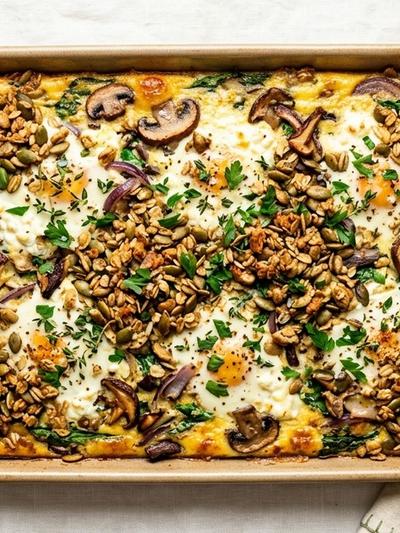
Piperade is the Basque kitchen's answer to a quiet pantry: sweet peppers, ripe tomato, and soft onion cooked down until they're almost jammy, then folded through eggs. This meal prep version leans into that base and stretches it into four portable lunches at roughly 30g of protein each, combining whole eggs, extra egg whites, grated manchego, and creamy white beans for staying power. Baked in a single dish and sliced into squares, it holds its shape beautifully for four or five days in the fridge.
The flavor lives in the slow-cooked pepper base — red bell peppers cooked until silky with onion, garlic, a pinch of sweet pimentón, and chopped tomato — so every bite has depth before the eggs even enter the pan. Manchego brings a nutty, slightly sharp edge that plays against the sweetness of the peppers, while white beans add a gentle, almost buttery richness that keeps the bake feeling like lunch rather than breakfast. Baby spinach wilts into the custard for color and a mild mineral note, and a finish of fresh parsley keeps things bright.
For GLP-1 users, the format matters as much as the nutrition. Each square sits around 445 calories with plenty of protein, fits neatly in a lunch container, and reheats gently without turning rubbery. Portions are naturally modest, which suits smaller appetites on Ozempic or similar medications — and because the texture is soft and custardy rather than heavy or greasy, it tends to sit easily when appetite is low.
Why This Works on GLP-1
Each 3-square serving provides approximately 30g of protein, anchored primarily by whole eggs and egg whites with supporting protein from manchego and white beans. That number sits squarely in the range most dietitians recommend for people on GLP-1 medications like Wegovy, where reduced food intake can make it harder to hit daily protein targets. Hitting 25–35g at lunch helps protect lean muscle during weight loss, supports steadier energy through the afternoon, and, because protein is itself satiating, complements the appetite-suppressing effects of the medication rather than fighting them.
Fiber comes in around 5g per serving, mostly from the white beans, peppers, and spinach — enough to support digestion without the volume that sometimes triggers bloating or early fullness on GLP-1 therapy. Egg-based bakes are also notably gentle on digestion: the custard structure is soft, the fat is moderate, and there's nothing fried or heavily spiced to slow gastric emptying further than the medication already does.
White beans contribute resistant starch and slow-release carbohydrates that help keep post-meal glucose response smoother than a bread-based lunch would, which is useful both for metabolic health and for avoiding the mid-afternoon energy dip some GLP-1 users describe. Manchego adds calcium and a concentrated flavor punch — you get a lot of satisfaction from a small amount, which matters when total food volume is limited.
Ingredients (serves 4)
For the piperade base:
- 2 tablespoons extra-virgin olive oil
- 1 medium yellow onion, thinly sliced (about 1 cup / 150g)
- 2 large red bell peppers, seeded and thinly sliced (about 2 cups / 300g)
- 3 garlic cloves, minced
- 1 teaspoon sweet pimentón (smoked Spanish paprika)
- 1/2 teaspoon dried thyme
- 2 medium plum tomatoes, chopped (about 1 cup / 200g)
- 1/2 teaspoon fine sea salt
- 1/4 teaspoon freshly ground black pepper
For the egg custard:
- 8 large eggs
- 8 large egg whites (about 1 cup / 240ml)
- 1/4 cup (60ml) low-fat milk or unsweetened almond milk
- 3/4 cup (75g) grated manchego cheese
- 1 1/2 cups (265g) cooked white beans (cannellini or navy), drained and rinsed
- 3 cups (90g) baby spinach, roughly chopped
- 1/4 teaspoon fine sea salt
- 1/4 teaspoon freshly ground black pepper
To finish:
- 2 tablespoons chopped flat-leaf parsley
- Lemon wedges, for serving (optional)
Instructions
Prepare the piperade base:
- Preheat the oven to 350°F (175°C). Lightly oil a 9×13-inch (23×33cm) baking dish or line it with parchment, leaving an overhang on two sides so you can lift the finished bake out cleanly for slicing.
- Warm the olive oil in a large skillet over medium heat. Add the onion and a pinch of salt and cook, stirring occasionally, for 6–8 minutes until soft and translucent but not browned. Low, patient heat is what makes piperade taste like itself — rushing here turns sweet peppers into something aggressive.
- Add the sliced peppers and cook for another 8–10 minutes, stirring now and then, until they collapse into soft, glossy ribbons. Stir in the garlic, pimentón, and thyme and cook for 1 minute until fragrant. Add the chopped tomatoes, salt, and pepper and cook for 4–5 minutes more, until the tomato has broken down and any excess liquid has evaporated. You want the base relatively dry so the egg custard sets cleanly. Remove from the heat and let cool for 5 minutes.
Assemble the bake:
- In a large bowl, whisk together the whole eggs, egg whites, milk, salt, and pepper until fully combined — about 30 seconds of brisk whisking. Stir in half of the manchego.
- Scatter the cooked piperade evenly over the bottom of the prepared baking dish. Distribute the white beans over the peppers, then tuck the chopped baby spinach into the gaps. Pour the egg mixture slowly over the top, tilting the dish if needed so the custard works its way down through the vegetables.
- Sprinkle the remaining manchego evenly across the surface.
Bake and portion:
- Bake on the center rack for 30–35 minutes, until the center is set and no longer jiggles when the dish is gently shaken, and the top is lightly golden. A paring knife inserted in the middle should come out clean.
- Let the bake rest for 10 minutes before slicing — this gives the custard time to firm up and makes for cleaner squares. Cut into 12 squares (a 3×4 grid). Three squares makes one serving.
- Finish with chopped parsley and serve warm, or cool completely on a wire rack before packing into meal prep containers.
Nutrition per Serving
| Nutrient | Amount (approx.) |
|---|---|
| Calories | ~445 kcal |
| Protein | ~30g |
| Fat | ~23g |
| Carbohydrates | ~23g |
| Fiber | ~5g |
Estimate based on large eggs, pasteurized liquid egg whites, grated manchego, canned cannellini beans, and standard produce weights divided across 4 servings (3 squares each).
Practical Notes
Storage and reheating. Let the bake cool completely, then slice and store squares in airtight containers in the fridge for up to 5 days. Reheat individual portions in a 325°F (160°C) oven or toaster oven for 8–10 minutes, or microwave on 60% power for 90 seconds — lower heat keeps the custard tender instead of rubbery.
Freezing for longer meal prep. Individual squares freeze well for up to 2 months. Wrap tightly in parchment, then foil, and freeze flat. Thaw overnight in the fridge and reheat as above. If you're stocking a freezer rotation, label with the date and cuisine so you don't end up with three Basque lunches in a row.
Adjusting for smaller appetite. If 3 squares feels like too much early in your GLP-1 treatment, start with 2 squares (about 20g protein and 295 kcal) paired with a small side salad or a few cucumber slices. The bake is protein-dense enough that a smaller portion still delivers useful nutrition.
Smart substitutions. No manchego? Aged cheddar, Gruyère, or pecorino all work and keep the protein and flavor profile intact. Swap spinach for chopped kale (massage it first), and cannellini beans can be replaced with butter beans or even chickpeas. If you're sensitive to nightshades, skip the peppers and use 3 cups of diced zucchini cooked down in the base instead.
Pack it with something bright. A small handful of cornichons, a few olives, or a spoonful of lemon-dressed herb salad on the side cuts through the richness of the eggs and cheese. Acidic, fresh pairings also tend to feel more appealing on GLP-1 medication, when rich or heavy flavors can register as too much.
Frequently Asked Questions
Will this egg bake sit heavily on my stomach if I'm early in GLP-1 treatment?
Can I make this dairy-free?
How long does it keep, and can I reheat it more than once?
I can only eat a tiny lunch right now — is this still worth making?
My eggs always come out watery in baked dishes — what am I doing wrong?
This article provides general food and nutrition guidance only. It does not constitute medical advice. Always consult your healthcare provider regarding your GLP-1 medication and individual nutritional needs.