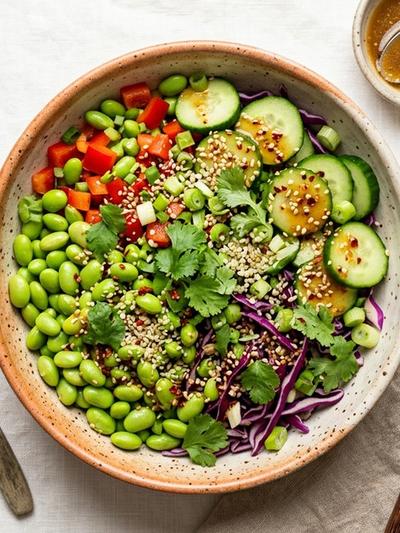
When you're on a GLP-1 medication, your appetite windows are compressed. You may feel full after just a few bites, which means every bite needs to work harder nutritionally. Edamame — young soybeans, steamed or boiled in or out of the pod — is one of the few snacks that delivers meaningful protein and fiber simultaneously, without requiring you to eat a large volume of food. One cup of shelled edamame contains approximately 18 grams of complete protein and 8 grams of fiber at around 189 calories. That ratio is difficult to match in the snack world.
What makes edamame particularly practical for GLP-1 users is its convenience. A bag of frozen edamame takes three minutes to prepare and virtually no skill or planning. It doesn't require refrigeration until opened, it travels reasonably well in a small container, and it's available year-round in nearly every grocery store. On days when nausea or appetite suppression makes eating feel like a task rather than a pleasure, edamame offers something mild-flavored, soft-textured, and easy to eat without triggering discomfort.
The natural sea salt preparation described here is the baseline, but this article also covers seasoning variations so you can rotate flavors across the week — keeping the snack interesting without adding complexity to your routine.
Why This Works on GLP-1
GLP-1 receptor agonists (Ozempic, Mounjaro) slow gastric emptying, meaning food stays in your stomach longer. This mechanism is central to appetite suppression, but it also means that dense, fiber-rich foods are processed slowly and keep blood glucose levels stable across a longer window. Edamame's fiber content directly supports this process by further moderating digestion speed.
The protein content matters for a different reason: GLP-1 users frequently consume fewer total calories than before starting medication. That caloric reduction, if not managed carefully, often comes with inadequate protein intake — which leads to muscle loss rather than fat loss. Prioritizing protein-dense snacks like edamame helps preserve lean mass while the medication does its work on appetite and glucose metabolism.
Edamame is also a complete protein, meaning it contains all nine essential amino acids. This is unusual for a plant food and makes it a reliable source for those on plant-based or reduced-meat diets.
Ingredients (serves 2)
- 2 cups frozen edamame, in-shell (280g / 10 oz) — or 1 cup shelled frozen edamame (155g / 5.5 oz)
- ½ teaspoon flaky sea salt (or to taste)
- Optional seasoning variations (see Practical Notes)
Instructions
If using in-shell edamame: Bring a medium pot of water to a boil. Add edamame and cook for 4–5 minutes until pods are bright green and beans inside are tender. Drain thoroughly.
If using shelled edamame: Place in a microwave-safe bowl with 2 tablespoons of water. Cover with a damp paper towel and microwave on high for 2–3 minutes, stirring once halfway through. Drain any remaining water.
Alternative microwave method for in-shell: Place pods in a microwave-safe bowl, cover with a damp paper towel, and microwave on high for 3–4 minutes. Let rest 1 minute before handling — steam inside the pods is hot.
Transfer edamame to a serving bowl. While still warm, sprinkle evenly with sea salt. Toss to coat.
For in-shell edamame: Eat by squeezing the beans out of the pod with your teeth. The pods themselves are not eaten.
Allow to cool completely before packing into a storage container if preparing ahead.
Nutrition per Serving
Based on 1 cup shelled edamame (approximately half the recipe):
- Calories: ~189
- Protein: ~18g
- Fat: ~8g
- Carbohydrates: ~14g
- Fiber: ~8g
Practical Notes
Start with a small portion. On GLP-1 medication, a full cup of shelled edamame may be more than you can comfortably eat in one sitting early in treatment. Begin with ½ cup and assess how your hunger and fullness signals respond.
Batch cook for the week. Prepare 4–6 cups of edamame at the start of the week. Store shelled edamame in airtight containers in the refrigerator for up to 5 days. It reheats quickly or can be eaten cold — both work well as snacks.
Seasoning rotations prevent palate fatigue. Try these variations to keep edamame interesting across a week: (a) garlic powder + red chili flakes + sesame oil; (b) smoked paprika + lime zest + cumin; (c) everything bagel seasoning; (d) miso paste dissolved in a teaspoon of warm water, tossed with shelled edamame. All add negligible calories while transforming the flavor profile.
Pair with water, not caloric beverages. Since GLP-1 medications can cause nausea when combining certain foods or eating while drinking, keep a glass of water nearby but sip between bites rather than simultaneously. This also supports the feeling of satiety from the fiber.
Texture matters on difficult days. If nausea is elevated, shelled edamame eaten at room temperature is gentler than hot or cold versions. The mild flavor and soft texture are less likely to trigger discomfort than more aromatic or heavily seasoned options.
Use as a protein anchor for larger plates. When appetite allows, edamame integrates well with grain bowls, salads, or alongside a small protein like sliced turkey. Its neutral flavor doesn't compete with other components.
Frequently Asked Questions
In-shell versus shelled edamame — which is better on GLP-1?
Can I eat edamame cold, or does it need to be warm?
How much edamame is too much in one sitting on GLP-1?
Is edamame safe to eat during GLP-1 nausea?
Can I use edamame as a protein source if I'm trying to reduce meat?
This article provides general food and nutrition guidance only. It does not constitute medical advice. Always consult your healthcare provider regarding your GLP-1 medication and individual nutritional needs.