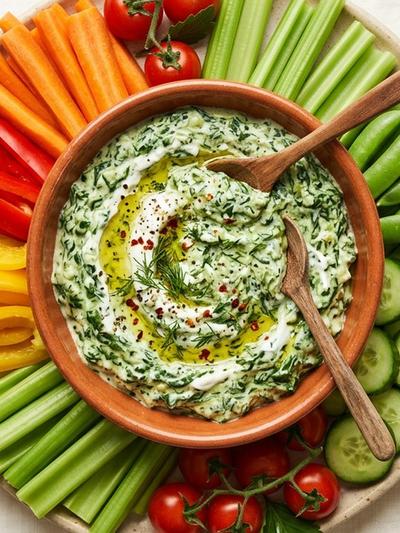
Each serving of this Turkish haydari mezze bowl delivers 29 grams of protein primarily from thick Greek yogurt and crumbled feta, making it one of the most protein-dense no-cook snacks you can assemble. The combination of strained yogurt, fresh herbs, and raw vegetables provides a complete snack with balanced macros — under 320 calories with only 11 grams of fat. You also get a modest 3 grams of fiber from the crudités and whole wheat pita, enough to support satiety without taxing your digestive system.
Haydari is a classic Turkish mezze — a thick, garlicky yogurt dip that's richer and more complex than its Greek cousin tzatziki. The fresh dill and mint provide a bright, herbaceous backbone, while crumbled feta adds a salty tang that deepens the yogurt's natural tartness. A light dusting of sumac on top contributes a fruity, citrusy warmth that makes this taste like something from an Istanbul mezze spread, not a diet snack.
For anyone on Mounjaro, Wegovy, or another GLP-1 medication, this format works exceptionally well. The thick, creamy texture is easy to eat in small quantities, and dipping vegetables into it naturally slows your eating pace. You control your portion intuitively — when you feel satisfied, you simply stop dipping. There is nothing heavy or greasy here to trigger the nausea that rich foods can cause on GLP-1 therapy.
Why This Works on GLP-1
The 29 grams of protein per serving come almost entirely from dairy — Greek yogurt and feta — which provides a complete amino acid profile with high bioavailability. During GLP-1-assisted weight loss, preserving lean muscle mass is a genuine clinical concern, and consistent protein intake at every eating occasion is one of the most effective strategies. This snack delivers protein comparable to a small chicken breast, but in a cool, soft format that many GLP-1 users find far easier to tolerate than dense meat, especially during the dose-adjustment phase when appetite is at its lowest.
The raw cucumber and bell pepper crudités contribute gentle soluble fiber and high water content, which supports hydration — something Ozempic and similar medications can compromise through reduced fluid intake. The small portion of whole wheat pita adds slow-digesting complex carbohydrates without creating the heavy, bloated feeling that large amounts of bread can cause when gastric emptying is delayed.
Greek yogurt is also a natural source of probiotics, which may support the gut microbiome changes that occur during significant weight loss. The fermented dairy is generally well tolerated even when appetite is suppressed, and the calcium and B12 content addresses two micronutrients that can become marginal when overall food intake drops substantially on GLP-1 therapy.
Ingredients (serves 2)
For the haydari:
- 2 cups (450g) plain nonfat Greek yogurt
- 1 oz (28g) feta cheese, finely crumbled
- 1 small clove garlic, minced or grated on a microplane
- 2 tablespoons fresh dill, finely chopped
- 1 tablespoon fresh mint, finely chopped
- 1 teaspoon lemon zest
- 1 tablespoon fresh lemon juice
- ¼ teaspoon fine sea salt
- ⅛ teaspoon black pepper
For the garnish:
- 2 teaspoons extra-virgin olive oil
- ½ teaspoon ground sumac
- Pinch of Aleppo pepper flakes (or sweet paprika)
For the crudités:
- 1 medium Persian cucumber, cut into spears
- 1 small bell pepper, cut into strips
- 4–5 cherry tomatoes, halved
- 1 small whole wheat pita (about 60g), cut into triangles and lightly toasted if desired
Instructions
Make the haydari base:
Spoon the Greek yogurt into a medium mixing bowl. If your yogurt seems thin or watery, line a fine-mesh strainer with cheesecloth, set it over a bowl, and strain the yogurt for 15–20 minutes in the refrigerator first. You want a thick, scoopable consistency — thicker yogurt makes the haydari more satisfying and closer to the authentic Turkish texture.
Add the finely crumbled feta and the minced garlic to the yogurt. Use a fork to mash and stir until the feta is mostly incorporated but small crumbles remain — these pockets of salt and tang are part of what makes haydari more interesting than plain yogurt.
Fold in the chopped dill, mint, lemon zest, lemon juice, salt, and pepper. Stir gently until everything is evenly distributed. Taste and adjust the salt — the feta contributes saltiness, so you may need less than you expect.
Assemble the bowls:
Divide the haydari between two shallow bowls or plates, spreading it into a thick layer with the back of a spoon and creating a shallow well in the center — this traditional presentation gives the olive oil somewhere to pool and makes the dip easier to scoop.
Drizzle 1 teaspoon of extra-virgin olive oil over each portion. Sprinkle the sumac generously over the surface and add a small pinch of Aleppo pepper flakes for color and gentle warmth.
Arrange the cucumber spears, bell pepper strips, cherry tomatoes, and pita triangles alongside or around the haydari. Serve immediately, or refrigerate covered for up to 2 hours — the flavors actually improve as the garlic and herbs meld into the yogurt.
Nutrition per Serving
| Nutrient | Amount (approx.) |
|---|---|
| Calories | ~318 kcal |
| Protein | ~29g |
| Fat | ~11g |
| Carbohydrates | ~24g |
| Fiber | ~3g |
Based on nonfat Greek yogurt (such as Fage 0%), standard feta cheese, one small 60g whole wheat pita split between two servings, and the vegetable portions listed.
Practical Notes
Make it ahead for grab-and-go snacking. The haydari base keeps beautifully in an airtight container in the refrigerator for up to 3 days — the flavor actually deepens overnight as the garlic mellows and the herbs infuse. Store the dip and crudités separately and assemble when ready to eat. Add the olive oil and sumac garnish fresh each time.
Swap the dipping vehicles based on your tolerance. If bread feels too heavy on your GLP-1 medication, skip the pita entirely and use only vegetables — endive leaves, radish slices, and blanched green beans all work well. If you want more substance, swap the pita for a few whole grain crackers or rice cakes, adjusting your carb count accordingly.
Start with half a portion during dose increases. When you are adjusting to a new Zepbound or Ozempic dose, appetite can drop sharply for a few days. Prepare the full recipe but eat only half a bowl — you still get roughly 15 grams of protein, and the cool, mild flavor is unlikely to trigger nausea. Save the other half for later in the day.
Boost the protein even higher if needed. Stir 1–2 tablespoons of unflavored collagen peptides into the yogurt base before adding the other ingredients — this adds 6–12 grams of protein without changing the flavor or texture. You can also increase the feta to 1.5 oz per serving for an extra 3 grams of protein and a more robust flavor.
Use this as a mini-meal when cooking feels like too much. On days when your appetite is low and the thought of cooking is unappealing, this mezze bowl provides enough protein and nutrients to qualify as a light meal. Pair it with a hard-boiled egg on the side for an additional 6 grams of protein, and you have a complete 35-gram protein meal with zero cooking required.
Frequently Asked Questions
Will the garlic in haydari cause nausea on GLP-1 medications?
Can I make this with regular yogurt instead of Greek yogurt?
How long does the assembled mezze bowl keep in the refrigerator?
What if I can only manage a few bites — is it still worth making?
Where can I find sumac and Aleppo pepper?
This article provides general food and nutrition guidance only. It does not constitute medical advice. Always consult your healthcare provider regarding your GLP-1 medication and individual nutritional needs.