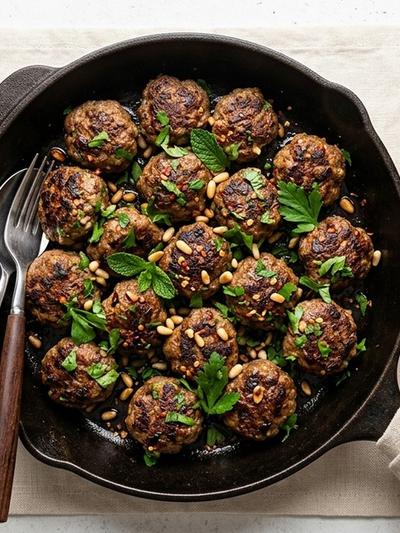
These Bavarian-inspired mini pork patties deliver 28 grams of protein per snack-sized serving from a combination of lean pork tenderloin and cottage cheese. Each portion clocks in under 200 calories, making them an ideal between-meal protein hit that won't overwhelm a reduced appetite. The cottage cheese keeps the patties exceptionally moist while adding calcium and additional complete protein. With a quick mustard yogurt dip on the side, you get a satisfying snack that travels well and reheats beautifully.
The flavor profile here is classically Southern German — warm caraway seeds, fragrant marjoram, and a whisper of nutmeg give these patties a depth that belies their simplicity. Grated apple adds a subtle sweetness and moisture that pairs naturally with pork, a combination that's been a staple of Bavarian cooking for centuries. The whole grain mustard yogurt dip brings a sharp, tangy contrast that cuts through the savory richness and makes each bite feel complete.
For GLP-1 users, this snack format is deliberately designed around smaller appetites. Three mini patties with a spoonful of dip is a satisfying portion that provides serious protein without the volume of a full meal. The patties are pan-seared rather than fried, keeping fat minimal, and the gentle seasoning avoids the heavy spice that can aggravate the digestive sensitivity many people experience on these medications.
Why This Works on GLP-1
Each serving delivers 28 grams of protein from two complementary sources — lean pork tenderloin and cottage cheese — which matters enormously for preserving muscle mass during GLP-1-assisted weight loss. Research consistently shows that adequate protein intake becomes even more critical when appetite is suppressed, as the body can break down muscle tissue alongside fat stores if protein falls short. Whether you're on Mounjaro or Wegovy, having a high-protein snack ready to grab between meals helps you hit your daily protein targets even when full meals feel like too much. These patties make it easy to get a third of your daily protein needs in a quick, portable format.
The gentle seasoning profile is intentional for GLP-1 digestion. Caraway seeds have traditionally been used in German cuisine partly for their carminative properties — they can help ease bloating and support digestion. The grated apple provides soluble fiber and natural moisture without the heaviness of added fats or oils.
At under 200 calories per portion, these patties fit comfortably into any calorie-conscious eating plan without requiring meticulous tracking. The combination of protein and moderate carbohydrates from the apple and breadcrumbs provides sustained energy, while the low fat content means they digest relatively quickly — important when gastric emptying is already slowed by GLP-1 medication.
Ingredients (serves 4)
For the pork patties:
- 1 lb (450g) pork tenderloin, trimmed and very finely minced
- 1/2 cup (115g) low-fat cottage cheese, drained if watery
- 1 small tart apple such as Granny Smith, peeled and finely grated
- 1 large egg white
- 3 tablespoons (20g) whole wheat panko breadcrumbs
- 1 teaspoon caraway seeds, lightly crushed
- 1 teaspoon dried marjoram
- 1/4 teaspoon ground nutmeg
- 1/2 teaspoon fine sea salt
- 1/4 teaspoon freshly ground black pepper
- 1 teaspoon olive oil
- 2 tablespoons fresh chives, finely snipped
For the mustard yogurt dip:
- 1/2 cup (120g) plain Greek yogurt (2% fat)
- 1 tablespoon whole grain mustard
- 1 teaspoon apple cider vinegar
- 1 tablespoon fresh dill, finely chopped
- Pinch of salt
Instructions
Make the mustard yogurt dip:
- Stir together the Greek yogurt, whole grain mustard, apple cider vinegar, dill, and a pinch of salt in a small bowl. The dip benefits from sitting while you prepare the patties, as the flavors meld together. Cover and refrigerate until serving.
Prepare the pork patty mixture:
Place the finely minced pork tenderloin in a large mixing bowl. If you don't have a butcher who can grind tenderloin for you, cut it into small chunks and pulse briefly in a food processor — you want a coarse mince, not a paste.
Squeeze the grated apple gently in a clean kitchen towel to remove excess moisture. This prevents the patties from becoming too wet and steaming rather than searing in the pan.
Add the squeezed apple, cottage cheese, egg white, breadcrumbs, crushed caraway seeds, marjoram, nutmeg, salt, and pepper to the pork. Mix with your hands until just combined — overmixing will make the patties dense and rubbery.
Divide the mixture into 12 equal portions and shape each into a small patty about 2 inches (5cm) across and 1/2 inch (1cm) thick. The mixture will be quite soft, which is normal — the cottage cheese and apple make it tender.
Cook the patties:
Heat the olive oil in a large non-stick skillet over medium-high heat. When the oil shimmers, arrange the patties in a single layer without crowding — work in two batches if your skillet is smaller than 12 inches (30cm).
Cook undisturbed for 3 to 4 minutes until the bottoms develop a golden-brown crust. This sear is where the flavor lives, so resist the urge to move them too early.
Flip carefully and cook for another 3 minutes until cooked through and golden on both sides. The internal temperature should reach 160°F (71°C). Transfer to a plate lined with a paper towel.
Arrange three patties per serving, scatter with fresh chives, and serve alongside the mustard yogurt dip.
Nutrition per Serving
| Nutrient | Amount (approx.) |
|---|---|
| Calories | ~198 kcal |
| Protein | ~28g |
| Fat | ~5g |
| Carbohydrates | ~11g |
| Fiber | ~2g |
Estimates based on lean pork tenderloin, low-fat cottage cheese, 2% Greek yogurt, and minimal cooking oil. Actual values may vary by specific brands used.
Practical Notes
Meal prep storage. These patties store beautifully in the refrigerator for up to 4 days in an airtight container with parchment between layers. They reheat well in a skillet over medium heat for 2 minutes per side, or in the microwave for 45 seconds. Keep the dip in a separate container to maintain its fresh tang.
Freezer-friendly batch cooking. Double the patty recipe, cook all of them, then freeze in portions of three on a parchment-lined tray. Once solid, transfer to a freezer bag. They keep for up to 3 months and reheat from frozen in a covered skillet over medium-low heat in about 6 minutes.
Protein powder boost. If you're struggling to hit protein targets, add 1 scoop (about 25g) of unflavored protein powder to the patty mixture. This increases protein to roughly 34g per serving without noticeably changing the texture or flavor. Reduce the breadcrumbs by 1 tablespoon to keep the consistency right.
GLP-1 portion flexibility. During the early weeks of medication when appetite is at its lowest, a single patty with a tablespoon of dip makes a perfectly adequate mini-snack at around 65 calories and 9g protein. As your appetite stabilizes, the full three-patty serving becomes an ideal between-meal protein bridge.
Apple substitution. If tart apples aren't in season, use a firm pear or 2 tablespoons of unsweetened applesauce. The fruit serves two purposes — it keeps the lean pork moist and adds a subtle sweetness that complements the caraway and marjoram. Without it, the patties will be noticeably drier.
Frequently Asked Questions
Can I use regular ground pork instead of minced tenderloin?
I'm lactose intolerant — what can I replace the cottage cheese and yogurt with?
How should I reheat these if I experience nausea with strong food smells?
These patties seem soft before cooking — is that normal?
Can I make these smaller for a party appetizer?
This article provides general food and nutrition guidance only. It does not constitute medical advice. Always consult your healthcare provider regarding your GLP-1 medication and individual nutritional needs.