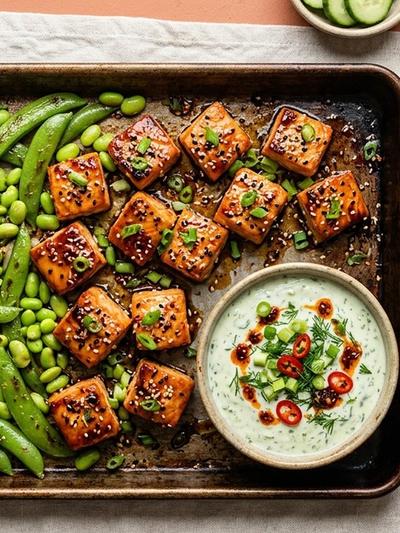
Each snack-sized portion of these miso-sesame shrimp bites packs 26 grams of complete protein into just 190 calories. Shrimp is one of the leanest protein sources available, delivering roughly 24 grams of protein per four-ounce serving with minimal fat. The white miso glaze adds umami depth and a touch of gut-friendly fermented flavor, while toasted sesame seeds contribute healthy fats and a satisfying crunch. A cool ginger yogurt dip rounds out each bite with an extra protein boost from Greek yogurt.
The flavor profile here is distinctly Japanese-inspired — sweet-savory miso caramelizes against the hot skillet, creating a light golden crust on each shrimp. Toasted sesame seeds add nuttiness, while a squeeze of fresh lime brightens everything. The cool, ginger-spiked yogurt dip provides a creamy counterpoint that makes each bite feel indulgent despite the lean nutritional profile.
This is a snack built for smaller GLP-1 appetites. The portion is satisfying without being heavy — four or five glazed shrimp with a small pool of dip is enough to bridge the gap between meals. Shrimp digests gently and quickly, which matters when gastric emptying is already slowed. And because everything cooks in a single skillet in under fifteen minutes, it works as a quick afternoon snack or a light bite before dinner.
Why This Works on GLP-1
Preserving lean muscle mass is one of the most important nutritional priorities during GLP-1-assisted weight loss. When medications like Mounjaro or Wegovy reduce your overall calorie intake, your body can break down muscle for energy unless you maintain adequate protein throughout the day. These shrimp bites deliver 26 grams of high-quality, complete protein per snack portion — roughly half the minimum daily protein target most dietitians recommend for GLP-1 users. Distributing protein across meals and snacks, rather than loading it all into dinner, supports better muscle protein synthesis throughout the day.
Shrimp is exceptionally gentle on the digestive system, which is a real advantage when GLP-1 medications are slowing gastric emptying. Unlike heavier proteins that can sit uncomfortably, shrimp breaks down quickly and rarely causes the bloating or nausea that some users experience with fattier meats. The fermented miso paste may also support gut health by introducing beneficial enzymes.
At just 190 calories with 6 grams of fat, this snack fits easily into any calorie-conscious eating plan. Shrimp is naturally rich in selenium and iodine — two minerals that support thyroid function, which plays a role in metabolic regulation during weight loss. The combination of high protein and low calorie density means you get real satiety without using up a large portion of your daily calorie budget.
Ingredients (serves 4)
For the miso-sesame shrimp:
- 1 lb (450g) large shrimp, peeled and deveined (about 24 shrimp)
- 1½ tablespoons white miso paste
- 1 teaspoon low-sodium soy sauce
- 1 teaspoon rice vinegar
- ½ teaspoon toasted sesame oil
- 1 clove garlic, finely grated
- 2 teaspoons sesame seeds
- 1 teaspoon neutral oil (avocado or grapeseed)
- 1 lime, cut into wedges
For the ginger yogurt dip:
- ½ cup (120g) plain nonfat Greek yogurt
- 1 teaspoon freshly grated ginger
- ½ teaspoon rice vinegar
- Pinch of salt
For serving:
- 1 small Persian cucumber, sliced into rounds (optional)
- Thinly sliced scallion greens for garnish
Instructions
Make the ginger yogurt dip:
- Stir together the Greek yogurt, grated ginger, rice vinegar, and a pinch of salt in a small bowl. Combining the ginger with the yogurt ahead of time allows the flavors to meld while you cook the shrimp. Set aside in the refrigerator.
Prepare the miso glaze:
In a medium bowl, whisk together the white miso paste, soy sauce, rice vinegar, sesame oil, and grated garlic until smooth. The miso can be lumpy, so press it against the side of the bowl with the back of a spoon to fully dissolve it.
Pat the shrimp thoroughly dry with paper towels — this is essential for achieving a good sear rather than steaming. Add the shrimp to the miso mixture and toss gently to coat evenly.
Cook the shrimp:
Toast the sesame seeds in a large nonstick skillet over medium heat for 60 to 90 seconds, shaking the pan frequently, until fragrant and lightly golden. Transfer to a small plate and set aside. Toasting them dry before cooking the shrimp prevents them from burning in the glaze.
Return the skillet to medium-high heat and add the neutral oil. Once the oil shimmers, arrange the shrimp in a single layer — work in two batches if needed to avoid crowding, which would cause the shrimp to steam instead of sear.
Cook undisturbed for 2 minutes until the bottoms develop a light caramelized crust from the miso sugars. Flip and cook for another 1 to 2 minutes until the shrimp are just opaque throughout and slightly curled. Remove from heat immediately — overcooked shrimp become rubbery.
Assemble and serve:
- Transfer the shrimp to a serving plate and sprinkle with the toasted sesame seeds. Arrange the cucumber rounds alongside if using, and place the ginger yogurt dip in a small bowl. Garnish with sliced scallion greens and serve with lime wedges for squeezing.
Nutrition per Serving
| Nutrient | Amount (approx.) |
|---|---|
| Calories | ~190 kcal |
| Protein | ~26g |
| Fat | ~6g |
| Carbohydrates | ~7g |
| Fiber | ~1g |
Estimates based on 4 oz raw shrimp per serving, white miso paste, nonfat Greek yogurt, and minimal cooking oil.
Practical Notes
Best eaten fresh, but storable. The shrimp and dip can be refrigerated separately in airtight containers for up to two days. Reheat the shrimp gently in a skillet over medium heat for one to two minutes — microwaving tends to make shrimp rubbery. The dip stays fresh for three days refrigerated.
Scale up for meal prep. Double the shrimp batch and store in portioned containers with individual dip cups. They make excellent grab-and-go snacks for the work week. Let the shrimp cool completely before sealing the containers to avoid condensation that makes them soggy.
Use any size shrimp you prefer. Large (26–30 count) shrimp work best for snacking because they are easy to pick up and eat by hand. If you only have smaller shrimp, reduce the cooking time by about 30 seconds per side to avoid overcooking. The nutrition stays the same regardless of size.
Start with fewer pieces if your appetite is very small. On days when GLP-1 medication has significantly reduced your hunger, eat three or four shrimp with a spoonful of dip — that still delivers roughly 15 grams of protein. You can always return for more if you find you are still hungry after ten minutes.
Swap the dip base if dairy does not agree with you. Silken tofu blended with the same ginger and rice vinegar makes a smooth, protein-rich alternative. You can also use plain coconut yogurt, though the protein content will drop — consider adding a teaspoon of hemp seeds to compensate.
Frequently Asked Questions
Can I eat these shrimp bites during the first few weeks of starting a GLP-1 medication?
Can I use frozen shrimp for this recipe?
How long do these keep in the refrigerator, and can I freeze them?
What if my appetite is too small for even a snack-sized portion?
Can I use red miso instead of white miso?
This article provides general food and nutrition guidance only. It does not constitute medical advice. Always consult your healthcare provider regarding your GLP-1 medication and individual nutritional needs.