Each serving of these baked halibut anticucho bites provides 34 grams of complete protein from just 5 ounces of halibut and a generous Greek yogurt dipping sauce, totaling only 285 calories. Halibut is one of the leanest firm white fish available — dense in protein, rich in selenium and magnesium, and naturally low in fat. The aji amarillo marinade adds virtually no calories while delivering the signature Peruvian warmth that makes this snack feel far more substantial than its modest portion size suggests.
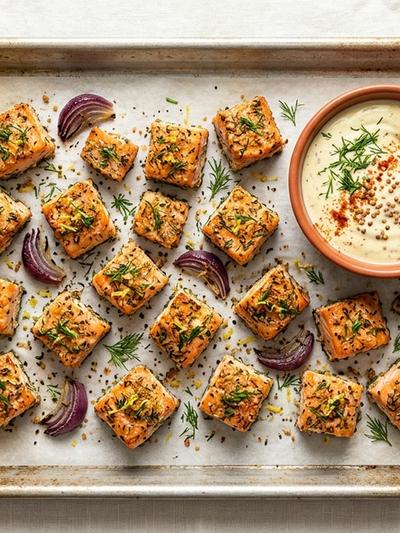
The flavor draws from Peru's anticucho tradition — street-grilled skewered meats rubbed with aji peppers, cumin, and garlic. Here, halibut cubes soak up a punchy marinade of aji amarillo paste, fresh lime juice, smoked paprika, and oregano before roasting at high heat until caramelized at the edges. The cool, herbaceous aji verde yogurt — blended with cilantro, a sliver of jalapeño, and another squeeze of lime — creates the kind of hot-cool contrast that makes every bite compelling.
As a GLP-1 snack, these bites solve the common problem of finding something protein-dense enough to be worth eating when your appetite is limited. The small, distinct pieces let you eat one or two at a time, stopping naturally when you feel satisfied. The bright acidity from the marinade and yogurt sauce also helps counter the mild food aversions some users experience with bland or heavy foods.
Why This Works on GLP-1
With 34 grams of protein in a single snack-sized serving, these halibut bites deliver more muscle-preserving amino acids than many full meals. Maintaining adequate protein intake is one of the most important nutritional priorities during GLP-1-assisted weight loss — research consistently shows that higher protein intake helps preserve lean muscle mass when losing body fat. Halibut provides all essential amino acids in a highly bioavailable form, and because it is so lean, nearly all of those 285 calories go directly toward protein rather than excess fat. For Mounjaro or Wegovy users struggling to hit their daily protein targets, a snack like this can bridge a significant gap.
The gentle spicing in this recipe works with GLP-1 medications rather than against them. Aji amarillo paste provides fruity heat without the aggressive burn of raw chili peppers, and the yogurt sauce soothes rather than irritates the digestive tract. Baking rather than frying keeps the fat content moderate and avoids the greasy mouthfeel that many GLP-1 users find unpalatable.
Halibut is also notably rich in magnesium and B vitamins, both of which support energy metabolism during caloric restriction. The Greek yogurt in the dipping sauce adds probiotics and calcium, supporting gut health and bone density — two areas that deserve extra attention during any period of sustained weight loss.
Ingredients (serves 2)
For the halibut bites:
- 10 oz (285g) skinless halibut fillet, cut into 1-inch cubes
- 1 tablespoon aji amarillo paste
- 1 tablespoon fresh lime juice (about half a lime)
- 1 tablespoon olive oil
- 1 clove garlic, minced
- 1/2 teaspoon ground cumin
- 1/2 teaspoon smoked paprika
- 1/4 teaspoon dried oregano
- 1/4 teaspoon salt
- Freshly ground black pepper
For the aji verde yogurt:
- 1/2 cup (120g) plain nonfat Greek yogurt
- 1/4 cup (10g) fresh cilantro leaves and tender stems, packed
- 1 tablespoon fresh lime juice
- 1 thin slice jalapeño (about 1/2 teaspoon minced), seeds removed
- 1 small clove garlic
- Pinch of salt
For serving:
- 1/2 cup (75g) cherry tomatoes, halved
- Lime wedges
- Fresh cilantro leaves
Instructions
Make the aji verde yogurt:
- Combine the Greek yogurt, cilantro, lime juice, jalapeño, garlic, and salt in a small blender or mini food processor. Blend until smooth and bright green, about 30 seconds. If you do not have a small blender, finely mince the cilantro, jalapeño, and garlic by hand and stir them into the yogurt. Refrigerate while you prepare the halibut — the flavors improve as they sit.
Marinate and bake the halibut:
Preheat your oven to 425°F (220°C). Line a sheet pan with parchment paper to prevent sticking and make cleanup easier.
In a medium bowl, whisk together the aji amarillo paste, lime juice, olive oil, garlic, cumin, smoked paprika, oregano, salt, and pepper until smooth. Add the halibut cubes and toss gently with a spatula or your hands, coating each piece evenly. Let the fish sit in the marinade for 5 to 10 minutes at room temperature while the oven heats — this short marination is enough for the aji amarillo to penetrate the surface without breaking down the delicate flesh.
Arrange the halibut cubes on the prepared sheet pan in a single layer with space between each piece. Crowding causes the fish to steam rather than roast, preventing the caramelized edges you want. Scatter the cherry tomato halves around the fish.
Bake for 10 to 12 minutes, until the halibut is opaque throughout and the edges are lightly golden. The internal temperature should reach 130–135°F (54–57°C) — halibut continues cooking after leaving the oven, so pulling it slightly early prevents dryness. The cherry tomatoes will be soft and lightly blistered.
Serve:
- Transfer the halibut bites and roasted cherry tomatoes to a plate or small serving board. Spoon the aji verde yogurt into a small bowl alongside for dipping. Garnish with fresh cilantro leaves and lime wedges. Serve immediately while the fish is still warm against the cool sauce.
Nutrition per Serving
| Nutrient | Amount (approx.) |
|---|---|
| Calories | ~285 kcal |
| Protein | ~34g |
| Fat | ~12g |
| Carbohydrates | ~9g |
| Fiber | ~2g |
Based on 5 oz raw halibut per serving, 1/4 cup nonfat Greek yogurt per serving, and 1/2 tablespoon olive oil per serving. Actual values may vary slightly depending on the specific aji amarillo paste brand used.
Practical Notes
Aji amarillo paste substitution. If you cannot find aji amarillo paste at your grocery store, substitute 1 teaspoon of chipotle paste in adobo mixed with 1/2 teaspoon of yellow mustard. This is not a perfect match, but it approximates the fruity, moderate heat of aji amarillo. Most Latin American grocery stores carry aji amarillo paste in jars or tubes, and it keeps for weeks in the refrigerator once opened.
Halibut alternatives. Mahi-mahi, cod, or swordfish all work well in this recipe with minimal adjustment. Choose any firm, lean white fish that holds together when cut into cubes. Avoid flaky varieties like tilapia or sole — they fall apart during roasting and will not give you clean, dippable bites.
Meal prep approach. The aji verde yogurt can be made up to 2 days ahead and refrigerated in an airtight container. The marinated raw halibut cubes can also be prepped and refrigerated for up to 8 hours before baking. However, baked halibut is best eaten fresh — reheated fish loses its texture. If you need a grab-and-go option, bake and refrigerate the bites to eat cold within 24 hours, similar to how you would eat cold shrimp with cocktail sauce.
Scaling for a larger gathering. This recipe doubles or triples easily for a party snack or shared appetizer. Use a full sheet pan for a double batch, keeping space between the pieces. The aji verde yogurt scales proportionally. Thread the halibut onto small bamboo skewers before baking for a more traditional anticucho presentation — soak the skewers in water for 20 minutes first.
Eating on early-phase GLP-1. If you are in the first weeks of Zepbound or Ozempic and your appetite is severely reduced, eat just 3 to 4 halibut cubes with a spoonful of the yogurt sauce. Even half a serving provides roughly 17 grams of protein. The cool yogurt and bright lime make this easier to tolerate than heavier protein sources when nausea is a factor.
Frequently Asked Questions
Will the spices in this recipe cause nausea or stomach upset on GLP-1 medication?
Can I use frozen halibut for this recipe?
How long do the baked halibut bites keep in the refrigerator?
What if my appetite is too small for a full serving?
Can I cook these in an air fryer instead of the oven?
This article provides general food and nutrition guidance only. It does not constitute medical advice. Always consult your healthcare provider regarding your GLP-1 medication and individual nutritional needs.