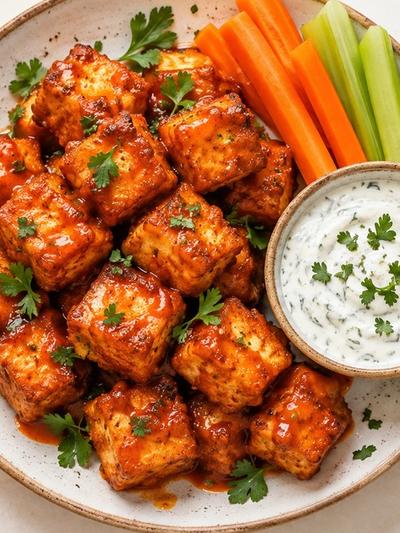
Each serving of these skillet pork burnt ends delivers roughly 30 grams of protein from one of the leanest cuts available — pork tenderloin — at just 215 calories. The quick stovetop method caramelizes a simple homemade glaze directly onto bite-sized cubes, creating sticky, deeply flavored morsels that taste like they spent hours in a smoker. A cool yogurt ranch dip adds creaminess and an additional protein boost without the fat of traditional ranch dressing.
The flavor here is pure American backyard — sweet, smoky, and just a little tangy. Smoked paprika and a touch of honey build the backbone of the glaze, while apple cider vinegar sharpens everything and prevents the sweetness from becoming cloying. Each bite has a caramelized exterior that gives way to tender, juicy pork inside, and the contrast with the herb-flecked yogurt ranch makes it genuinely hard to stop eating.
For GLP-1 users, these bites solve the snack problem elegantly. They're portioned naturally — you pick up a cube, dip it, eat it — so there's no guesswork about serving size. The high protein density means a small bowl of five or six pieces genuinely satisfies, and the gentle spice profile won't aggravate the digestive sensitivity that many people experience on these medications.
Why This Works on GLP-1
Preserving lean muscle mass is one of the most important nutritional priorities during GLP-1-assisted weight loss, and that requires consistent protein intake throughout the day — not just at meals. These burnt ends deliver 30 grams of complete protein per snack serving, which helps close the daily protein gap that many Mounjaro and Wegovy users struggle with when appetite is significantly reduced. Pork tenderloin is comparable to chicken breast in its protein-to-fat ratio, making it an underused powerhouse for high-protein snacking. Having a grab-and-go protein snack already portioned in the fridge removes the friction of eating enough when you simply don't feel hungry.
The yogurt ranch dip contributes probiotics and additional protein without the heavy fat load of sour cream-based dressings. Because GLP-1 medications slow gastric emptying, lower-fat preparations move through the stomach more comfortably, reducing the nausea and bloating that high-fat snacks can trigger.
Pork tenderloin is also a strong source of thiamine (vitamin B1) and selenium, both of which support energy metabolism and thyroid function. These micronutrients become especially relevant when overall food intake drops, because every bite needs to carry more nutritional weight than it did before medication.
Ingredients (serves 4)
For the pork burnt ends:
- 1 lb (454g) pork tenderloin, trimmed and cut into 1-inch cubes
- 1 tablespoon smoked paprika
- 1 teaspoon garlic powder
- 1/2 teaspoon onion powder
- 1/4 teaspoon black pepper
- 1/4 teaspoon salt
- 2 teaspoons avocado oil or olive oil
- 2 tablespoons tomato paste
- 1 tablespoon honey
- 1 tablespoon apple cider vinegar
- 1 teaspoon Worcestershire sauce
- 2 tablespoons water
For the yogurt ranch dip:
- 1/2 cup (120g) plain nonfat Greek yogurt
- 1 tablespoon fresh dill, finely chopped (or 1 teaspoon dried)
- 1 tablespoon fresh chives, finely chopped
- 1/2 teaspoon garlic powder
- 1/4 teaspoon onion powder
- 1 teaspoon lemon juice
- Pinch of salt
Instructions
Make the yogurt ranch dip:
- Stir together the Greek yogurt, dill, chives, garlic powder, onion powder, lemon juice, and salt in a small bowl. Refrigerate while you cook the pork — the flavors develop as it sits, and the cold temperature creates a better contrast with the warm bites.
Season and sear the pork:
Pat the pork tenderloin cubes dry with paper towels. This step matters — dry surfaces caramelize, wet surfaces steam, and you want a sticky crust, not a soggy one.
Toss the cubes with smoked paprika, garlic powder, onion powder, black pepper, and salt in a medium bowl until evenly coated.
Heat the avocado oil in a large nonstick skillet or cast iron pan over medium-high heat until the oil just begins to shimmer. Arrange the pork cubes in a single layer with space between them. Resist the urge to crowd the pan — work in two batches if necessary.
Sear without moving for 2 minutes per side, turning to brown on at least three sides. The goal is a dark, slightly crispy exterior on each cube. This takes about 6–7 minutes total. The pork should be just cooked through — it will continue cooking in the glaze.
Build the glaze:
Reduce heat to medium-low. Push the pork to one side of the skillet and add the tomato paste to the empty side. Stir the paste against the hot pan for 30 seconds — this blooms the tomato flavor and removes the raw, tinny taste that uncooked tomato paste can have.
Add the honey, apple cider vinegar, Worcestershire sauce, and water to the tomato paste. Stir to combine into a smooth sauce, then toss the pork cubes through it until every piece is evenly coated.
Cook for 2–3 minutes more, stirring occasionally, until the glaze thickens and clings to the pork in a sticky, lacquered layer. The sauce should look glossy and reduced, not watery.
Serve:
- Transfer the pork bites to a plate or divide among four small containers. Serve warm or at room temperature alongside the yogurt ranch dip.
Nutrition per Serving
| Nutrient | Amount (approx.) |
|---|---|
| Calories | ~215 kcal |
| Protein | ~30g |
| Fat | ~5g |
| Carbohydrates | ~13g |
| Fiber | ~1g |
Estimates based on trimmed pork tenderloin, nonfat Greek yogurt, and the stated quantities of glaze ingredients. Actual values may vary by brand.
Practical Notes
Meal prep storage. These bites refrigerate beautifully for up to 4 days in airtight containers. Store the yogurt ranch separately to prevent it from thinning. Reheat the pork in a skillet over medium heat for 2 minutes to restore the sticky exterior — the microwave works but sacrifices the caramelized texture.
Cutting consistent cubes. Aim for true 1-inch cubes so everything cooks at the same rate. If some pieces from the tapered end of the tenderloin are smaller, add them to the skillet 30 seconds after the larger pieces to avoid overcooking.
Sugar-free option. Replace the honey with 2 teaspoons of sugar-free maple syrup or a pinch of stevia-monk fruit blend. The glaze will be slightly less sticky but still flavorful. This drops each serving by about 15 calories and 4 grams of carbs.
Pairing for a fuller snack. If your appetite allows, serve alongside celery sticks, bell pepper strips, or cucumber rounds for dipping into the leftover yogurt ranch. This adds fiber and volume without significantly increasing calories.
Freezer-friendly. Freeze glazed pork bites in a single layer on a parchment-lined tray, then transfer to a freezer bag once solid. They keep for up to 2 months. Reheat from frozen in a skillet over medium heat for 4–5 minutes, adding a splash of water to rehydrate the glaze.
Frequently Asked Questions
I'm in my first weeks on Ozempic and can barely eat — is this snack too much?
Can I use a different cut of pork?
How long do these keep in the fridge, and can I eat them cold?
Is the sugar content from the honey a concern on GLP-1?
My skillet isn't nonstick — will the glaze burn?
This article provides general food and nutrition guidance only. It does not constitute medical advice. Always consult your healthcare provider regarding your GLP-1 medication and individual nutritional needs.