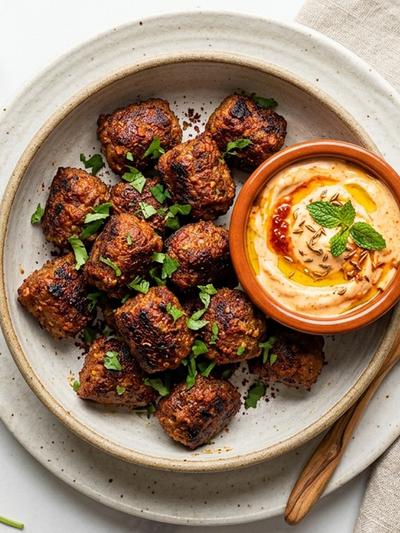
Each snack-sized serving of these Moroccan kefta bites packs 26 grams of protein from lean ground beef, bolstered by fresh herbs and a cooling yogurt dip that adds another layer of nutrition. At only 230 calories per portion, you get a genuinely satisfying snack without the caloric weight of a full meal. The combination of cumin, coriander, cinnamon, and smoked paprika creates a warm North African spice profile that pairs naturally with the brightness of fresh mint and cilantro folded directly into the meat.
The flavor here is layered in a way that makes five small bites feel like an event. The warm spices bloom as the kefta cook, developing a light crust on the outside while staying tender within thanks to finely grated zucchini mixed into the beef. The preserved lemon yogurt dip cuts through the richness with its briny, floral tang, and a final scatter of fresh mint leaves ties every element together.
For anyone on a GLP-1 medication, these kefta solve a common problem: finding a snack that delivers real protein without overwhelming a reduced appetite. Five small bites are easy to eat slowly, the spicing is warm without being aggressive on the stomach, and the entire recipe comes together in a single skillet in twenty minutes. They hold well at room temperature for an hour, making them practical for afternoon snacking or packing in a container for later.
Why This Works on GLP-1
Preserving lean muscle mass is one of the most important nutritional priorities during GLP-1-assisted weight loss, and that requires consistent protein intake spread across meals and snacks. These kefta bites provide 26 grams of complete protein per serving, primarily from 93% lean ground beef, which supplies all essential amino acids along with bioavailable iron and B12. For anyone on Mounjaro or a similar GLP-1 receptor agonist, hitting a protein target of 25 grams or more even in a snack helps protect muscle tissue while the medication supports fat loss. The Greek yogurt in the dip contributes an additional 3 grams of protein per serving while adding beneficial probiotics.
The spice profile here is deliberately gentle. Cumin and coriander support digestion rather than irritating it, and cinnamon has been shown to help moderate blood sugar response after eating. The grated zucchini mixed into the beef adds moisture that makes the kefta easier to chew and swallow, which matters when GLP-1 medications slow gastric emptying.
At 230 calories and 11 grams of fat per serving, this snack fits comfortably into a reduced-calorie day without requiring meticulous tracking. The moderate fat content comes almost entirely from the lean beef itself rather than added oils, and the protein-to-calorie ratio is excellent at roughly one gram of protein per nine calories. Users of Wegovy and similar medications often report that protein-dense snacks like these reduce the urge to graze on less nutritious options between meals.
Ingredients (serves 4)
For the kefta bites:
- 1 lb (454g) 93% lean ground beef
- 1 small zucchini, finely grated and squeezed dry (about 1/2 cup / 80g)
- 2 tablespoons finely chopped fresh mint
- 2 tablespoons finely chopped fresh cilantro
- 2 tablespoons finely grated shallot (about 1 small)
- 1 teaspoon ground cumin
- 1/2 teaspoon ground coriander
- 1/2 teaspoon smoked paprika
- 1/4 teaspoon ground cinnamon
- 1/2 teaspoon fine sea salt
- 1/4 teaspoon black pepper
- 2 teaspoons olive oil
For the preserved lemon yogurt dip:
- 1/2 cup (120g) plain Greek yogurt (2% fat)
- 1 tablespoon finely minced preserved lemon rind
- 1 teaspoon fresh lemon juice
- 1/4 teaspoon ground cumin
- Pinch of fine sea salt
For serving:
- Fresh mint leaves
- Lemon wedges
Instructions
Make the kefta mixture:
Place the ground beef in a medium bowl along with the squeezed-dry grated zucchini, chopped mint, cilantro, grated shallot, cumin, coriander, smoked paprika, cinnamon, salt, and pepper. The zucchini adds moisture that keeps the lean beef tender during cooking without adding noticeable calories or flavor. Mix with your hands just until everything is evenly distributed — overworking ground beef makes it dense and rubbery.
Divide the mixture into 20 equal portions and roll each into a small ball, roughly the size of a large marble or about 1 inch across. Keeping the kefta small ensures they cook through quickly and stay at a snack-friendly size. Set them on a plate as you work.
Cook the kefta:
Heat the olive oil in a large nonstick or cast-iron skillet over medium-high heat until the oil shimmers. A properly preheated pan creates a light crust without needing excessive fat.
Add the kefta in a single layer, leaving a little space between each one. Cook without moving them for 3 to 4 minutes until the bottoms develop a golden-brown crust. Turn each one and cook for another 3 to 4 minutes until browned on all sides and cooked through — the internal temperature should reach 160°F (71°C). The small size means they cook fast, so watch them closely after the first turn.
Transfer the cooked kefta to a plate lined with a paper towel and let them rest for 2 minutes. This brief rest redistributes the juices so the bites stay moist when you eat them.
Make the dip:
- While the kefta cook, stir together the Greek yogurt, minced preserved lemon rind, lemon juice, cumin, and salt in a small bowl. Taste and adjust the salt — preserved lemons are quite briny, so you may not need much. The dip should be tangy and floral with a subtle spice note from the cumin.
Serve:
- Arrange 5 kefta bites per serving alongside a generous spoonful of the preserved lemon yogurt. Scatter a few fresh mint leaves over the top and serve with a lemon wedge for squeezing.
Nutrition per Serving
| Nutrient | Amount (approx.) |
|---|---|
| Calories | ~230 kcal |
| Protein | ~26g |
| Fat | ~11g |
| Carbohydrates | ~5g |
| Fiber | ~1g |
Estimates based on 93% lean ground beef, 2% Greek yogurt, and standard USDA values for fresh produce and spices. Actual values may vary by brand.
Practical Notes
Preserved lemon substitution. If you cannot find preserved lemons, mix 1 teaspoon of finely grated lemon zest with a pinch of flaky salt and let it sit for 5 minutes before stirring into the yogurt. The result is less complex but still provides the bright, citrusy contrast the kefta need. Preserved lemons are sold in jars at Middle Eastern grocery stores and increasingly at well-stocked supermarkets.
Meal prep and storage. Cooked kefta keep in an airtight container in the refrigerator for up to 4 days. Reheat gently in a skillet over medium heat for 2 to 3 minutes or eat them cold — they are surprisingly good straight from the fridge, especially with the yogurt dip made fresh. Store the dip separately to keep it from getting watery.
Boost the fiber. Serve the kefta alongside cucumber rounds, bell pepper strips, or carrot sticks for dipping into the yogurt alongside the meat. Adding a cup of raw vegetable crudités brings the fiber up to 3 to 4 grams per serving and adds satisfying crunch without significantly changing the calorie count.
Freezing for later. Freeze the uncooked kefta balls on a parchment-lined baking sheet until solid, then transfer to a freezer bag. They keep for up to 3 months. Cook directly from frozen — add 2 to 3 extra minutes of cooking time per side and reduce the heat to medium so the outside does not burn before the center is done.
Eating on GLP-1 with a very small appetite. A half portion of 2 to 3 kefta with a tablespoon of yogurt dip is a perfectly valid snack at around 115 calories and 13 grams of protein. Eating slowly and chewing thoroughly helps when gastric emptying is slowed by your medication.
Frequently Asked Questions
Can I use a fattier ground beef like 85% lean for these kefta?
What can I use instead of beef for this recipe?
How should I store and reheat leftover kefta for snacking during the week?
I'm in the first weeks of GLP-1 treatment and can barely eat — is this snack still practical?
Do I need to squeeze the moisture out of the grated zucchini?
This article provides general food and nutrition guidance only. It does not constitute medical advice. Always consult your healthcare provider regarding your GLP-1 medication and individual nutritional needs.