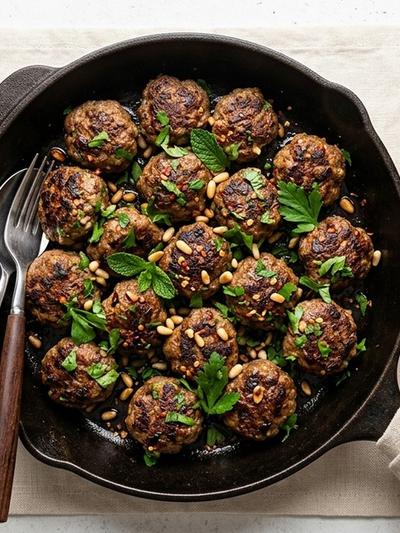
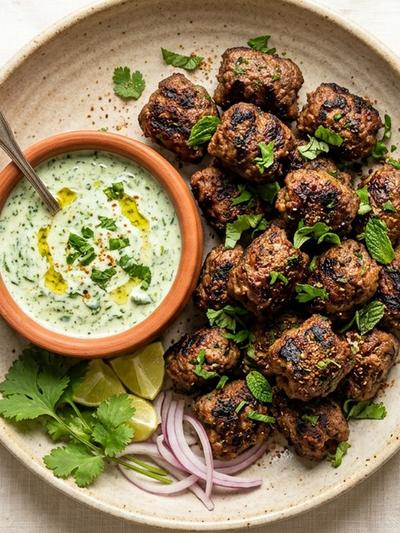
Each serving of these Tunisian-inspired merguez bites delivers 29 grams of protein and just 225 calories, making them one of the most efficient protein snacks you can prepare. Lean ground beef provides the amino acid foundation, while chickpea flour acts as a binder that adds a small dose of plant-based protein and fiber. The combination of cumin, fennel, coriander, and harissa paste creates a deeply aromatic bite without relying on added fat for flavor.
Traditional merguez sausage is a staple across Tunisia, Morocco, and Algeria — richly spiced lamb or beef links grilled over charcoal. This version captures those warm, complex flavors in a leaner format. The fennel seeds provide a subtle anise sweetness that rounds out the heat of the harissa, while smoked paprika adds depth without heaviness. Each bite has a crisp, caramelized exterior from the air fryer and a tender, juicy interior.
For GLP-1 users, these bites solve the common snacking problem: finding something satisfying in a small volume that still delivers meaningful protein. Five or six bites make a complete snack portion, and the bold North African seasoning means every bite registers as flavorful and complete. The air fryer method keeps preparation under 25 minutes with minimal cleanup, removing friction from the snack prep process.
Why This Works on GLP-1
With 29 grams of protein per serving, these merguez bites provide nearly half the daily protein many GLP-1 users need to preserve lean muscle mass during weight loss. Muscle preservation is one of the most important nutritional priorities while taking medications like Mounjaro or Wegovy, since reduced caloric intake can lead to muscle loss alongside fat loss. The high protein density per calorie — roughly 29 grams in just 225 calories — means you get substantial muscle-supporting nutrition without overshooting your reduced energy needs. Ground beef also provides bioavailable iron and B12, two nutrients that can become harder to maintain when eating smaller portions overall.
The spice profile in these bites is intentionally moderate. Harissa provides warmth rather than aggressive heat, and fennel has traditionally been used to support digestion. GLP-1 medications slow gastric emptying, so avoiding overly rich or heavily spiced foods helps prevent the nausea and discomfort some users experience — these bites strike the right balance between flavor intensity and digestive comfort.
At under 400 calories per serving with the yogurt dip included, this snack fits comfortably into a calorie-controlled day without requiring careful portion negotiation. The Greek yogurt dip adds an additional 3 grams of protein while providing a cooling contrast to the warm spices, and the probiotics in yogurt may support gut health during GLP-1 treatment.
Ingredients (serves 4)
For the merguez bites:
- 1 lb (454g) 93% lean ground beef
- 2 tablespoons (14g) chickpea flour (besan)
- 1 tablespoon harissa paste (not powder)
- 2 cloves garlic, finely minced
- 1 teaspoon ground cumin
- 1 teaspoon fennel seeds, lightly crushed
- 1/2 teaspoon ground coriander
- 1/2 teaspoon smoked paprika
- 1/2 teaspoon fine sea salt
- 1/4 teaspoon black pepper
- 1 tablespoon (7g) ground flaxseed
- 2 tablespoons fresh cilantro, finely chopped
For the harissa yogurt dip:
- 1/2 cup (125g) plain 2% Greek yogurt
- 1 teaspoon harissa paste
- 1 tablespoon fresh lemon juice
- 1 tablespoon fresh mint, finely chopped
- Pinch of salt
Instructions
Prepare the merguez mixture:
In a medium bowl, combine the ground beef, chickpea flour, harissa paste, garlic, cumin, crushed fennel seeds, coriander, smoked paprika, salt, pepper, ground flaxseed, and cilantro. Mix with your hands until the spices are evenly distributed — about 60 seconds of gentle folding. Overmixing will make the bites tough, so stop as soon as the mixture looks uniform.
Divide the mixture into 20–24 small portions, about 1 tablespoon each. Roll each portion into a small oval or slightly flattened patty, roughly 1.5 inches (4cm) across. The slight flattening helps them cook evenly and develop more surface crust in the air fryer.
Air fry the bites:
Preheat your air fryer to 400°F (200°C) for 3 minutes. Lightly mist the basket with cooking spray or brush with a thin layer of oil — this prevents sticking and helps the exterior crisp.
Arrange the bites in a single layer in the air fryer basket, leaving a small gap between each one for air circulation. You may need to cook in two batches depending on your air fryer size. Cook for 10–12 minutes, shaking the basket or flipping the bites at the halfway point. They are done when the exterior is deeply browned and an internal thermometer reads 160°F (71°C).
Make the harissa yogurt dip:
- While the bites cook, stir together the Greek yogurt, harissa paste, lemon juice, mint, and salt in a small bowl. Taste and adjust the harissa level — start mild and add more if you tolerate heat well. The dip should be cooling with a gentle warmth underneath.
Serve:
- Let the bites rest for 2 minutes after cooking — this allows the juices to redistribute and prevents them from being dry. Serve 5–6 bites per portion alongside 2 tablespoons of the harissa yogurt dip.
Nutrition per Serving
| Nutrient | Amount (approx.) |
|---|---|
| Calories | ~225 kcal |
| Protein | ~29g |
| Fat | ~9g |
| Carbohydrates | ~6g |
| Fiber | ~2g |
Estimates based on 93% lean ground beef, 2% Greek yogurt, and standard measurements for harissa paste and chickpea flour. Actual values may vary with specific brands.
Practical Notes
Batch prep and freeze for the week. These bites freeze exceptionally well. Form them, arrange on a parchment-lined sheet pan, freeze for 1 hour until solid, then transfer to a zip-top bag. Cook from frozen at 400°F (200°C) for 14–16 minutes, adding 3–4 minutes to the fresh cooking time. Keep a bag in the freezer for days when you need protein quickly.
Adjust the harissa level to your tolerance. Harissa paste varies widely between brands — some are mild and fruity, others are quite hot. If you are early in your GLP-1 treatment and experiencing nausea sensitivity, start with half the harissa in both the bites and the dip. You can always add more heat to the yogurt dip after tasting. Rose harissa is a milder, more fragrant option worth trying.
Swap the beef for other lean proteins. Ground turkey (93% lean) or ground chicken breast work as direct swaps with no other changes needed. Ground lamb is traditional for merguez but significantly higher in fat — if using lamb, choose the leanest ground available and expect roughly 3–4 extra grams of fat per serving.
Store leftovers properly. Cooked bites keep in an airtight container in the refrigerator for up to 4 days. Reheat in the air fryer at 350°F (175°C) for 3–4 minutes to restore the crisp exterior — microwaving works but produces a softer texture. Store the yogurt dip separately and keep it refrigerated; it stays fresh for up to 5 days.
Pair with raw vegetables for a more complete snack. Sliced cucumber, bell pepper strips, or cherry tomatoes alongside the bites and dip round out the snack with additional fiber and volume. For GLP-1 users who find even snack portions filling, eat the protein bites first to prioritize your protein intake, then add vegetables as appetite allows.
Frequently Asked Questions
Can I eat these merguez bites if I'm experiencing nausea on GLP-1 medication?
What can I use instead of chickpea flour?
How should I store and reheat these for meal prep?
I'm in the early weeks of Zepbound and can only eat very small amounts. How do I adjust?
Can I cook these in a conventional oven instead of an air fryer?
This article provides general food and nutrition guidance only. It does not constitute medical advice. Always consult your healthcare provider regarding your GLP-1 medication and individual nutritional needs.