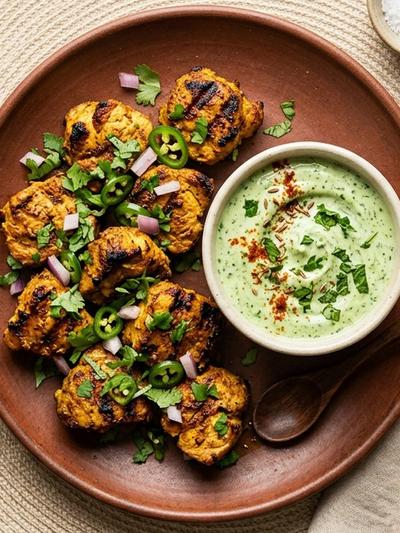
Each serving of these reshmi kebab bites packs 28g of complete protein from chicken breast, with only 245 calories and 11g of fat. The marinade relies on Greek yogurt and a small amount of ground cashews for that signature silky reshmi texture, replacing the heavy cream found in traditional recipes. Cardamom, mace, and white pepper bring warmth without heat, making this a spice-forward snack that stays gentle on the stomach.
Reshmi kebabs — the name means "silky" in Hindi — are traditionally known for their extraordinarily tender, almost creamy texture. That quality comes from a double marinade: first a brief acid tenderize, then a rich yogurt-cashew paste that clings to the meat during cooking. The air fryer crisps the exterior while the interior stays moist, creating a contrast of textures that makes each bite satisfying without heaviness.
For GLP-1 users, these bites solve the common snack problem of wanting something savory and substantial without a full meal commitment. Each bite is small enough to eat one or two at a time, and the high protein density means even a half-serving provides meaningful nutrition. The aromatic spices stimulate appetite gently, which can be especially helpful on days when food feels unappealing.
Why This Works on GLP-1
With 28g of protein per serving, these reshmi kebab bites provide the kind of concentrated protein that supports muscle preservation during GLP-1-assisted weight loss. Research consistently shows that maintaining adequate protein intake — at least 25g per meal or snack — helps prevent the lean muscle loss that can accompany rapid weight reduction on medications like Mounjaro or Wegovy. Chicken breast is one of the most bioavailable protein sources, meaning your body absorbs and uses a high percentage of what you eat. For users experiencing reduced appetite, getting this much protein into a small, flavorful package matters.
The Greek yogurt in the marinade contributes additional protein along with probiotics that support gut health — a relevant consideration since GLP-1 medications alter digestive transit time. The gentle spice profile avoids capsaicin-heavy heat that can trigger nausea, relying instead on cardamom and mace, which have traditionally been valued for their digestive-soothing properties.
At just 245 calories per serving, these bites fit comfortably into a reduced-calorie day without requiring careful portion math. The moderate fat content from cashews and yogurt provides satiety signals that complement GLP-1's appetite-reducing effects, helping you feel satisfied after a small number of bites rather than grazing mindlessly.
Ingredients (serves 4)
For the first marinade:
- 1 lb (450g) boneless, skinless chicken breast, cut into 1-inch cubes
- 1 tablespoon lemon juice
- ½ teaspoon salt
- ¼ teaspoon ground turmeric
For the reshmi paste:
- ⅓ cup (80g) plain Greek yogurt (2% or full-fat)
- 2 tablespoons (15g) raw cashews, soaked 10 minutes in hot water and drained
- 1 tablespoon grated fresh ginger
- 2 cloves garlic, minced
- ½ teaspoon ground cardamom
- ¼ teaspoon ground mace
- ¼ teaspoon ground white pepper
- ½ teaspoon garam masala
- 1 tablespoon neutral oil (avocado or light olive)
- ¼ teaspoon salt
For the cashew yogurt dip:
- ⅓ cup (80g) plain Greek yogurt (2% or full-fat)
- 1 tablespoon (8g) raw cashews, finely ground
- 1 tablespoon fresh mint, finely chopped
- ½ teaspoon chaat masala
- Pinch of salt
Instructions
Prepare the first marinade:
- Toss the chicken cubes with lemon juice, salt, and turmeric in a bowl. The brief acid exposure begins breaking down surface proteins, which allows the second marinade to penetrate more deeply. Let this sit for 10 minutes while you prepare the reshmi paste.
Make the reshmi paste and marinate:
Blend the soaked cashews with Greek yogurt, ginger, garlic, cardamom, mace, white pepper, garam masala, oil, and salt in a small blender or food processor until smooth. The cashews should break down completely into the yogurt — this is what creates the silky coating that defines reshmi kebabs.
Pour the reshmi paste over the chicken and mix thoroughly, ensuring every cube is well coated. Marinate for at least 15 minutes at room temperature, or up to 8 hours in the refrigerator. Longer marination produces more tender, flavorful results.
Air fry the kebab bites:
Preheat your air fryer to 400°F (200°C) for 3 minutes. Lightly mist the basket with cooking spray or brush with a thin layer of oil to prevent sticking.
Arrange the chicken cubes in a single layer in the air fryer basket, leaving small gaps between pieces for air circulation. Work in two batches if necessary — overcrowding steams the chicken instead of crisping it.
Air fry for 6 minutes, then flip each piece and cook for an additional 4–5 minutes until the exterior is golden with lightly charred spots and the internal temperature reaches 165°F (74°C). The yogurt-cashew coating should look set and slightly blistered.
Let the bites rest for 2 minutes on a plate — this allows the juices to redistribute so the interior stays moist when you bite in.
Prepare the dip:
- While the chicken cooks, stir together the yogurt, ground cashews, mint, chaat masala, and salt. The chaat masala adds a tangy, slightly sulfuric depth that complements the mild kebab spicing. Serve alongside the warm bites.
Nutrition per Serving
| Nutrient | Amount (approx.) |
|---|---|
| Calories | ~245 kcal |
| Protein | ~28g |
| Fat | ~11g |
| Carbohydrates | ~9g |
| Fiber | ~2g |
Estimates based on 1 lb boneless skinless chicken breast, 2% Greek yogurt, and raw cashews divided across 4 servings.
Practical Notes
Marinate overnight for the best results. If you have the time, mixing the chicken with both marinades the night before and refrigerating produces remarkably tender bites. The yogurt enzymes and acid work slowly at cold temperatures, breaking down connective tissue without making the meat mushy. Pull from the fridge 10 minutes before air frying.
Store and reheat with care. Cooked bites keep in an airtight container in the refrigerator for up to 4 days. Reheat in the air fryer at 350°F (175°C) for 3–4 minutes to restore the exterior crispness — the microwave works but softens the coating. The dip stores separately for up to 3 days.
Scale down for smaller appetites. If you are in the early weeks of Zepbound or another GLP-1 medication and find full servings too large, prepare the full batch but eat just 3–4 bites as a snack. The rest refrigerates well, giving you several days of ready protein without cooking again.
Swap cashews if needed. For a nut-free version, substitute blanched almonds or sunflower seeds in both the marinade and dip. The texture changes slightly — almonds produce a grainier paste — but the flavor profile remains similar. Avoid peanuts, which overpower the delicate reshmi spicing.
Thread onto skewers for presentation. If serving these as appetizers or want a more traditional kebab look, thread the marinated chicken onto short metal or pre-soaked bamboo skewers before air frying. Skewers also make the bites easier to flip — just rotate each skewer once during cooking.
Frequently Asked Questions
Can I eat these reshmi kebab bites if I experience nausea on GLP-1 medication?
Can I use chicken thighs instead of breast?
How should I store and portion these for weekly meal prep?
What if my appetite is very small and I cannot finish a full serving?
My air fryer runs hot — how do I prevent the yogurt coating from burning?
This article provides general food and nutrition guidance only. It does not constitute medical advice. Always consult your healthcare provider regarding your GLP-1 medication and individual nutritional needs.