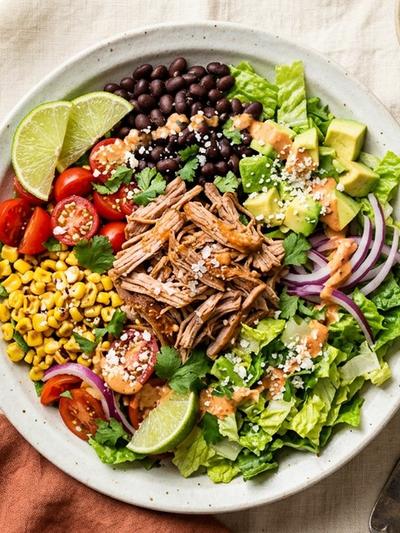
Each serving of this slow cooker Thai pork salad delivers roughly 35 grams of protein from one of the leanest cuts available — pork tenderloin averages just 3 grams of fat per four-ounce serving before cooking. The slow cooker breaks down the meat's connective tissue into silky, shreddable strands without adding any oil, while the raw vegetable base provides crunch, volume, and a solid 4 grams of fiber. You also get meaningful amounts of vitamin C from the lime and cabbage, plus anti-inflammatory compounds from the fresh ginger and herbs.
The flavor here is unmistakably Thai — a balance of salty fish sauce, sour lime, faintly sweet honey, and aromatic ginger, all pulled together by handfuls of fresh cilantro and mint. The slow-cooked pork absorbs those aromatics for hours, so every shred carries flavor. Against that, the cool crunch of napa cabbage, shaved carrots, and sliced cucumber creates a contrast that makes this salad far more satisfying than its calorie count suggests.
This format works exceptionally well for GLP-1 users because the pork is so tender it practically melts — no heavy chewing or dense texture that can feel unpleasant when appetite is suppressed. The salad base adds volume without caloric density, so a reasonable portion looks and feels like a full meal. And because everything is served at room temperature or just slightly warm, it sidesteps the nausea triggers that very hot or very rich foods can provoke.
Why This Works on GLP-1
Pork tenderloin is a powerhouse protein source that often gets overlooked in favor of chicken breast. At 35 grams of protein per serving here, this salad covers roughly 50–70% of most GLP-1 users — including those on Ozempic or Mounjaro —' daily protein target in a single meal. That matters because muscle preservation is one of the central nutritional challenges during GLP-1-assisted weight loss — adequate protein intake signals your body to maintain lean mass even in a caloric deficit. The slow cooking method also partially breaks down the protein structure, which may support easier digestion compared to seared or grilled preparations.
The combination of raw napa cabbage, carrots, and cucumber provides gentle fiber — enough to support gut motility without the bloating that higher-fiber legumes or raw cruciferous vegetables like broccoli can cause. The ginger in both the cooking liquid and the dressing is a genuine digestive aid, well-studied for its anti-nausea properties, which makes it particularly relevant for people in the early weeks of GLP-1 titration.
The overall macronutrient profile — high protein, moderate carbohydrate, low fat — aligns with what most dietitians recommend for GLP-1 patients focused on body recomposition. The absence of added cooking oil keeps the fat content minimal, while the small amount of honey in the dressing provides just enough carbohydrate energy to make the meal satisfying without spiking blood sugar.
Ingredients (serves 4)
For the slow cooker pork:
- 1½ lb (680g) pork tenderloin, trimmed of silverskin
- 2 tablespoons fish sauce
- 1 tablespoon fresh lime juice
- 1 tablespoon reduced-sodium soy sauce
- 1 tablespoon freshly grated ginger
- 3 cloves garlic, smashed
- 1 stalk lemongrass, outer layers removed, cut into 3 pieces and bruised
- ½ cup (120ml) low-sodium chicken broth
For the Thai dressing:
- 3 tablespoons fresh lime juice (about 2 limes)
- 1½ tablespoons fish sauce
- 1 tablespoon rice vinegar
- 2 teaspoons honey
- 1 teaspoon freshly grated ginger
- 1 small garlic clove, finely minced
For the salad base:
- 4 cups (280g) napa cabbage, thinly sliced
- 1 cup (110g) shredded carrots
- 1 medium cucumber, halved and thinly sliced
- 3 scallions, thinly sliced
- ½ cup (20g) fresh cilantro leaves and tender stems
- ¼ cup (10g) fresh mint leaves, torn
- 1 tablespoon sesame seeds, for garnish
Instructions
Prepare and start the slow cooker:
- Trim any silverskin or excess fat from the pork tenderloin. Silverskin doesn't break down during cooking and will make the shredded meat chewy, so take a minute to remove it with a sharp knife.
- In a small bowl, whisk together the fish sauce, lime juice, soy sauce, and grated ginger. This concentrated mixture will penetrate the pork during the long cook, building flavor from the inside out.
- Place the smashed garlic cloves and bruised lemongrass pieces in the bottom of your slow cooker. Lay the pork tenderloin on top.
- Pour the fish sauce mixture evenly over the pork, then add the chicken broth to the slow cooker. The broth prevents the bottom from scorching and creates a flavorful cooking liquid.
- Cover and cook on low for 3 to 4 hours or on high for 2 to 2½ hours. Pork tenderloin is lean and will dry out if overcooked — aim for an internal temperature of 145°F (63°C) before shredding.
Make the dressing:
- While the pork cooks, whisk together the lime juice, fish sauce, rice vinegar, honey, grated ginger, and minced garlic in a small bowl. The dressing should taste punchy and slightly too intense on its own — it will mellow once it coats the salad. Set aside at room temperature so the flavors can marry.
Prepare the salad base:
- Thinly slice the napa cabbage crosswise into ribbons about ¼ inch wide. Napa is ideal here because its tender leaves absorb dressing well while the white ribs stay crunchy.
- Combine the sliced cabbage, shredded carrots, cucumber slices, and scallions in a large bowl. Hold off on adding the herbs until just before serving — they'll wilt if dressed too early.
Shred and assemble:
- When the pork is cooked through and tender, transfer it to a cutting board and let it rest for 5 minutes. Discard the lemongrass pieces.
- Using two forks, shred the pork into bite-sized strands. Spoon 2 to 3 tablespoons of the slow cooker liquid over the shredded meat and toss gently — this keeps the pork moist and adds another layer of flavor.
- Add the cilantro and torn mint to the salad base. Drizzle the dressing over the vegetables and toss to coat evenly.
- Divide the dressed salad among four plates or bowls. Top each portion with shredded pork and a sprinkle of sesame seeds. Serve immediately.
Nutrition per Serving
| Nutrient | Amount (approx.) |
|---|---|
| Calories | ~270 kcal |
| Protein | ~35g |
| Fat | ~7g |
| Carbohydrates | ~16g |
| Fiber | ~4g |
Estimates based on 1½ lb pork tenderloin divided among 4 servings, with the full dressing and salad base. Actual values may vary slightly depending on the pork cut's fat content and how much cooking liquid is retained.
Practical Notes
Meal prep works beautifully with one adjustment. Store the shredded pork, salad base, and dressing in three separate containers in the refrigerator. Assembled, the salad gets soggy within hours — kept separate, all three components stay fresh for up to 4 days. Assemble individual portions as needed.
The slow cooker liquid is worth saving. Strain out the garlic and lemongrass, then refrigerate the cooking liquid. It makes an excellent base for a quick soup, a braising liquid for vegetables, or a flavor boost stirred into plain rice. It will keep refrigerated for up to 5 days.
Adjust the dressing heat if your tolerance allows. The base recipe is intentionally mild for GLP-1 digestion, but if you handle gentle heat well, add half a teaspoon of sambal oelek or a few thin slices of fresh red chili to the dressing. Start small — spice tolerance often decreases on GLP-1 medications.
Use an instant-read thermometer for the pork. Tenderloin is so lean that the window between perfectly tender and dry is narrow. Pull the pork at 145°F (63°C) internal temperature. It will coast up a few more degrees as it rests. Overcooking even slightly will result in stringy, dry shreds rather than juicy ones.
This makes an excellent next-day lunch wrap. Roll a portion of dressed salad and shredded pork into a low-carb tortilla or large butter lettuce leaf for a portable lunch. The flavors actually intensify overnight as the dressing continues to season the pork, making day-two leftovers arguably better than the first serving.
Frequently Asked Questions
I get nauseous easily on my GLP-1 medication — will the fish sauce be too strong?
Can I use chicken breast or thighs instead of pork tenderloin?
How long does the shredded pork last in the refrigerator, and can I freeze it?
What if I can only eat a very small portion right now?
My slow cooker runs hot — how do I prevent the tenderloin from drying out?
This article provides general food and nutrition guidance only. It does not constitute medical advice. Always consult your healthcare provider regarding your GLP-1 medication and individual nutritional needs.