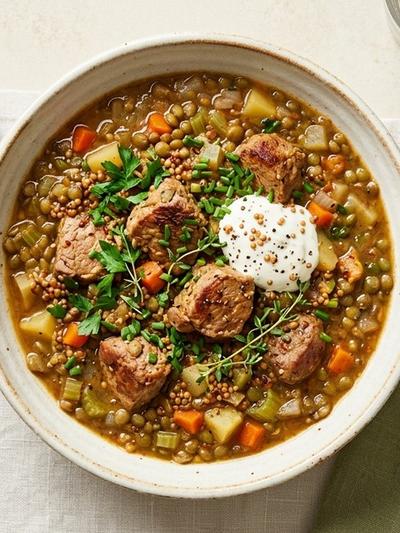
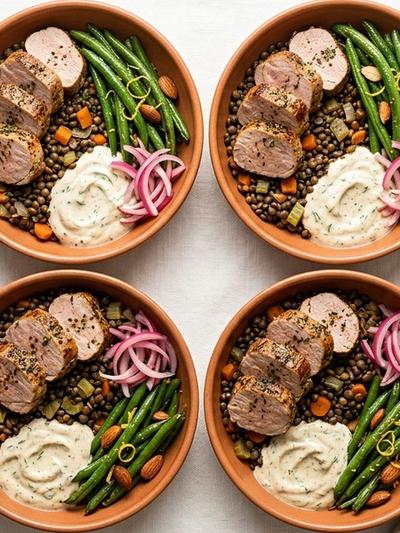
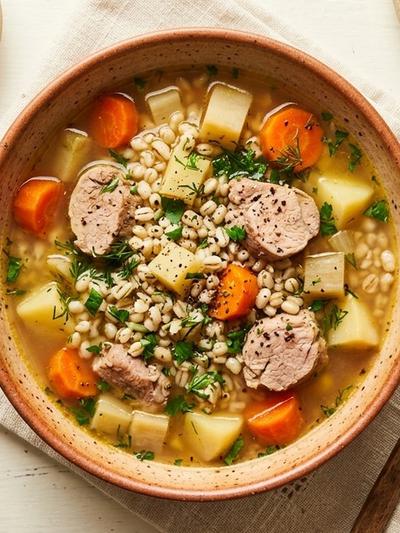
This slow cooker British cider-braised pork delivers 35 grams of protein and just 375 calories per serving — a ratio that makes it exceptionally useful for anyone prioritizing muscle preservation during weight loss. Pork tenderloin provides one of the leanest cuts available, while cannellini beans contribute an additional 7 grams of plant protein alongside 5 grams of soluble fiber. The parsnips and carrots round out each bowl with vitamins A and C plus gentle, gut-friendly carbohydrates.
Dry cider transforms during the long braise into something remarkable — a sauce that is simultaneously fruity, savory, and faintly sweet without any added sugar. The natural sugars in parsnips caramelize slowly alongside the pork, while whole-grain mustard and fresh thyme cut through the sweetness with sharp, herbaceous warmth. Each forkful layers silky beans against tender root vegetables and pork that practically falls apart.
For GLP-1 users, this recipe offers the ideal dinner format: concentrated nutrition in modest portions that feel deeply satisfying. The slow cooker does all the work while you go about your day, and the braising liquid keeps everything moist and easy to digest. Small servings of this stew feel substantial because of the protein density and fiber content working together to sustain satiety well into the evening.
Why This Works on GLP-1
Each serving provides 35 grams of complete protein from two complementary sources — lean pork tenderloin and cannellini beans. This level of protein intake at dinner supports the muscle preservation that becomes critical during the accelerated weight loss many people experience on Mounjaro or similar GLP-1 medications. Because the pork is slow-braised until completely tender, it requires minimal chewing effort and breaks down easily in the stomach, which matters when gastric emptying is already slowed by medication.
The 8 grams of fiber per serving come primarily from the white beans and parsnips — both sources of soluble fiber that move gently through the digestive system without causing the bloating or gas that higher-fiber foods like raw cruciferous vegetables sometimes trigger. This gentle fiber profile helps maintain regular bowel function, a common concern for GLP-1 users adjusting to reduced food intake.
At just 7 grams of fat and 375 calories per serving, this dinner leaves comfortable room in your daily budget for other meals and snacks. The B vitamins in pork tenderloin — particularly B1 (thiamine) and B6 — support energy metabolism, which can feel sluggish during periods of caloric restriction. The iron from both the pork and the white beans also contributes to preventing the fatigue that sometimes accompanies significant dietary changes.
Ingredients (serves 4)
For the pork:
- 1½ lb (680g) pork tenderloin, trimmed and cut into 2-inch (5cm) pieces
- ½ teaspoon fine sea salt
- ¼ teaspoon freshly ground black pepper
- 1 tablespoon whole-grain mustard
- 2 teaspoons olive oil
For the braise:
- 1 medium onion, diced (about 1 cup / 150g)
- 2 medium parsnips, peeled and cut into 1-inch (2.5cm) chunks (about 8 oz / 225g)
- 2 medium carrots, peeled and cut into 1-inch (2.5cm) chunks (about 6 oz / 170g)
- 2 stalks celery, sliced (about ½ cup / 100g)
- 3 cloves garlic, minced
- 1 cup (240ml) dry cider (not sweet cider)
- ½ cup (120ml) low-sodium chicken broth
- 1 tablespoon whole-grain mustard
- 1 tablespoon tomato paste
- 4 sprigs fresh thyme (or 1 teaspoon dried thyme)
- 2 bay leaves
For finishing:
- 1 can (15 oz / 425g) cannellini beans, drained and rinsed
- 1 tablespoon fresh lemon juice
- 2 tablespoons fresh flat-leaf parsley, chopped
Instructions
Season and sear the pork:
Pat the pork tenderloin pieces dry with paper towels, then season all over with salt and pepper. Rub the tablespoon of whole-grain mustard evenly over the pieces — this creates a savory crust that deepens during the long braise and adds flavor complexity you cannot achieve with seasoning alone.
Heat the olive oil in a large skillet over medium-high heat. Sear the pork pieces for about 90 seconds per side until golden brown on at least two sides. You are not cooking the pork through — you are building a Maillard crust that will enrich the braising liquid for hours. Transfer the seared pork to the slow cooker insert.
Build the braising base:
In the same skillet (no need to add more oil — use the residual fat), cook the diced onion over medium heat for 3 minutes until softened. Add the garlic and tomato paste, stirring for 30 seconds until fragrant. The tomato paste adds umami depth and a subtle sweetness that balances the dry cider.
Pour in the dry cider and chicken broth, scraping up any browned bits from the bottom of the skillet with a wooden spoon. These fond bits are concentrated flavor that would otherwise be wasted. Stir in the remaining tablespoon of whole-grain mustard.
Pour this liquid over the pork in the slow cooker. Arrange the parsnip chunks, carrot chunks, and celery slices around and over the pork. Tuck in the thyme sprigs and bay leaves.
Slow cook:
- Cover and cook on LOW for 6 to 7 hours, or on HIGH for 3½ to 4 hours. The pork is ready when it shreds easily with two forks and the parsnips are completely tender. The cider will have reduced into a glossy, lightly thickened sauce.
Finish with beans and serve:
Remove and discard the thyme sprigs and bay leaves. Add the drained cannellini beans, folding them gently into the stew. Cover and cook for an additional 15 minutes on HIGH — just long enough to warm the beans through without turning them mushy.
Stir in the lemon juice, which brightens the entire dish and cuts through the rich braising flavors. Taste and adjust salt if needed. Ladle into bowls and scatter fresh parsley over each serving.
Nutrition per Serving
| Nutrient | Amount (approx.) |
|---|---|
| Calories | ~375 kcal |
| Protein | ~35g |
| Fat | ~7g |
| Carbohydrates | ~33g |
| Fiber | ~8g |
Estimates based on trimmed pork tenderloin, low-sodium broth, and drained canned cannellini beans. Actual values vary with specific brands and cider used.
Practical Notes
Meal prep storage. This stew refrigerates beautifully for up to 4 days in sealed containers. The flavors actually improve overnight as the mustard and cider meld further into the pork. Reheat gently in a saucepan over medium-low heat with a splash of broth to loosen the sauce, or microwave in 90-second intervals, stirring between each.
Choosing the right cider. Use a dry cider with no added sugar — look for one that lists only apples and yeast in the ingredients. Sweet ciders will make the sauce cloying and add unnecessary sugar. If you prefer to avoid alcohol entirely, substitute with unsweetened apple juice mixed with 1 tablespoon of apple cider vinegar for acidity.
Portion guidance for early GLP-1 users. If you are in your first weeks on Wegovy or another GLP-1 medication and finding that even small dinners feel heavy, serve a half portion (about ¾ cup) and save the rest. The high protein density means even a smaller serving delivers over 17 grams of protein. Pair it with a few sips of the warm broth on its own if solid food feels challenging.
Freezer-friendly batches. This recipe freezes well for up to 3 months. Portion into single-serving containers before freezing so you can defrost exactly what you need. Thaw overnight in the refrigerator and reheat on the stovetop. The beans may soften slightly more after freezing, but the flavor remains excellent.
Root vegetable swaps. Turnips or sweet potatoes work well in place of parsnips if you prefer — cut them to the same size for even cooking. Sweet potatoes will add about 15 more calories per serving and slightly more natural sweetness to the sauce. Celeriac (celery root) is another excellent British-pantry swap that adds a subtle, earthy flavor.
Frequently Asked Questions
Will this recipe cause nausea if I eat it in the evening on GLP-1 medication?
Can I use a different cut of pork instead of tenderloin?
How should I store and reheat individual portions?
What if I can only eat very small amounts right now?
Do I need to sear the pork, or can I skip that step?
This article provides general food and nutrition guidance only. It does not constitute medical advice. Always consult your healthcare provider regarding your GLP-1 medication and individual nutritional needs.