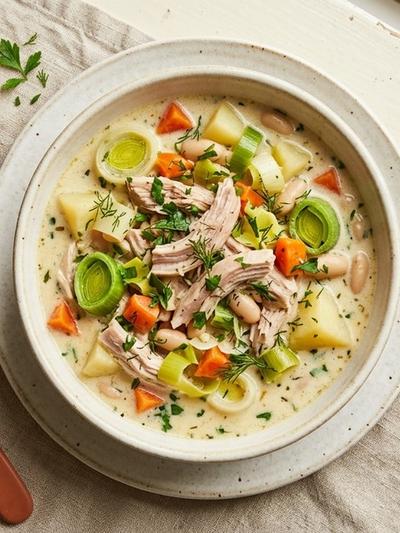
Each serving of this French-inspired slow cooker pork delivers 34 grams of protein and 8 grams of fiber from just 358 calories. Pork tenderloin is one of the leanest cuts available — comparable to skinless chicken breast — while cannellini beans add plant-based protein and soluble fiber that supports steady blood sugar. The combination of leeks, carrots, and fresh thyme rounds out the bowl with vitamins A and C, plus potassium that many GLP-1 users need more of.
The flavor here is quietly sophisticated in the way the best French country cooking tends to be. Dijon mustard melts into the braising liquid, creating a sauce that's tangy and savory without any heaviness. Leeks soften into silky ribbons, carrots turn sweet and tender, and the white beans absorb the herbed cooking liquid until they're creamy throughout. A final squeeze of lemon and scatter of fresh parsley keeps everything bright.
This is a particularly good format for GLP-1 users who find large meals overwhelming at midday. The slow cooker does the work while you're busy, and the result is soft-textured, easy to digest, and satisfying in a modest portion. Because the beans and pork both hold up beautifully when reheated, it doubles as a four-day lunch prep with almost no extra effort.
Why This Works on GLP-1
Preserving lean muscle mass is one of the most important nutritional goals during GLP-1-assisted weight loss, and this recipe directly addresses that need. Each serving provides 34 grams of complete protein from pork tenderloin, which contains all essential amino acids required for muscle protein synthesis. For people on Mounjaro or similar GLP-1 medications who are losing weight steadily, hitting 25–40 grams of protein per meal helps ensure that weight loss comes primarily from fat stores rather than muscle tissue. The slow braising keeps the pork exceptionally tender, which matters when appetite is reduced and tough, chewy textures feel unappealing.
The 8 grams of fiber per serving come mainly from cannellini beans, which provide soluble fiber that dissolves into a gel-like consistency during digestion. This type of fiber is gentler on the GI tract than insoluble fiber from raw vegetables, making it a better choice for GLP-1 users who experience nausea or digestive sensitivity. The beans also contribute resistant starch, which feeds beneficial gut bacteria and supports the microbiome changes that often accompany GLP-1 therapy.
Leeks belong to the allium family and contain inulin, a prebiotic fiber that supports digestive health without the bloating that onions sometimes cause. The Dijon mustard adds flavor complexity with virtually no calories, which is a useful strategy when you need meals to taste satisfying despite smaller portions. At just 7 grams of fat per serving, this dish sits well in the stomach without triggering the delayed gastric discomfort that higher-fat meals can cause on Wegovy or other GLP-1 medications.
Ingredients (serves 4)
For the pork:
- 1¼ lb (565g) pork tenderloin, trimmed of silver skin
- ½ tsp fine sea salt
- ¼ tsp freshly ground black pepper
- 2 tsp olive oil
For the slow cooker:
- 2 medium leeks, white and light green parts only, halved lengthwise and sliced into half-moons (about 2 cups / 180g)
- 2 medium carrots, peeled and diced (about 1 cup / 130g)
- 2 stalks celery, diced (about ½ cup / 60g)
- 3 cloves garlic, minced
- 1 can (15 oz / 425g) cannellini beans, drained and rinsed
- 1 cup (240ml) low-sodium chicken broth
- 2 tbsp Dijon mustard
- 1 tbsp whole-grain mustard
- 1 tbsp white wine vinegar
- 4 sprigs fresh thyme (or 1 tsp dried thyme)
- 1 bay leaf
To finish:
- 1 tbsp fresh lemon juice
- 2 tbsp chopped fresh flat-leaf parsley
- Flaky salt, to taste
Instructions
Prepare the pork:
Pat the pork tenderloin dry with paper towels and season all over with the salt and pepper. Drying the surface thoroughly helps develop a light sear, which adds a layer of savory depth to the finished dish.
Heat the olive oil in a large skillet over medium-high heat. Sear the tenderloin for about 2 minutes per side, turning to brown three or four sides, until golden. This step is optional but builds flavor — the Maillard reaction creates compounds that enrich the entire braising liquid as the pork cooks.
Build the slow cooker base:
Spread the sliced leeks, diced carrots, and celery in an even layer across the bottom of a 4- to 6-quart slow cooker. Scatter the minced garlic over the vegetables. This vegetable bed serves as a rack, keeping the pork slightly elevated so it braises rather than boils.
Nestle the drained cannellini beans around the edges of the vegetable layer. The beans will absorb the cooking liquid throughout the long braise, becoming creamy and deeply flavored.
In a small bowl, whisk together the chicken broth, Dijon mustard, whole-grain mustard, and white wine vinegar until smooth. Pour this mixture over the vegetables and beans.
Place the seared pork tenderloin on top of the vegetables. Tuck the thyme sprigs and bay leaf alongside the pork.
Cook low and slow:
Cover and cook on LOW for 4 to 5 hours, or on HIGH for 2½ to 3 hours. The pork is done when it reaches an internal temperature of 145°F (63°C) and feels tender when pressed with a fork. Tenderloin is lean, so avoid cooking beyond 5 hours on low — overcooking will dry it out.
Carefully remove the pork tenderloin to a cutting board. Tent loosely with foil and let rest for 5 minutes. Resting allows the juices to redistribute, keeping each slice moist.
Finish and serve:
Remove and discard the thyme sprigs and bay leaf from the slow cooker. Stir the lemon juice into the bean and vegetable mixture — the acid brightens all the flavors and balances the richness of the mustard sauce.
Slice the pork tenderloin into ½-inch (1cm) rounds. You should get about 16 slices from the full tenderloin.
Divide the bean and vegetable mixture among four bowls. Arrange four pork slices over each portion. Spoon any remaining cooking liquid from the slow cooker over the top, sprinkle with fresh parsley, and finish with a pinch of flaky salt if desired. Serve warm.
Nutrition per Serving
| Nutrient | Amount (approx.) |
|---|---|
| Calories | ~358 kcal |
| Protein | ~34g |
| Fat | ~7g |
| Carbohydrates | ~31g |
| Fiber | ~8g |
Estimates based on USDA data for trimmed pork tenderloin, canned cannellini beans, and standard produce. Actual values may vary by brand and exact portion sizes.
Practical Notes
Meal prep storage. This recipe stores exceptionally well for up to 4 days in the refrigerator. Portion the sliced pork with the beans and vegetables into individual airtight containers while still warm — the pork absorbs more flavor as it sits. Reheat gently in the microwave for 2 minutes, adding a splash of broth if the sauce has thickened.
Freezing instructions. Freeze fully cooked portions in airtight containers for up to 3 months. The beans and vegetables freeze beautifully, and the pork stays moist thanks to the braising liquid. Thaw overnight in the refrigerator and reheat on the stovetop over low heat for the best texture.
Leek cleaning shortcut. Leeks trap grit between their layers, so always wash them thoroughly. The fastest method: slice first, then submerge the pieces in a bowl of cold water and swish vigorously. The dirt sinks, the leeks float. Lift them out with a slotted spoon and drain on a clean towel.
Protein boost if needed. If you're aiming for 40+ grams of protein per meal, stir 2 tablespoons of unflavored collagen powder into each bowl when reheating — it dissolves invisibly and adds roughly 10 grams of protein without changing the flavor or texture. Alternatively, serve with a side of cottage cheese drizzled with a little olive oil and black pepper.
Slow cooker size matters. A 4-quart slow cooker works best for this recipe — the pork should sit snugly on the vegetable bed with the liquid reaching about halfway up the sides. In a very large slow cooker (7+ quarts), the liquid spreads too thin and may evaporate before the pork finishes cooking. If using a larger model, add an extra ½ cup of broth.
Frequently Asked Questions
I feel full quickly on GLP-1 medication — can I eat a smaller portion?
Can I use a different cut of pork?
How long will this keep in the fridge, and what's the best reheating method?
I'm in the first few weeks of GLP-1 treatment and experiencing nausea — is this recipe safe?
Can I use dried beans instead of canned?
This article provides general food and nutrition guidance only. It does not constitute medical advice. Always consult your healthcare provider regarding your GLP-1 medication and individual nutritional needs.