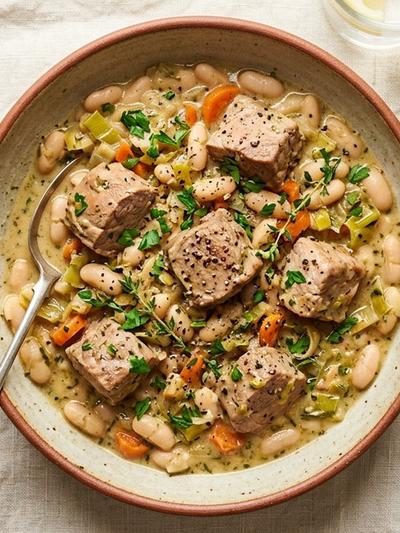
This sheet pan lunch delivers 36 grams of protein and 9 grams of fiber per serving, built around one of the leanest cuts of pork available. Pork tenderloin provides complete protein with minimal saturated fat, while cannellini beans add plant-based protein and slow-digesting carbohydrates. The combination keeps you fueled through the afternoon without the heaviness that can make GLP-1 side effects worse.
Alsace, the French-German border region, is known for cooking pork with cabbage, apples, and caraway — a combination that works beautifully on a sheet pan. The cabbage caramelizes at the edges while staying tender inside, the apple slices turn jammy and sweet against the savory mustard-rubbed pork, and the caraway seeds release their warm, slightly anise-like fragrance as they toast. It tastes like a refined version of comfort food without any of the heaviness.
Everything roasts on a single pan in about 25 minutes of hands-off oven time. The portions are naturally moderate — a few slices of tenderloin, a wedge of cabbage, some beans and fruit — which suits the smaller appetite most GLP-1 users experience. This is the kind of lunch you can pack into containers on Sunday and reheat all week without any loss of quality.
Why This Works on GLP-1
Each serving provides 36 grams of protein primarily from pork tenderloin, one of the leanest animal proteins available at just 3 grams of fat per 4-ounce serving. Maintaining adequate protein intake is critical during GLP-1-assisted weight loss, as medications like Mounjaro and Wegovy reduce appetite significantly, making it easy to under-eat protein without realizing it. Insufficient protein accelerates muscle loss, which lowers your resting metabolic rate and undermines long-term weight management. This single lunch covers roughly half of most people's daily protein target.
The 9 grams of fiber per serving come from two gentle sources — cabbage and cannellini beans — both of which are well-tolerated by most GLP-1 users when cooked thoroughly. Roasting softens the fiber structure, making it easier to digest than raw cruciferous vegetables. The caraway seeds aren't just for flavor; they're a traditional European digestive aid that can help reduce gas and bloating.
The balance of lean protein, moderate complex carbohydrates, and minimal added fat creates a meal that provides steady energy without triggering the nausea or fullness that high-fat meals can cause on GLP-1 medications. The natural sweetness from the roasted apples satisfies without added sugar, and the whole grain mustard adds depth without extra calories.
Ingredients (serves 4)
For the pork:
- 1¼ lb (565g) pork tenderloin, trimmed of silver skin
- 1 tablespoon whole grain mustard
- 1 teaspoon caraway seeds, lightly crushed
- ½ teaspoon fine sea salt
- ¼ teaspoon freshly ground black pepper
- 1 teaspoon olive oil
For the sheet pan vegetables:
- 1 small head green cabbage (about 1½ lb / 680g), cut into 8 wedges through the core
- 2 medium tart apples (such as Granny Smith or Braeburn), cored and cut into ½-inch wedges
- 1 can (15 oz / 425g) cannellini beans, drained and rinsed
- 1 tablespoon olive oil
- 1 teaspoon caraway seeds
- ½ teaspoon fine sea salt
- ¼ teaspoon freshly ground black pepper
For the mustard-herb drizzle:
- 2 tablespoons whole grain mustard
- 1 tablespoon apple cider vinegar
- 1 teaspoon honey
- 1 tablespoon fresh thyme leaves (or 1 teaspoon dried)
Instructions
Prepare the pork and preheat:
Preheat your oven to 425°F (220°C) and line a large rimmed sheet pan with parchment paper. Letting the oven fully preheat ensures the vegetables start caramelizing immediately, which develops deeper flavor.
Pat the pork tenderloin dry with paper towels — this is essential for browning rather than steaming. Mix the mustard, crushed caraway, salt, and pepper together, then rub the mixture evenly over the entire surface of the tenderloin. Drizzle with 1 teaspoon of olive oil and rub to coat.
Arrange the sheet pan:
Toss the cabbage wedges, apple slices, and drained beans in a large bowl with 1 tablespoon of olive oil, the caraway seeds, salt, and pepper. Spread them across the prepared sheet pan in a single layer, keeping the cabbage wedges cut-side down so they develop golden contact points with the pan.
Nestle the prepared pork tenderloin in the center of the pan, pushing the vegetables to the sides. The pork should have a little space around it for air circulation, which helps it brown evenly.
Roast:
Roast for 22 to 28 minutes, until the pork reaches an internal temperature of 145°F (63°C) and the cabbage edges are golden and slightly charred. The beans will turn slightly crispy on top — this is desirable and adds textural contrast. If the apples are browning too quickly, you can tuck them under the cabbage wedges at the 15-minute mark.
Remove the pan from the oven and transfer the pork to a cutting board. Tent it loosely with foil and let it rest for 5 minutes. Resting allows the juices to redistribute so the slices stay moist rather than drying out on the plate.
Make the drizzle and serve:
While the pork rests, whisk together the mustard, apple cider vinegar, honey, and thyme leaves in a small bowl. The acidity of the vinegar cuts through the richness of the pork and brightens the sweet roasted vegetables.
Slice the tenderloin into ½-inch medallions. Divide the cabbage wedges, apple slices, and beans among four plates, top with the pork slices, and spoon the mustard-herb drizzle over everything.
Nutrition per Serving
| Nutrient | Amount (approx.) |
|---|---|
| Calories | ~385 kcal |
| Protein | ~36g |
| Fat | ~11g |
| Carbohydrates | ~32g |
| Fiber | ~9g |
Estimates based on 1¼ lb trimmed pork tenderloin, one 15-oz can of cannellini beans, and measured oil quantities, divided across 4 servings.
Practical Notes
Meal prep storage. This recipe stores exceptionally well for up to 4 days in the refrigerator. Pack each serving in a separate airtight container with the mustard drizzle in a small side container to keep things from getting soggy. Reheat in the microwave for 90 seconds or in a 350°F oven for 8 to 10 minutes.
Crushing caraway seeds. Place the caraway seeds in a small zip-lock bag and press firmly with the bottom of a heavy mug or pan. You want them cracked, not powdered — this releases their oils for maximum flavor while keeping some texture. Pre-ground caraway works in a pinch, but use half the amount as it's more concentrated.
Apple variety matters. Choose firm, tart apples that hold their shape when roasted. Granny Smith, Braeburn, and Honeycrisp all work well. Avoid Red Delicious or Gala, which turn mushy in the oven. Leave the skin on for extra fiber and color.
For smaller appetites. If you're in the early weeks of Zepbound or another GLP-1 medication and eating very small portions, this recipe works beautifully as 6 servings instead of 4. Simply slice the tenderloin thinner and use one cabbage wedge per plate instead of two. The nutrition adjusts to roughly 255 calories and 24 grams of protein per serving.
Protein boost option. If you want to push the protein higher without adding volume, scatter 2 tablespoons of hemp hearts over each serving before adding the drizzle. This adds about 6 grams of protein and 90 calories per serving with almost no extra bulk — useful for days when your appetite is particularly suppressed but you need to hit your protein target.
Frequently Asked Questions
Will the cabbage cause bloating on GLP-1 medication?
Can I substitute chicken breast for the pork tenderloin?
How long does this keep in the fridge, and can I freeze it?
I can only eat very small amounts right now — how should I approach this meal?
Can I use a different type of bean or skip them entirely?
This article provides general food and nutrition guidance only. It does not constitute medical advice. Always consult your healthcare provider regarding your GLP-1 medication and individual nutritional needs.