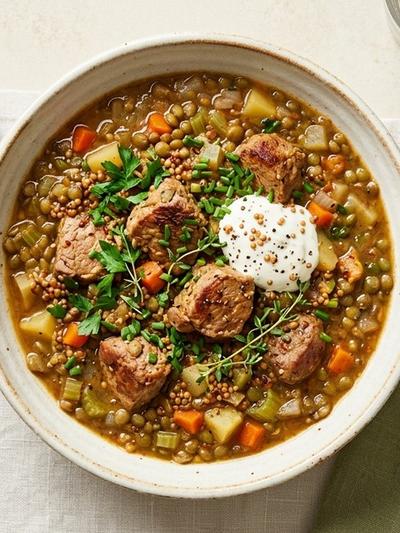
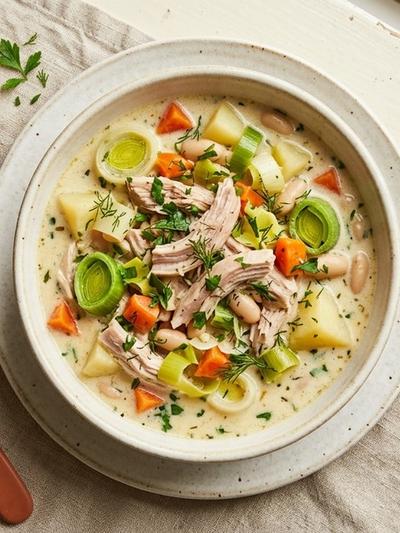
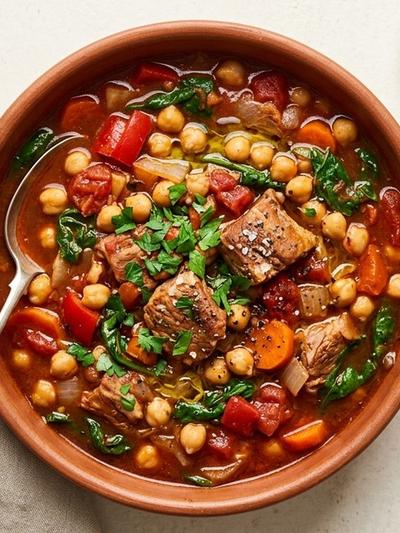
Each bowl of this slow-braised Polish soup delivers 31 grams of protein and 8 grams of fiber for just 385 calories. Pork tenderloin — one of the leanest cuts available at roughly 3 grams of fat per 100 grams — provides the protein backbone, while pearl barley and a medley of root vegetables round out the macros with complex carbohydrates and gentle soluble fiber. The slow cooker does the heavy lifting, transforming tough parsnip and celery root into silky-soft pieces that practically dissolve on the tongue.
This soup is modeled on krupnik, a traditional Polish barley soup that has warmed kitchens across Eastern Europe for centuries. The combination of earthy parsnip, sweet carrot, nutty celery root, and aromatic marjoram creates a deeply savory broth without relying on cream or butter. The barley absorbs the pork-enriched cooking liquid as it simmers, turning each spoonful into something rich and satisfying despite the lean ingredient list.
For GLP-1 users, this is an ideal lunch format. The broth-based structure means each serving has substantial volume without excessive density, so smaller appetites can enjoy a full-looking bowl without discomfort. Pearl barley releases its starch slowly, providing steady energy through the afternoon, and the soft-cooked vegetables are exceptionally gentle on a digestive system adjusting to medication.
Why This Works on GLP-1
Preserving lean muscle mass is one of the most important nutritional goals during GLP-1-assisted weight loss, and this soup makes it easy to hit your protein targets at lunch. Each serving provides 31 grams of complete protein from pork tenderloin — enough to stimulate meaningful muscle protein synthesis in a single meal. For people on Mounjaro or similar GLP-1 medications who find their appetite significantly reduced, a warm, broth-based soup is often more appealing and easier to finish than a dense solid meal. The protein is distributed evenly through every spoonful rather than concentrated in a single slab of meat, which many users find more manageable.
The 8 grams of fiber per serving come primarily from pearl barley and root vegetables — both sources of soluble fiber that dissolve gently in the gut rather than creating the bloating that raw cruciferous vegetables or high-bran foods can trigger. This matters because GLP-1 medications already slow gastric emptying, and adding harsh insoluble fiber on top can cause real discomfort.
Pearl barley has a glycemic index of roughly 28, making it one of the lowest-GI grains available. Combined with the protein from pork, this soup produces a remarkably stable blood sugar response — supporting the glucose-regulating effects of your medication rather than working against them. The B vitamins in pork tenderloin (particularly B6 and B12) also support energy metabolism, which can help counter the fatigue some users experience during the adjustment period.
Ingredients (serves 4)
For the soup:
- 1¼ lb (567g) pork tenderloin, trimmed of silverskin, cut into ¾-inch (2cm) cubes
- ¾ cup (150g) pearl barley, rinsed
- 2 medium carrots (200g), peeled and cut into ½-inch (1cm) half-moons
- 1 medium parsnip (150g), peeled and cut into ½-inch (1cm) pieces
- 1 small celery root (200g), peeled and cut into ½-inch (1cm) cubes
- 1 medium yellow onion (150g), finely diced
- 3 cloves garlic, minced
- 5 cups (1.2L) low-sodium chicken broth
- 2 dried bay leaves
- 1 tsp dried marjoram
- ½ tsp dried thyme
- ½ tsp smoked paprika
- ½ tsp fine sea salt
- ¼ tsp freshly ground black pepper
To finish:
- 2 tbsp fresh dill, chopped
- 2 tbsp fresh flat-leaf parsley, chopped
- 1 tbsp lemon juice (about half a lemon)
- 1 tsp extra-virgin olive oil (optional, for drizzling)
Instructions
Prepare the ingredients:
Trim any silverskin or visible fat from the pork tenderloin and cut it into ¾-inch (2cm) cubes. Keeping the pieces uniform ensures they cook evenly over the long simmer and stay tender rather than drying out at the edges.
Peel the carrots, parsnip, and celery root. Cut them into roughly equal ½-inch (1cm) pieces — matching the size means every vegetable finishes at the same silky texture. Dice the onion finely so it melts into the broth.
Rinse the pearl barley under cold running water for about 30 seconds. This removes surface starch and prevents the soup from becoming overly thick or gluey.
Build the slow cooker:
Add the diced onion and minced garlic to the bottom of the slow cooker — placing aromatics on the bottom allows them to release their flavor into the liquid from the start.
Layer the cubed pork over the onion, then add the carrots, parsnip, and celery root on top of the meat.
Scatter the rinsed barley over the vegetables. Add the bay leaves, marjoram, thyme, smoked paprika, salt, and pepper.
Pour the chicken broth over everything. The liquid should just barely cover the ingredients — if your slow cooker runs wide rather than deep, you may need an extra ½ cup of broth.
Cook low and slow:
Cover and cook on LOW for 6 to 7 hours, or on HIGH for 3½ to 4 hours. The soup is ready when the barley is plump and tender, the pork cubes shred easily with a fork, and the celery root has softened completely.
Remove and discard the bay leaves. Taste the broth and adjust salt if needed — the smoked paprika deepens over the long cook, so you likely will not need to add much.
Finish and serve:
Stir in the chopped dill, parsley, and lemon juice just before serving. The fresh herbs brighten the deep, slow-cooked flavors, and the lemon juice lifts the entire bowl — this step makes a noticeable difference, so do not skip it.
Ladle into bowls. If desired, finish each bowl with a quarter teaspoon of extra-virgin olive oil for a subtle richness. Serve warm.
Nutrition per Serving
| Nutrient | Amount (approx.) |
|---|---|
| Calories | ~385 kcal |
| Protein | ~31g |
| Fat | ~8g |
| Carbohydrates | ~42g |
| Fiber | ~8g |
Estimates based on USDA data for raw pork tenderloin (trimmed), dry pearl barley, and standard root vegetables, with low-sodium chicken broth.
Practical Notes
This soup is a meal prep powerhouse. It stores in airtight containers in the refrigerator for up to 5 days and actually improves overnight as the barley absorbs more broth and the flavors meld. Pack individual portions in glass containers for grab-and-go weekday lunches — it reheats in the microwave in about 2 minutes.
Expect the soup to thicken as it sits. Pearl barley continues to absorb liquid even after cooking. When reheating, add a splash of broth or water (2–3 tablespoons per portion) to restore the original consistency. This is normal and does not mean anything went wrong.
For smaller GLP-1 appetites, start with a half portion. At roughly 190 calories and 15 grams of protein, a half bowl still makes a meaningful lunch. You can always go back for more if your appetite allows. Many Wegovy and Zepbound users find that warming the soup first and eating slowly helps them gauge fullness more accurately.
Freeze individual portions for up to 3 months. Let the soup cool completely, then transfer to freezer-safe containers leaving 1 inch of headspace for expansion. Thaw overnight in the refrigerator and reheat gently on the stovetop or in the microwave. The texture holds up remarkably well because barley freezes better than pasta or rice.
Swap the root vegetables based on what you have. Turnip works in place of parsnip, and regular celery stalks can substitute for celery root (though you will lose some of the earthy depth). Butternut squash cubes are another good option — they add natural sweetness and hold their shape well in the slow cooker.
Frequently Asked Questions
Can I eat this soup during the first few weeks of starting GLP-1 medication?
Can I use a different cut of pork instead of tenderloin?
How should I store and reheat leftovers?
What if I find a full serving too filling on my medication?
Can I make this soup on the stovetop instead of a slow cooker?
This article provides general food and nutrition guidance only. It does not constitute medical advice. Always consult your healthcare provider regarding your GLP-1 medication and individual nutritional needs.