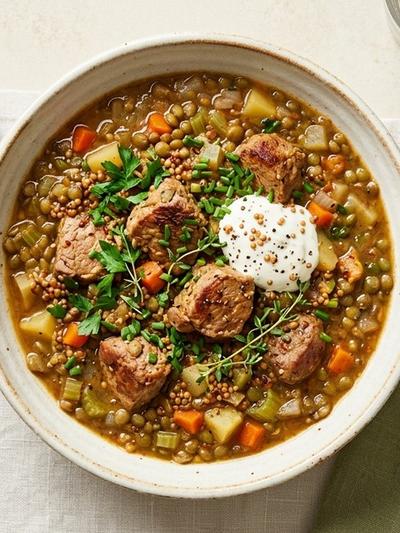
This French bistro-inspired bowl packs 42 grams of protein and 8 grams of fiber into every serving while staying under 380 calories. Pork tenderloin provides nearly 30 grams of lean protein on its own, and Puy lentils contribute another 9 grams alongside a generous dose of iron and folate. With roasted carrots adding natural sweetness and a tangy Dijon-herb yogurt tying everything together, this is a nutritionally complete dinner built for the week ahead.
The flavor here draws from the French tradition of pairing tender pork with earthy green lentils, a combination you'll find in bistros across Lyon and Burgundy. Searing the pork develops a golden crust that locks in juices, while the lentils absorb shallot, garlic, and a splash of white wine as they simmer. The finished bowl balances savory depth from the lentils against the bright acidity of Dijon mustard and fresh herbs in the yogurt.
This is a natural fit for GLP-1 users who need concentrated nutrition in smaller portions. Each bowl delivers a full dinner's worth of protein and fiber without requiring a large volume of food, and the lentils provide slow-digesting complex carbohydrates that won't spike blood sugar. The batch format means four dinners are ready in the refrigerator after a single cooking session — no decision fatigue on busy weeknights.
Why This Works on GLP-1
Preserving lean muscle mass is one of the central challenges during GLP-1-assisted weight loss, and this bowl addresses it directly. Each serving delivers 42 grams of complete protein, well above the 25–30 gram threshold that research consistently links to effective muscle protein synthesis. For people taking Mounjaro or similar GLP-1 medications, hitting this protein target at dinner is especially important because the appetite-suppressing effects can make it tempting to eat too little at the end of the day. The combination of pork tenderloin and lentils covers all essential amino acids without relying on high-fat cuts.
The 8 grams of fiber per serving come primarily from Puy lentils, which are gentler on digestion than larger bean varieties. Their small size and firm texture mean they break down gradually, supporting steady blood sugar levels without the bloating that GLP-1 users sometimes experience from high-fiber foods. The roasted carrots contribute soluble fiber that further supports gut motility.
At just 6 grams of fat per serving, this bowl sits comfortably below the threshold where high-fat meals can aggravate the nausea some Wegovy users report in their first weeks of treatment. The modest fat content comes almost entirely from the pork itself and a small amount of olive oil for searing, making this one of the leanest dinner bowls you can batch-cook without sacrificing flavor.
Ingredients (serves 4)
For the pork:
- 1¼ pounds (565g) pork tenderloin, trimmed of silver skin
- 1 tablespoon (15g) Dijon mustard
- 2 teaspoons (10ml) olive oil
- ½ teaspoon fine sea salt
- ¼ teaspoon freshly ground black pepper
- 2 sprigs fresh thyme
For the Puy lentils:
- 1 cup (200g) French green lentils (lentilles du Puy), rinsed
- 2 medium shallots, finely diced (about ¼ cup / 50g)
- 3 cloves garlic, minced
- ¼ cup (60ml) dry white wine (or additional broth)
- 2 cups (480ml) low-sodium chicken broth
- 1 bay leaf
- 2 sprigs fresh thyme
- 1 tablespoon (15ml) white wine vinegar
- ¼ teaspoon fine sea salt
For the roasted carrots:
- 1 pound (450g) carrots, peeled and cut into ½-inch (1cm) batons
- Cooking spray
- ¼ teaspoon fine sea salt
For the Dijon-herb yogurt:
- ½ cup (120g) plain nonfat Greek yogurt
- 1 tablespoon (15g) Dijon mustard
- 2 tablespoons fresh flat-leaf parsley, finely chopped
- 1 tablespoon fresh chives, finely chopped
- 1 teaspoon (5ml) fresh lemon juice
- Pinch of fine sea salt
Instructions
Prepare the oven and carrots:
- Preheat your oven to 400°F (200°C) and line a rimmed sheet pan with parchment paper. Spread the carrot batons in a single layer, mist lightly with cooking spray, and sprinkle with salt. Slide the pan into the oven and roast for 25–30 minutes, tossing once halfway through, until the edges are golden and the carrots are tender. Roasting concentrates the natural sugars in the carrots, giving you depth of flavor without adding any fat.
Start the lentils:
While the carrots roast, place a medium saucepan over medium heat. Add a light mist of cooking spray and sauté the diced shallots for 3–4 minutes until they soften and turn translucent. Add the garlic and cook for 30 seconds until fragrant — the goal is to release the aroma without browning, which would turn the garlic bitter.
Pour in the white wine and stir, scraping up any bits from the bottom. Let it reduce by half, about 1 minute. Add the rinsed lentils, chicken broth, bay leaf, and thyme sprigs. Bring to a boil, then reduce heat to a gentle simmer. Cover and cook for 25–30 minutes until the lentils are tender but still hold their shape. Puy lentils keep a slight bite even when fully cooked, which is exactly what you want for meal prep — they won't turn mushy when reheated.
Once the lentils are done, discard the bay leaf and thyme sprigs. Stir in the white wine vinegar and salt. The vinegar brightens the earthy lentils and keeps the flavor lively across several days in the refrigerator.
Sear and roast the pork:
While the lentils simmer, pat the pork tenderloin completely dry with paper towels — this step is essential for a proper sear. Season all sides with salt and pepper. Heat the olive oil in an oven-safe skillet over medium-high heat until it shimmers. Sear the pork for 2 minutes per side, rotating to brown all four sides evenly. You should hear a steady sizzle throughout; if the pan goes quiet, it is not hot enough.
Remove the skillet from the heat and brush the top and sides of the tenderloin with the Dijon mustard, then lay the thyme sprigs on top. Transfer the skillet to the oven alongside the carrots and roast for 15–18 minutes, or until an instant-read thermometer inserted into the thickest part reads 145°F (63°C). This internal temperature gives you juicy, faintly pink pork that stays moist through four days of reheating.
Transfer the tenderloin to a cutting board and let it rest for a full 10 minutes. Resting allows the juices to redistribute throughout the meat. After resting, slice crosswise into ½-inch (1cm) medallions.
Make the Dijon-herb yogurt:
- While the pork rests, stir together the Greek yogurt, Dijon mustard, parsley, chives, lemon juice, and salt in a small bowl. Taste and adjust the lemon or salt as needed. This sauce replaces higher-fat options like cream sauces or butter while adding 3 grams of protein per serving.
Assemble the bowls:
- Divide the lentils evenly among four meal prep containers. Arrange the pork medallions and roasted carrots alongside the lentils. Spoon the Dijon-herb yogurt into a small separate container or into one corner of the bowl if eating immediately. Seal and refrigerate.
Nutrition per Serving
| Nutrient | Amount (approx.) |
|---|---|
| Calories | ~380 kcal |
| Protein | ~42g |
| Fat | ~6g |
| Carbohydrates | ~33g |
| Fiber | ~8g |
Estimates based on USDA data for raw pork tenderloin (lean only), dry French green lentils, raw carrots, and nonfat Greek yogurt. Actual values may vary by brand and trimming.
Practical Notes
Meal prep storage and reheating. These bowls keep well in the refrigerator for up to four days in airtight containers. Store the yogurt sauce separately to prevent it from thinning. Reheat the pork, lentils, and carrots together in the microwave for 2–3 minutes at medium power, then add the cold yogurt on top — the temperature contrast is actually pleasant and keeps the herbs fresh.
Lentil substitution if Puy lentils are unavailable. Regular green or brown lentils work as a substitute, though they cook slightly faster and may soften more. Check them at 20 minutes and drain any excess liquid. Avoid red or yellow lentils here — they break down into a puree and won't give you the texture this bowl needs for meal prep durability.
Pork tenderloin doneness matters for leftovers. Pulling the pork at exactly 145°F (63°C) is not just a food safety guideline — it is the single most important step for meal prep success. Overcooked tenderloin dries out dramatically when reheated. If you do not have an instant-read thermometer, this recipe is a good reason to buy one. They cost under ten dollars and prevent the most common complaint about lean pork.
Adapt the portion size for early-phase GLP-1 appetite. If you are in your first weeks on medication and struggling to finish full meals, divide this recipe into six smaller portions instead of four. You will get roughly 28 grams of protein per portion, which still qualifies as a meaningful protein serving. Eat slowly and stop when comfortable.
Build variety across the week. The lentil-and-pork base is deliberately neutral enough to pair with different sauces. On day three or four, swap the Dijon yogurt for a spoonful of whole-grain mustard, a drizzle of balsamic reduction, or a few cornichons on the side. Small changes in condiment keep the same meal prep from feeling repetitive, which helps when your appetite is already low.
Frequently Asked Questions
Can I eat this bowl cold if my GLP-1 medication is causing nausea with hot food?
What can I use instead of pork tenderloin?
How do the lentils hold up after four days in the refrigerator?
I can only eat very small amounts right now. How should I approach this recipe?
Why sear the pork before roasting instead of just baking it?
This article provides general food and nutrition guidance only. It does not constitute medical advice. Always consult your healthcare provider regarding your GLP-1 medication and individual nutritional needs.