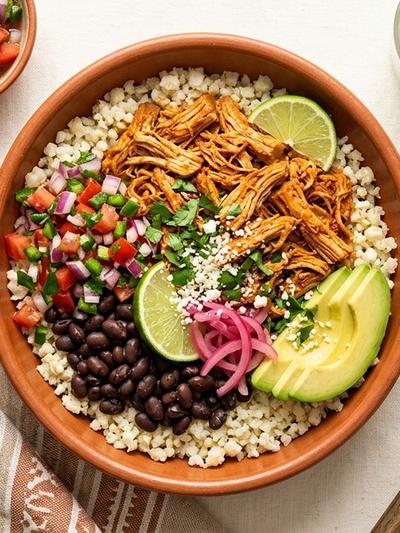
Each serving of this slow cooker Mexican pork salad provides roughly 34 grams of protein drawn from two complementary sources — lean pork tenderloin and fiber-rich black beans. Pork tenderloin contains about 22 grams of protein per 100 grams with only 3.5 grams of fat, making it one of the leanest animal proteins available. The black beans add another 7 grams of plant protein per half-cup while contributing 9 grams of fiber per serving, covering nearly a third of most adults' daily needs.
The flavors here are unmistakably Mexican but deliberately restrained — warm cumin and smoked paprika season the pork as it slow-cooks in a bath of tomato, garlic, and a single chipotle pepper, enough to add a smoky depth without overwhelming heat. Once shredded and cooled slightly, the pork sits over crisp romaine, roasted corn, diced tomato, and thin-sliced radish, all brought together by a bright chipotle-lime dressing made with Greek yogurt instead of sour cream. The contrast between warm, seasoned pork and cool, crunchy vegetables makes every bite feel substantial.
This salad format is particularly well suited for GLP-1 users because the raw vegetable base adds visual and textural volume without caloric density — a reasonable portion looks like a generous meal on the plate. The slow-cooked pork shreds into soft, easy-to-eat strands that require minimal chewing effort, which matters when appetite suppression makes dense or chewy textures feel like work. Serving the components separately also lets you scale your portion up or down depending on how your appetite feels that day.
Why This Works on GLP-1
At 34 grams of protein per serving, this salad covers roughly half of the daily protein target most dietitians recommend for GLP-1 patients — typically 60 to 80 grams depending on body weight and activity level. Adequate protein intake during GLP-1-assisted weight loss is critical for preserving lean muscle mass, and combining animal and plant protein sources improves overall amino acid availability. The slow cooking method partially denatures the pork's protein structure, which some research suggests makes it easier to digest — a meaningful advantage for people on Wegovy or Zepbound who experience slower gastric emptying.
The 9 grams of fiber per serving comes primarily from black beans, which provide a mix of soluble and insoluble fiber. Soluble fiber helps regulate blood sugar response and supports satiety, both of which complement GLP-1 medication effects. The romaine, radish, and tomato add gentle bulk fiber without the intense gas production that raw cruciferous vegetables can cause.
The overall calorie density is low at 370 calories per serving, but the combination of protein, fiber, and healthy fat from a small amount of avocado creates a strong satiety signal. Smoky chipotle and bright lime also stimulate appetite through flavor rather than volume — important for GLP-1 users who need nutrient density in smaller quantities.
Ingredients (serves 4)
For the slow cooker pork:
- 1 1/4 lb (565g) pork tenderloin, trimmed of silver skin
- 1 tsp ground cumin
- 1 tsp smoked paprika
- 1/2 tsp garlic powder
- 1/2 tsp dried oregano
- 1/2 tsp fine sea salt
- 1/4 tsp black pepper
- 1 can (14.5 oz / 410g) diced fire-roasted tomatoes
- 3 cloves garlic, smashed
- 1 chipotle pepper in adobo, minced, plus 1 tsp adobo sauce
- 1/2 cup (120ml) low-sodium chicken broth
For the salad base:
- 1 can (15 oz / 425g) black beans, drained and rinsed
- 1 cup (155g) roasted or grilled corn kernels (frozen works — thaw and dry-roast in a skillet)
- 6 cups (285g) chopped romaine lettuce
- 1 cup (180g) diced Roma tomatoes
- 4 radishes, thinly sliced
- 1 small avocado (about 100g flesh), diced
For the chipotle-lime dressing:
- 1/3 cup (80g) plain nonfat Greek yogurt
- 2 tbsp fresh lime juice (about 1 lime)
- 1 tsp adobo sauce (from the chipotle can)
- 1 small clove garlic, finely grated
- 1 tbsp water
- Pinch of salt
For garnish:
- 1/4 cup (10g) fresh cilantro leaves
- 1 lime, cut into wedges
Instructions
Season and slow-cook the pork:
- Mix the cumin, smoked paprika, garlic powder, oregano, salt, and pepper in a small bowl. Rub the spice mixture evenly over the entire pork tenderloin — patting it dry first helps the spices adhere and prevents the meat from steaming instead of absorbing flavor.
- Place the smashed garlic cloves in the bottom of the slow cooker. Add the diced fire-roasted tomatoes, minced chipotle pepper, adobo sauce, and chicken broth. Stir briefly to combine.
- Nestle the seasoned pork tenderloin into the liquid. The liquid should come about halfway up the meat — this ensures it braises rather than boils, keeping the texture tender without becoming waterlogged.
- Cover and cook on low for 3 to 4 hours, or on high for 2 to 2.5 hours. The pork is done when it reaches an internal temperature of 145°F (63°C) and shreds easily with two forks.
- Transfer the pork to a cutting board and let it rest for 5 minutes. Shred it into bite-sized strands using two forks, then return it to the slow cooker liquid and toss to coat. This step ensures every strand absorbs the chipotle-tomato braising liquid.
Prepare the salad components:
- If using frozen corn, spread the kernels in a dry nonstick skillet over medium-high heat and cook for 4 to 5 minutes, stirring occasionally, until lightly charred in spots. Charring the corn adds a smoky sweetness that echoes the chipotle in the pork.
- Drain and rinse the black beans thoroughly — residual canning liquid can make the salad murky and overly starchy.
- Chop the romaine into bite-sized pieces, dice the tomatoes, slice the radishes thinly, and dice the avocado. Keep each component separate until assembly.
Make the chipotle-lime dressing:
- Whisk together the Greek yogurt, lime juice, adobo sauce, grated garlic, water, and salt in a small bowl until smooth. The dressing should be pourable — add another teaspoon of water if it's too thick. Using Greek yogurt instead of sour cream adds 3 grams of protein per serving while cutting the fat by more than half.
Assemble the salad:
- Divide the romaine among four wide, shallow bowls. Top each with a quarter of the black beans, corn, diced tomatoes, radish slices, and avocado.
- Spoon the warm shredded pork and a little braising liquid over each salad. The slight warmth from the pork will gently wilt the top layer of romaine, creating a pleasing mix of textures.
- Drizzle the chipotle-lime dressing over each bowl. Finish with fresh cilantro leaves and a lime wedge on the side.
Nutrition per Serving
| Nutrient | Amount (approx.) |
|---|---|
| Calories | ~370 kcal |
| Protein | ~34g |
| Fat | ~12g |
| Carbohydrates | ~28g |
| Fiber | ~9g |
Estimates based on 1 1/4 lb pork tenderloin divided among 4 servings, with one-quarter of a small avocado per portion and nonfat Greek yogurt dressing.
Practical Notes
Meal prep storage. The shredded pork and dressing store well separately in the refrigerator for up to 4 days. Keep the salad vegetables prepped but unassembled — toss everything together just before eating to maintain crunch. The pork reheats well in the microwave with a splash of broth to prevent drying.
Scaling for smaller appetites. If you are in the early weeks of Mounjaro or a similar GLP-1 medication and eating very small portions, assemble a half-serving and save the remaining pork for tomorrow. The protein-rich pork and beans will keep you nourished even at a reduced portion.
Corn substitutions. If corn is out of season or unavailable, jicama cut into small dice works well as a swap — it adds the same mild sweetness and crunch without changing the calorie profile significantly. You can also use thawed frozen corn without charring if you prefer a simpler preparation.
Controlling the heat level. One chipotle pepper plus a teaspoon of adobo sauce produces a gentle, smoky warmth rather than sharp heat. If you are sensitive to spice — common during GLP-1 titration when the stomach lining can be more reactive — use only half the chipotle and omit the adobo sauce from the dressing entirely. The cumin and smoked paprika still carry plenty of flavor.
Making it a wrap. If you prefer a handheld format, spoon the pork, beans, and a small amount of the salad vegetables into a low-carb whole wheat tortilla with a drizzle of dressing. This works well as a packed lunch — wrap tightly in foil and the flavors meld together by lunchtime.
Frequently Asked Questions
Will this salad cause nausea if I'm in my first weeks on a GLP-1 medication?
Can I make this without black beans or swap a different legume?
How long does the shredded pork keep, and can I freeze it?
What if my appetite is too small for a full serving?
Can I cook the pork tenderloin on high to save time?
This article provides general food and nutrition guidance only. It does not constitute medical advice. Always consult your healthcare provider regarding your GLP-1 medication and individual nutritional needs.