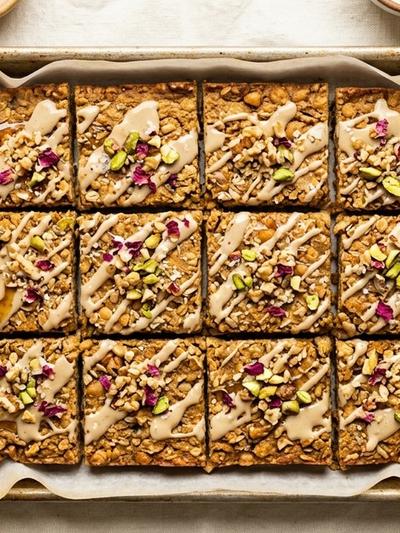
Each serving of these saffron-scented bites delivers 27 grams of protein from lean ground beef and Greek yogurt, with natural sweetness from Medjool dates and warm spice from cardamom. They contain just 278 calories per four-bite portion, making them one of the most protein-dense sweets you can prepare on a sheet pan. Ground flaxseed adds omega-3 fatty acids and a subtle nutty depth, while oat flour binds everything into a tender, slightly chewy texture.
The flavor profile draws from Hyderabadi meat halwa — a centuries-old Indian preparation that slow-cooks ground meat with ghee, sugar, and spices until it becomes a dense, aromatic confection. This version strips away the excess fat and sugar while preserving the essential character: saffron's honeyed bitterness, cardamom's citrusy warmth, and the faint floral finish of rose water. A drizzle of rose-scented yogurt on top ties every element together with cooling tang.
For GLP-1 users, these bites solve a common frustration — finding a satisfying sweet that delivers real nutrition rather than empty calories. Each piece is small enough to enjoy without triggering fullness discomfort, and the high protein content means you get meaningful macros from even two or three bites. The sheet-pan method keeps preparation hands-off and cleanup minimal.
Why This Works on GLP-1
With 27 grams of protein per serving, these bites provide roughly half the daily minimum that many healthcare providers recommend for patients on Mounjaro or similar GLP-1 medications. Maintaining adequate protein intake during weight loss is critical for preserving lean muscle mass, which supports metabolic rate and functional strength. Because GLP-1 medications reduce overall food volume, every meal and snack needs to earn its place nutritionally — and a sweet that delivers this much protein per calorie is a genuine asset. The combination of animal protein from beef and dairy protein from Greek yogurt provides a complete amino acid profile.
The dates provide natural sweetness along with potassium and small amounts of magnesium, both minerals that some Wegovy users report needing more of during treatment. Oat flour contributes soluble fiber that moves gently through the digestive system without the bloating risk of high-inulin fiber sources. The overall fat content stays moderate at 9 grams per serving, keeping these bites easy to digest.
Saffron has been studied for its potential effects on appetite regulation and mood support — both relevant concerns for people adjusting to GLP-1 therapy. While you should not treat any spice as medicine, the small amount used here adds genuine flavor complexity that makes these bites feel indulgent without any nutritional compromise.
Ingredients (serves 4)
For the beef halwa bites:
- 1 lb (450g) lean ground beef, 93% lean
- 1/3 cup (30g) oat flour
- 2 tablespoons (14g) ground flaxseed
- 6 Medjool dates, pitted and finely chopped (about 3.5 oz / 100g)
- 1/4 cup (60g) plain nonfat Greek yogurt
- 1 large pinch saffron threads, crumbled (about 20 threads)
- 1 tablespoon warm milk (any type)
- 3/4 teaspoon ground cardamom
- 1/4 teaspoon ground cinnamon
- 1/4 teaspoon fine sea salt
- 1/2 teaspoon rose water
- Nonstick cooking spray
For the rose yogurt drizzle:
- 1/2 cup (120g) plain nonfat Greek yogurt
- 1/2 teaspoon rose water
- 1 teaspoon honey
- Pinch of ground cardamom
For garnish:
- 1 tablespoon (8g) unsalted pistachios, finely chopped
- Dried rose petals (optional)
Instructions
Bloom the saffron:
- Combine the saffron threads with the warm milk in a small bowl and let steep for 10 minutes. This step extracts saffron's color and flavor compounds far more effectively than adding dry threads directly to the mixture.
Prepare the bite mixture:
Preheat your oven to 375°F (190°C) and line a large sheet pan with parchment paper. Lightly coat the parchment with nonstick cooking spray.
In a large bowl, combine the lean ground beef, oat flour, ground flaxseed, chopped dates, Greek yogurt, bloomed saffron with its milk, cardamom, cinnamon, salt, and rose water. Mix with your hands or a fork until the dates are evenly distributed throughout the meat — about 90 seconds of mixing. Avoid overworking the mixture, which can make the bites tough.
Using a tablespoon measure or small cookie scoop, portion the mixture into 16 equal balls (about 1.5 tablespoons each). Place them on the prepared sheet pan with at least 1 inch of space between each bite. Gently flatten the tops slightly with your palm — they should be small domes, not completely flat.
Bake the bites:
- Bake on the center rack for 18 to 20 minutes, until the bites are firm to the touch and lightly golden on the outside. The internal temperature should reach 160°F (71°C). Remove from the oven and let them rest on the pan for 5 minutes — they will firm up slightly as they cool.
Make the rose yogurt drizzle:
- While the bites bake, whisk together the Greek yogurt, rose water, honey, and pinch of cardamom in a small bowl. Taste and adjust the rose water if needed — it should be noticeable but not soapy. Start with less and add more gradually.
Assemble and serve:
- Arrange four bites per serving on a plate. Drizzle or dollop the rose yogurt over the top. Scatter chopped pistachios and dried rose petals (if using) across the bites. Serve warm or at room temperature.
Nutrition per Serving
| Nutrient | Amount (approx.) |
|---|---|
| Calories | ~278 kcal |
| Protein | ~27g |
| Fat | ~9g |
| Carbohydrates | ~21g |
| Fiber | ~3g |
Estimates based on 93% lean ground beef, nonfat Greek yogurt, Medjool dates, and standard measurements for oat flour and flaxseed. Actual values may vary by brand.
Practical Notes
Meal prep and storage. These bites refrigerate well for up to 4 days in an airtight container. Store the rose yogurt separately to prevent sogginess. Reheat bites in a 325°F oven for 6 to 8 minutes — the microwave works but softens the exterior. They also freeze beautifully for up to 6 weeks; thaw overnight in the refrigerator.
Saffron substitution. Good saffron is expensive, and there is no perfect substitute for its flavor. However, a pinch of turmeric plus a tiny drop of vanilla extract approximates the color and some of the warmth. The bites will taste different but still delicious — the cardamom and dates carry most of the flavor complexity.
Date preparation shortcut. If your dates are very firm, soak them in warm water for 10 minutes before chopping. For faster chopping, lightly oil your knife blade to prevent sticking. You can also pulse the dates in a food processor, but be careful not to create a paste — you want small pieces that distribute evenly through the meat.
Adjusting sweetness for GLP-1 appetite changes. Many people on Ozempic notice that their sweet tooth diminishes during treatment. If these bites taste too sweet, reduce the dates to four and skip the honey in the yogurt drizzle. Conversely, if you find yourself craving sweets more than expected, these bites are a far better choice than most desserts because of the protein density.
Scaling for smaller appetites. If you are in the early weeks of GLP-1 treatment and eating very small portions, serve two bites instead of four with a smaller drizzle of yogurt. That still gives you roughly 14 grams of protein — meaningful nutrition from a snack-sized serving that will not overwhelm a reduced appetite.
Frequently Asked Questions
Can I taste the beef in these bites, or do they taste like a traditional sweet?
Can I make these with ground turkey or chicken instead of beef?
How should I store and reheat these for weekly meal prep?
I am in my first month on Zepbound and can barely eat. Are these still worth making?
What sheet pan size works best, and can I use a muffin tin instead?
This article provides general food and nutrition guidance only. It does not constitute medical advice. Always consult your healthcare provider regarding your GLP-1 medication and individual nutritional needs.