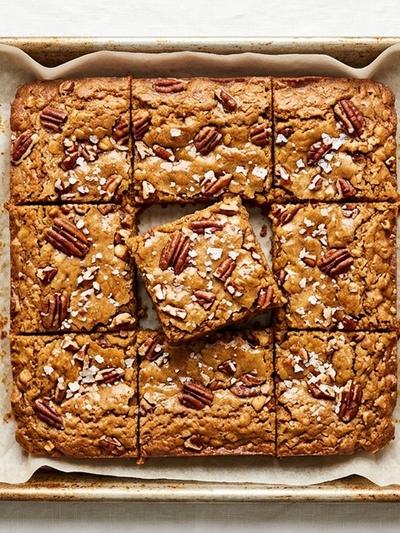
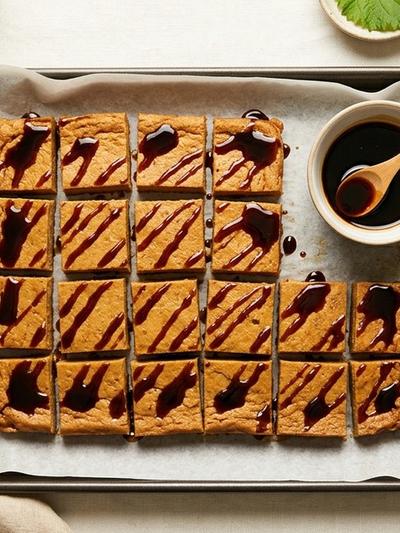
These German-inspired protein bars deliver 26 grams of plant-based protein per serving from a combination of puréed white beans and vanilla pea protein powder. Each two-bar portion provides a complete amino acid profile alongside 7 grams of fiber, making them a satisfying sweet that supports muscle maintenance during active weight loss. The roasted plums caramelize on top, providing natural sweetness without excessive added sugar.
The flavor profile draws from traditional German pflaumenkuchen — plum cake — with warm notes of cardamom, vanilla, and toasted hazelnuts against the jammy tartness of roasted Italian plums. The white bean base creates a dense, fudgy texture similar to a blondie, while the oats add gentle chew. A light hazelnut butter swirl through the batter ties everything together with rich, nutty depth.
For GLP-1 users, these bars work exceptionally well as a small-portion dessert that feels complete and satisfying. The combination of slow-digesting protein and fiber means a single serving provides genuine satiety without the heaviness of traditional baked goods. The sheet pan format produces eight uniform bars — easy to portion, store, and grab when a sweet craving hits.
Why This Works on GLP-1
Each serving delivers 26 grams of plant-based protein, which is critical for preserving lean muscle mass during the accelerated weight loss that Mounjaro and similar GLP-1 medications can produce. White beans provide leucine-rich protein alongside resistant starch, which feeds beneficial gut bacteria and supports steady blood sugar. The added pea protein powder ensures a complete amino acid profile comparable to animal-based sources, making these bars a legitimate protein delivery vehicle disguised as dessert.
The 7 grams of fiber per serving comes primarily from the white beans and rolled oats — both soluble fiber sources that form a gentle gel in the digestive tract. This is particularly helpful for GLP-1 users experiencing slowed gastric emptying, as soluble fiber moves through the system more comfortably than insoluble roughage from raw vegetables or bran.
The moderate fat content of 11 grams per serving — mostly from heart-healthy monounsaturated fats in hazelnuts — keeps these bars from feeling heavy or triggering the nausea that high-fat desserts can cause on GLP-1 therapy. The natural sugars from plums and a small amount of maple syrup provide sweetness without the blood sugar spike of refined sugar-heavy alternatives.
Ingredients (serves 4)
For the protein bar base:
- 1½ cups (270g) cooked white beans (cannellini or navy), drained and rinsed
- 3 scoops (90g) vanilla plant-based protein powder
- ¾ cup (65g) rolled oats
- 2 tbsp (32g) hazelnut butter
- 2 tbsp (30ml) maple syrup
- 1 large egg's worth of flax egg (1 tbsp ground flaxseed + 3 tbsp water, rested 5 minutes)
- 1 tsp vanilla extract
- ½ tsp ground cardamom
- ¼ tsp ground cinnamon
- ¼ tsp fine sea salt
- 1 tsp baking powder
For the roasted plum topping:
- 4 medium Italian prune plums (about 200g), halved and pitted
- 1 tsp maple syrup
- Pinch of cardamom
For finishing:
- 2 tbsp (15g) roughly chopped toasted hazelnuts
- Flaky sea salt (optional)
Instructions
Prepare the base and preheat:
- Preheat your oven to 350°F (175°C). Line an 8×8-inch (20×20 cm) baking pan or quarter sheet pan with parchment paper, leaving overhang on two sides for easy removal.
- Prepare the flax egg by whisking ground flaxseed with water in a small bowl. Set aside for 5 minutes until it forms a gel — this binds the bars without adding animal products.
- In a food processor, blend the drained white beans with hazelnut butter, maple syrup, flax egg, and vanilla extract until completely smooth, about 60 seconds. Scrape down the sides once during blending. The mixture should look like thick cake batter with no visible bean pieces.
Mix the dry ingredients and combine:
- In a medium bowl, whisk together the protein powder, rolled oats, cardamom, cinnamon, salt, and baking powder. The oats stay whole here — they provide structural chew that prevents the bars from becoming too dense.
- Pour the wet bean mixture into the dry ingredients and fold with a spatula until just combined. The batter will be thick and slightly sticky — this is correct. Overmixing can make the bars tough, so stop as soon as no dry streaks remain.
- Spread the batter evenly into the prepared pan using a damp spatula or the back of a spoon. Aim for uniform thickness so the bars bake evenly.
Prepare the plum topping and bake:
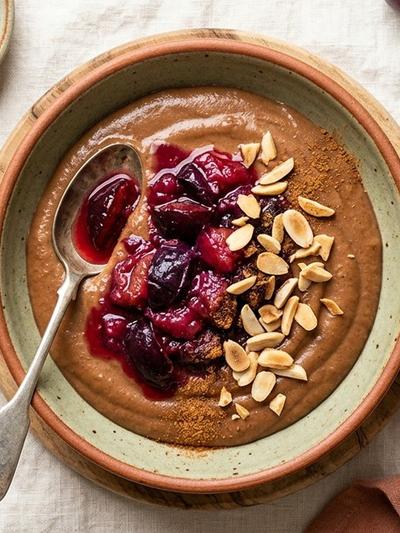
- Slice each plum half into 3–4 thin wedges. Toss gently with 1 teaspoon maple syrup and a pinch of cardamom. Arrange the plum slices in rows across the top of the batter, pressing them in slightly.
- Bake for 28–32 minutes until the edges are golden and firm, and a toothpick inserted in the center comes out with just a few moist crumbs. The plums will have softened and caramelized at the edges.
- Remove from the oven and immediately scatter the chopped toasted hazelnuts over the top while the surface is still slightly tacky — they will adhere as the bars cool. Add a light pinch of flaky sea salt if desired.
Cool and portion:
- Allow the bars to cool completely in the pan — at least 30 minutes. Plant protein bars firm up significantly as they cool, and cutting them warm will result in crumbling. Once cool, lift out using the parchment overhang and cut into 8 equal bars.
Nutrition per Serving
| Nutrient | Amount (approx.) |
|---|---|
| Calories | ~345 kcal |
| Protein | ~26g |
| Fat | ~11g |
| Carbohydrates | ~38g |
| Fiber | ~7g |
Estimates based on 2 bars per serving using canned cannellini beans, a standard pea/rice protein blend powder, and medium Italian prune plums.
Practical Notes
Meal prep and storage. These bars keep for 5 days in an airtight container in the refrigerator, or freeze individually wrapped for up to 2 months. They actually improve in texture after a night in the fridge — the oats fully hydrate and the bars become denser and more fudge-like. Thaw frozen bars overnight in the fridge or for 30 seconds in the microwave.
Protein powder selection matters. Use a vanilla-flavored pea protein or pea/rice blend — whey will also work if you are not strictly plant-based, but avoid collagen protein powders here as they do not set properly in baked goods. The protein powder brand affects sweetness significantly, so taste your batter before baking and add an extra teaspoon of maple syrup if needed.
Plum substitutions by season. When Italian prune plums are unavailable, use fresh apricots, pitted cherries, or sliced pears. Frozen plums work if thawed and patted dry first — excess moisture will make the bar tops soggy. In winter, thin apple slices with a squeeze of lemon are excellent.
GLP-1 portion guidance. If your appetite is very small in the early weeks of medication, cut the batch into 12 smaller bars instead of 8. A single small bar still provides approximately 17 grams of protein — meaningful for a snack or light dessert. Pair with herbal tea rather than eating on a very full stomach.
Hazelnut alternatives. If you have a tree nut allergy, substitute sunflower seed butter for the hazelnut butter and top with toasted pumpkin seeds instead of chopped hazelnuts. The flavor profile shifts slightly but remains complementary to the plum and cardamom.
Frequently Asked Questions
Can I eat these bars if I'm experiencing nausea on Wegovy or Ozempic?
Can I use chickpeas instead of white beans?
How should I store these for weekly meal prep?
What if I can only eat very small portions in my first weeks on GLP-1 medication?
Why do the bars need to cool completely before cutting?
This article provides general food and nutrition guidance only. It does not constitute medical advice. Always consult your healthcare provider regarding your GLP-1 medication and individual nutritional needs.