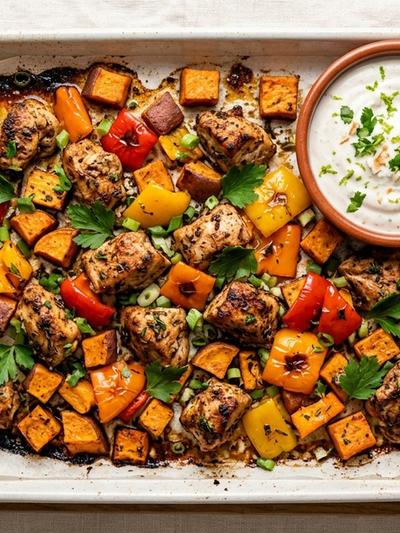
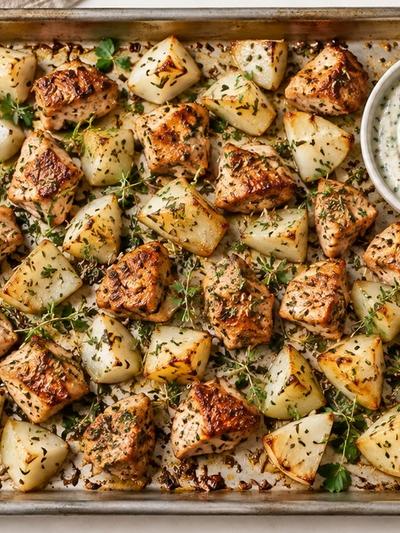
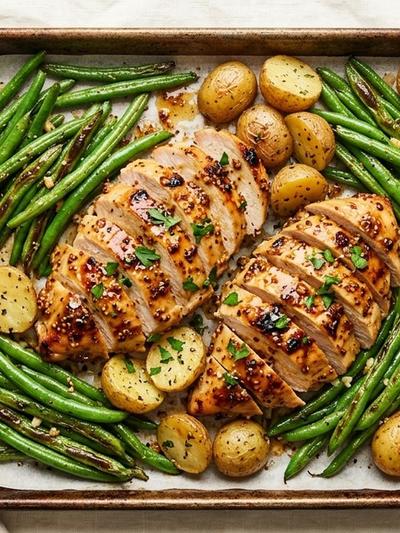
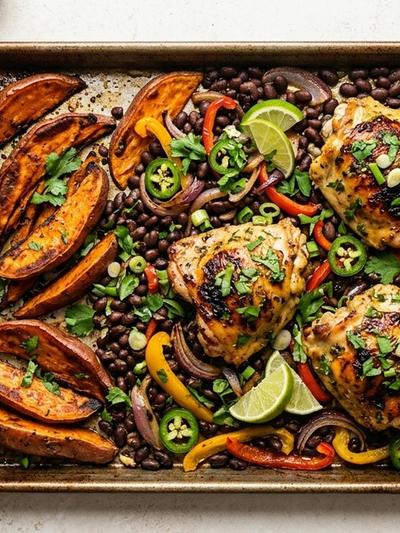
Each serving of this Caribbean curry sheet pan delivers 35 grams of protein from lean turkey breast, backed by nearly 4 grams of plant protein from chickpeas. The butternut squash supplies beta-carotene and potassium, while the chickpeas contribute iron and slow-digesting complex carbohydrates. At 355 calories per plate, you get a nutritionally dense dinner without the caloric load that makes GLP-1 evenings uncomfortable.
West Indian curry powder brings warm turmeric, earthy cumin, and toasted coriander to the turkey, while a pinch of allspice and fresh thyme root the flavors firmly in the Caribbean. The butternut squash caramelizes at the edges and turns creamy inside, creating a natural sweetness that balances the curry spice. Chickpeas scattered across the pan crisp up in the oven heat, adding a satisfying crunch that contrasts with the tender turkey and soft squash.
Sheet pan cooking concentrates the curry flavors through direct, dry roasting heat rather than drowning ingredients in oil or coconut milk. The result is a lighter take on Caribbean curry that sits comfortably during the slower gastric emptying that GLP-1 medications produce. Each piece of turkey and squash carries its own seasoning, so even a small portion feels complete.
Why This Works on GLP-1
The 35 grams of protein per serving comes primarily from turkey breast, one of the leanest and most bioavailable protein sources available. Maintaining adequate protein intake matters during GLP-1-assisted weight loss because the reduced calorie consumption can accelerate muscle loss if protein falls below optimal levels. For people on Wegovy or Mounjaro who find their appetite significantly suppressed, a single plate of this curry turkey delivers nearly half the daily protein most adults need. The combination of animal and plant protein from the chickpeas provides a broader amino acid profile than either source alone.
The 7 grams of fiber per serving comes from the chickpeas and butternut squash, both of which are gentle on the digestive system compared to raw cruciferous vegetables or high-FODMAP legumes. Canned chickpeas are already cooked and softened, making them easier to digest than dried beans prepared from scratch. The squash breaks down into a smooth, easily tolerated texture during roasting.
Turmeric, the dominant spice in Caribbean curry powder, contains curcumin, a compound with well-documented anti-inflammatory properties. The small amount of fat from the olive oil helps with curcumin absorption. At only 9 grams of fat per serving, this recipe avoids the heaviness of traditional coconut milk-based Caribbean curries while still delivering satisfying flavor.
Ingredients (serves 4)
For the curry turkey:
- 1 lb (454g) turkey breast tenderloin, cut into 1-inch pieces
- 1 1/2 tablespoons Caribbean or Madras curry powder
- 1/2 teaspoon ground allspice
- 1/2 teaspoon dried thyme
- 3 cloves garlic, finely grated
- 1 tablespoon fresh ginger, finely grated
- 1 tablespoon fresh lime juice
- 1 tablespoon olive oil
- 1/2 teaspoon salt
- 1/4 teaspoon black pepper
For the roasted vegetables:
- 3 cups (400g) butternut squash, peeled and cut into 3/4-inch cubes
- 1 can (15 oz / 425g) chickpeas, drained, rinsed, and patted dry
- 1 large red bell pepper, cut into 1-inch pieces
- 1 medium red onion, cut into thin wedges
- 1 tablespoon olive oil
- 1/2 teaspoon curry powder
- 1/4 teaspoon salt
For the lime-cilantro yogurt:
- 1/2 cup (120g) plain nonfat Greek yogurt
- 2 tablespoons fresh cilantro, finely chopped
- 1 tablespoon fresh lime juice
- Pinch of salt
For serving:
- 1 lime, cut into wedges
- Fresh cilantro leaves (optional)
- 1/2 Scotch bonnet or habanero pepper, seeded and minced (optional, for heat)
Instructions
Prepare the curry turkey:
- In a medium bowl, combine the curry powder, allspice, dried thyme, garlic, ginger, lime juice, olive oil, salt, and pepper into a paste. Add the turkey pieces and toss until every piece is evenly coated. The paste should cling to the turkey rather than pool at the bottom of the bowl — if it seems dry, add another teaspoon of lime juice. Set aside while you prepare the vegetables, which gives the spices at least 10 minutes to penetrate the surface of the meat.
Prepare the vegetables and preheat:
Preheat your oven to 425°F (220°C) and line a large rimmed sheet pan with parchment paper. The parchment prevents the curry paste from burning onto the pan and makes cleanup effortless.
Toss the butternut squash cubes, chickpeas, bell pepper pieces, and red onion wedges with the olive oil, curry powder, and salt on the prepared sheet pan. Patting the chickpeas dry before tossing is important — surface moisture steams instead of roasts, and you want the chickpeas to turn crisp. Spread everything into an even layer, leaving space in the center for the turkey.
Roast everything together:
Arrange the curry-coated turkey pieces in the center of the pan, nestled among the vegetables but not stacked on top of each other. Every piece needs contact with the hot pan surface for proper browning. If your sheet pan feels crowded, use two pans rather than piling ingredients — overcrowding creates steam and prevents the caramelization that makes this dish work.
Roast for 15 minutes, then remove the pan and flip the turkey pieces with tongs. Stir the vegetables gently to expose new surfaces to the heat. The squash should be starting to brown at the edges and the chickpeas should be visibly drier.
Return the pan to the oven and roast for another 8 to 10 minutes, until the turkey reaches an internal temperature of 165°F (74°C) and the squash is fork-tender with golden caramelized edges. The chickpeas should be lightly crisp on the outside. If the squash needs more time but the turkey is done, remove the turkey pieces to a plate and tent loosely with foil while the vegetables finish.
Make the lime-cilantro yogurt:
- While the sheet pan roasts, stir together the Greek yogurt, cilantro, lime juice, and a pinch of salt in a small bowl. The yogurt should be loose enough to drizzle — if it seems too thick, thin it with a teaspoon of water. Refrigerate until serving.
Serve:
- Divide the turkey and roasted vegetables among four plates. Drizzle each serving with the lime-cilantro yogurt and squeeze a lime wedge over the top. If you want Caribbean heat, scatter a few pieces of minced Scotch bonnet over your portion — start with less than you think you need, as the pepper's full intensity develops after a few bites.
Nutrition per Serving
| Nutrient | Amount (approx.) |
|---|---|
| Calories | ~355 kcal |
| Protein | ~35g |
| Fat | ~9g |
| Carbohydrates | ~33g |
| Fiber | ~7g |
Estimates based on turkey breast tenderloin, canned chickpeas (drained), raw butternut squash, and nonfat Greek yogurt. Actual values vary with specific brands and produce sizes.
Practical Notes
Meal prep storage. This recipe refrigerates well for up to 4 days in airtight containers. The chickpeas will lose their crispness but remain flavorful. Store the yogurt separately and add it fresh when reheating. Reheat the turkey and vegetables in a 375°F (190°C) oven for 8 to 10 minutes rather than microwaving, which tends to dry out turkey breast.
Butternut squash shortcut. Many grocery stores sell pre-cut butternut squash cubes in the produce section. These save 5 to 7 minutes of peeling and cutting and are usually cut to a consistent size, which helps them cook evenly. If the pre-cut pieces are larger than 3/4 inch, halve them so they finish roasting in the same time as the turkey.
Curry powder matters. Caribbean curry powder differs from standard Indian curry powder — it tends to be heavier on turmeric and lighter on chili heat, with more toasted cumin and coriander. Madras curry powder is the closest widely available substitute. Avoid "hot" curry blends, which can irritate GLP-1-sensitive stomachs. If you only have mild yellow curry powder, add an extra quarter teaspoon of ground cumin and a pinch more allspice to nudge it toward the Caribbean profile.
Adjusting portions for reduced appetite. If you are in the early weeks of GLP-1 treatment and your appetite is significantly suppressed, plate half a serving and refrigerate the rest. The protein density means that even a half portion delivers over 17 grams of protein. Eating slowly and stopping when comfortable is more important than finishing a full serving.
The Scotch bonnet is optional but authentic. Traditional Caribbean curry uses Scotch bonnet or habanero for both heat and fruity flavor. If you want the flavor without the fire, place a whole, uncut Scotch bonnet on the sheet pan during roasting and discard it before serving — it will release its aroma without releasing its capsaicin into the food. For GLP-1 users who experience acid reflux or stomach sensitivity, skip the hot pepper entirely. The dish has plenty of flavor from the curry spice blend alone.
Frequently Asked Questions
Will this recipe cause digestive discomfort on GLP-1 medication?
Can I use ground turkey instead of turkey breast?
How long does this keep in the fridge, and can I freeze it?
What if I can only eat a very small amount right now?
My butternut squash is browning faster than the turkey is cooking. What should I do?
This article provides general food and nutrition guidance only. It does not constitute medical advice. Always consult your healthcare provider regarding your GLP-1 medication and individual nutritional needs.