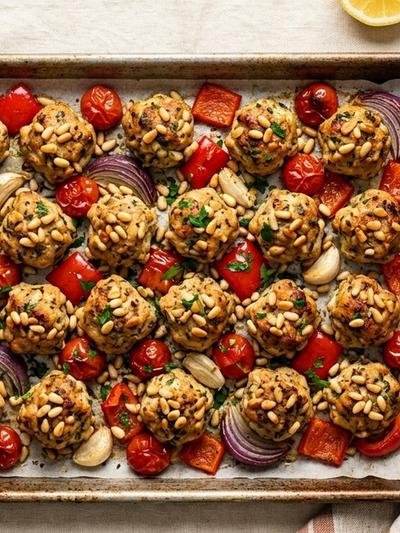
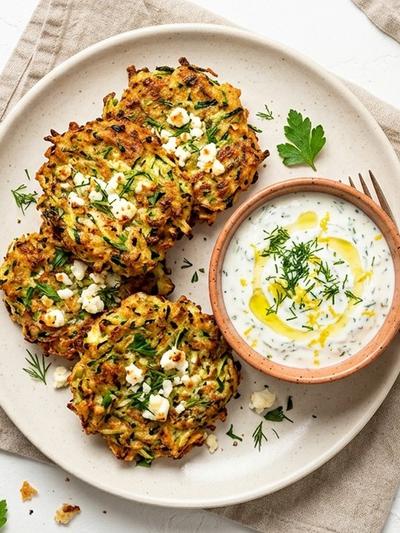
Each serving of these jerk turkey bites delivers 31 grams of protein and just 338 calories, making them one of the most efficient snack options for anyone watching their macros. The combination of lean ground turkey, roasted sweet potato, and colorful bell pepper gives you a complete spread of B vitamins, potassium, and beta-carotene alongside that protein. A simple coconut-lime yogurt dip adds probiotics and calcium without significant extra calories.
The flavor here is distinctly Caribbean without being aggressive. A homemade mild jerk blend — built on allspice, thyme, garlic, and ginger — coats the turkey bites with warm, aromatic depth. The natural sweetness of roasted sweet potato balances the spice, while the cool coconut-lime yogurt provides a creamy contrast that ties everything together.
As a sheet-pan recipe, this is genuinely hands-off. You shape the bites, scatter the vegetables, and let the oven do the work in 20 minutes. The portion sizes are snack-appropriate — five or six small bites per person with a handful of roasted vegetables — satisfying without overwhelming a reduced appetite.
Why This Works on GLP-1
Preserving lean muscle mass is one of the most important nutritional priorities during GLP-1-assisted weight loss. With 31 grams of protein per snack-sized serving, these turkey bites provide roughly a third of most people's daily protein target in a format that's easy to eat in small amounts. For anyone on Mounjaro or a similar GLP-1 medication finding it difficult to hit protein goals at main meals, a protein-dense snack like this fills the gap effectively. Ground turkey breast is one of the leanest protein sources available, keeping fat moderate while maximizing the protein-to-calorie ratio.
The mild jerk seasoning is deliberately gentle. Allspice and thyme are aromatic rather than irritating, and ginger is well-documented for easing nausea — a common early side effect of GLP-1 medications. There is no scotch bonnet or habanero in this blend, so the heat level stays stomach-friendly while still tasting authentically Caribbean.
Sweet potatoes contribute slow-digesting complex carbohydrates and soluble fiber, which helps maintain steady blood sugar between meals. The Greek yogurt dip adds a modest dose of probiotics that support gut health — particularly relevant when GLP-1 medications are altering your digestive pace. At under 400 calories per serving, this snack fits comfortably into any calorie-conscious eating plan without requiring careful measurement.
Ingredients (serves 4)
For the jerk turkey bites:
- 1 lb (450g) lean ground turkey (93% lean or higher)
- 1 tablespoon allspice
- 1 teaspoon dried thyme
- 1 teaspoon garlic powder
- 1 teaspoon ground ginger
- ½ teaspoon onion powder
- ½ teaspoon smoked paprika
- ¼ teaspoon black pepper
- ½ teaspoon fine sea salt
- 1 tablespoon lime juice
- 1 teaspoon olive oil (for the turkey mixture)
For the sheet pan vegetables:
- 1 medium sweet potato (about 200g), peeled and cut into ½-inch cubes
- 1 large red bell pepper, cut into 1-inch pieces
- 1 large green bell pepper, cut into 1-inch pieces
- 1 tablespoon olive oil
- ¼ teaspoon salt
For the coconut-lime yogurt dip:
- ¾ cup (180g) plain Greek yogurt (2% fat)
- 2 tablespoons unsweetened desiccated coconut
- Zest of 1 lime
- 1 tablespoon lime juice
- 1 small clove garlic, finely grated
- Pinch of salt
Instructions
Make the jerk spice blend and form the bites:
- Preheat your oven to 425°F (220°C) and line a large sheet pan with parchment paper. Parchment prevents sticking and makes cleanup effortless — important when you are making a quick snack, not a project.
- In a large bowl, combine the allspice, thyme, garlic powder, ginger, onion powder, smoked paprika, black pepper, and salt. Add the ground turkey, lime juice, and olive oil. Mix with your hands until the spices are evenly distributed, but avoid overworking the meat — compressed turkey bites turn rubbery.
- Scoop roughly 1 tablespoon portions and roll them into balls. You should get about 24 small bites. Place them on one half of the prepared sheet pan, leaving a little space between each.
Prepare and arrange the vegetables:
- Toss the sweet potato cubes, red bell pepper, and green bell pepper in a bowl with the olive oil and salt. The sweet potato needs the oil to caramelize properly — without it, the cubes dry out and turn chalky.
- Spread the vegetables on the other half of the sheet pan in a single layer. If your pan feels crowded, use two pans — overcrowding steams the vegetables instead of roasting them.
Roast everything together:
- Place the sheet pan on the middle rack and roast for 18 to 20 minutes. At the 10-minute mark, flip the turkey bites and stir the vegetables once. The bites are done when they reach an internal temperature of 165°F (74°C) and have golden-brown spots on the outside.
- Remove from the oven and let the bites rest for 3 minutes. This short rest lets the juices redistribute so the bites stay moist when you bite into them.
Make the coconut-lime yogurt dip:
- While the pan is in the oven, stir together the Greek yogurt, desiccated coconut, lime zest, lime juice, grated garlic, and salt. Let it sit for at least 10 minutes so the coconut softens slightly and the flavors meld. The dip thickens as it rests.
Serve:
- Divide the turkey bites and roasted vegetables among four plates or containers. Serve each portion with about 3 tablespoons of the coconut-lime yogurt dip on the side. Eat warm or at room temperature — both work well.
Nutrition per Serving
| Nutrient | Amount (approx.) |
|---|---|
| Calories | ~338 kcal |
| Protein | ~31g |
| Fat | ~11g |
| Carbohydrates | ~27g |
| Fiber | ~4g |
Estimates based on 93% lean ground turkey, 2% Greek yogurt, and standard USDA values for sweet potato and bell peppers.
Practical Notes
Meal prep storage. These bites refrigerate well for up to 4 days in airtight containers. Store the yogurt dip separately to prevent the bites from getting soggy. Reheat the turkey and vegetables in a 350°F oven for 5 to 7 minutes — the microwave works but softens the exterior.
Make the bites smaller for early GLP-1 phases. If your appetite is very limited, use a teaspoon instead of a tablespoon to form the bites. Smaller bites are easier to eat one or two at a time without committing to a full serving, and they cook faster — check at 14 minutes.
Substitute the sweet potato if needed. Butternut squash cubes work as a direct swap with a similar texture and sweetness. For lower carbs, use zucchini rounds instead — they roast faster, so add them to the pan at the 10-minute mark rather than the start.
Toast the coconut for deeper flavor. Spread the desiccated coconut on a dry sheet pan and toast at 325°F for 3 to 4 minutes before stirring it into the yogurt. Toasted coconut adds a nutty richness that makes the dip taste more complex. Watch it carefully — coconut burns within seconds of browning.
Freeze for longer storage. The cooked turkey bites freeze well for up to 2 months. Freeze them on a parchment-lined tray first, then transfer to a freezer bag. Reheat from frozen at 375°F for 10 to 12 minutes. The dip does not freeze well — make a fresh batch when you defrost the bites.
Frequently Asked Questions
Can I eat these turkey bites if I'm experiencing nausea from my GLP-1 medication?
Can I use chicken instead of turkey?
How long do the bites and dip last in the fridge?
What if I can only eat a very small amount right now?
Why do the turkey bites need to rest after roasting?
This article provides general food and nutrition guidance only. It does not constitute medical advice. Always consult your healthcare provider regarding your GLP-1 medication and individual nutritional needs.