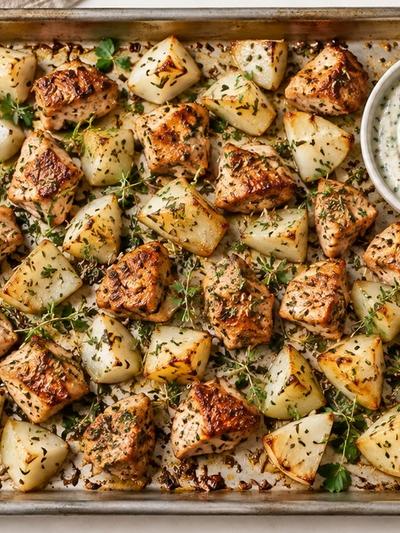
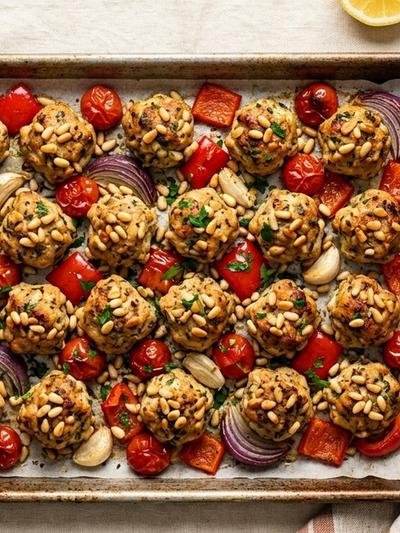
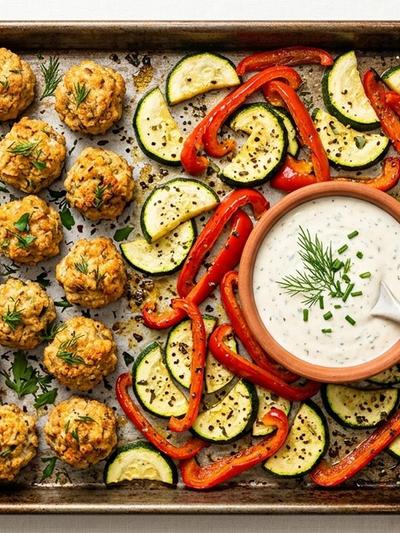
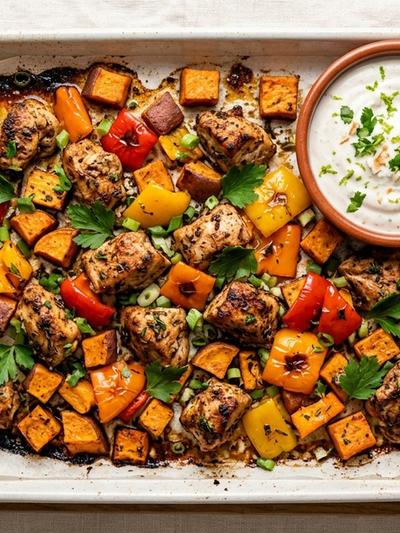
Each serving of these tandoori turkey bites delivers 34 grams of protein from lean turkey breast, with an additional 4 grams from roasted chickpeas — all for just 265 calories. The yogurt marinade tenderizes the turkey while adding probiotics, and a simple spice blend of turmeric, cumin, coriander, and smoked paprika creates the warm, earthy profile that defines good tandoori cooking. Bell peppers and red onion roast alongside the turkey, caramelizing into sweet, soft companions.
The flavor here comes from layering spice at two stages: first in the yogurt marinade that coats the turkey, then again as a light dusting on the chickpeas before roasting. The result is turkey that stays remarkably juicy inside — the yogurt forms a thin, lightly charred crust — with chickpeas that turn nutty and crisp at the edges. A cool cucumber raita brings everything together, its freshness cutting through the warm spices.
As a GLP-1 snack, these bites work because they are satisfying in small quantities. The combination of lean protein and fiber from chickpeas provides lasting satiety without the heaviness that can trigger nausea. Sheet-pan cooking means minimal hands-on effort and easy cleanup — important when your energy for cooking may be lower than usual on medication days.
Why This Works on GLP-1
Protein preservation is one of the most important nutritional goals during GLP-1-assisted weight loss. With 34 grams of protein per snack serving, these tandoori bites provide nearly half of most people's daily protein target in a single, manageable portion. For Mounjaro and Ozempic users experiencing reduced appetite, getting this much protein into a snack-sized serving — rather than having to face a large meal — can make hitting daily targets significantly easier. Turkey breast is one of the leanest animal proteins available, which keeps fat and calories low while maximizing the protein-to-calorie ratio.
The chickpeas add 4 grams of fiber per serving along with slow-digesting complex carbohydrates that help stabilize blood sugar between meals. This steady energy release complements the blood sugar regulation already provided by GLP-1 medications, avoiding the spikes and crashes that can worsen nausea.
The yogurt in both the marinade and the raita provides beneficial probiotics that support gut health — a real consideration when GLP-1 medications are altering your digestive patterns. Turmeric, a key spice in the tandoori blend, has well-documented anti-inflammatory properties, and the overall spice level is moderate enough to be gentle on a sensitive stomach.
Ingredients (serves 4)
For the tandoori turkey:
- 1 lb (450g) boneless, skinless turkey breast, cut into 1-inch cubes
- 1/3 cup (80g) plain nonfat Greek yogurt
- 1 tablespoon avocado oil
- 1 teaspoon ground turmeric
- 1 teaspoon ground cumin
- 1 teaspoon ground coriander
- 1/2 teaspoon smoked paprika
- 1/2 teaspoon garlic powder
- 1/4 teaspoon cayenne pepper (optional — reduce or omit for sensitive stomachs)
- 1/2 teaspoon fine sea salt
- Juice of 1/2 lemon
For the sheet pan vegetables and chickpeas:
- 1 can (15 oz / 425g) chickpeas, drained, rinsed, and patted dry
- 1 large red bell pepper, cut into 1-inch pieces
- 1 medium red onion, cut into wedges
- 1 teaspoon avocado oil
- 1/2 teaspoon ground cumin
- 1/4 teaspoon smoked paprika
- 1/4 teaspoon salt
For the cucumber raita:
- 1/2 cup (120g) plain nonfat Greek yogurt
- 1/2 medium cucumber, grated and squeezed dry
- 1 tablespoon fresh mint, finely chopped
- 1/4 teaspoon ground cumin
- Pinch of salt
- Squeeze of lemon juice
Instructions
Marinate the turkey:
- In a medium bowl, combine the Greek yogurt, avocado oil, turmeric, cumin, coriander, smoked paprika, garlic powder, cayenne, salt, and lemon juice. Stir until smooth — the yogurt acts as a tenderizer, and the acid from the lemon helps the spices penetrate the meat.
- Add the turkey cubes and toss until every piece is evenly coated. Cover and refrigerate for at least 20 minutes, or up to 8 hours. Longer marinating produces more tender, flavorful results.
Prepare the sheet pan:
- Preheat your oven to 425°F (220°C). Line a large sheet pan with parchment paper for easy cleanup.
- Spread the patted-dry chickpeas on one half of the pan. Toss with 1 teaspoon avocado oil, cumin, smoked paprika, and salt. Drying the chickpeas thoroughly is critical — wet chickpeas will steam instead of crisping.
- Arrange the bell pepper pieces and red onion wedges on the other half of the pan. They need no additional oil — the moisture from the vegetables is enough at this temperature.
Roast everything together:
- Nestle the marinated turkey cubes among the chickpeas and vegetables, spacing them about 1 inch apart. Crowding will cause the turkey to steam rather than develop those characteristic tandoori-style charred edges.
- Roast for 18–22 minutes, flipping the turkey pieces once at the 12-minute mark. The turkey is done when it reaches an internal temperature of 165°F (74°C) and the yogurt coating has developed golden-brown spots. The chickpeas should be slightly crispy at the edges.
Make the raita:
- While the turkey roasts, combine the yogurt, squeezed-dry grated cucumber, mint, cumin, salt, and lemon juice. Stir well and refrigerate until serving. Squeezing the cucumber prevents a watery raita — use a clean kitchen towel or cheesecloth to wring out as much liquid as possible.
Serve:
- Divide the turkey bites, roasted chickpeas, peppers, and onions among four plates or containers. Serve each portion with 2 tablespoons of cucumber raita on the side.
Nutrition per Serving
| Nutrient | Amount (approx.) |
|---|---|
| Calories | ~265 kcal |
| Protein | ~34g |
| Fat | ~6g |
| Carbohydrates | ~17g |
| Fiber | ~4g |
Estimates based on 93% lean turkey breast, canned chickpeas, and nonfat Greek yogurt. Actual values may vary by brand.
Practical Notes
Meal prep storage. These bites refrigerate well for up to 4 days in airtight containers. Store the raita separately to keep it fresh. Reheat the turkey and chickpeas in a 375°F oven for 8–10 minutes — microwaving works but softens the chickpeas.
Scale as a full meal. If you want to turn this snack into a lunch or dinner, serve over 1/2 cup cooked basmati rice or with a small piece of naan. This adds roughly 100–120 calories and turns a snack into a complete 380-calorie meal.
Adjust the heat level. The cayenne pepper is entirely optional. If you are in the early weeks of GLP-1 treatment and experiencing heightened stomach sensitivity, leave it out entirely. The cumin, coriander, and turmeric provide plenty of flavor without any digestive risk.
Turkey breast alternatives. Turkey tenderloin works identically and is often easier to find pre-portioned. Ground turkey can substitute — form it into small meatballs before marinating — but the texture and protein density will differ slightly. Avoid turkey thighs here; the higher fat content changes the calorie profile significantly.
Best eaten at room temperature. These bites are genuinely good cold or at room temperature, making them an excellent desk snack or packed lunch. The yogurt marinade keeps the turkey moist even after chilling, unlike plain roasted turkey breast which can dry out.
Frequently Asked Questions
Can I eat these tandoori bites if I'm experiencing nausea on my GLP-1 medication?
What can I use instead of chickpeas?
How long can I store these, and do they freeze well?
I can only eat very small portions right now. How should I adjust this recipe?
Can I use a regular oven rack position, or does placement matter?
This article provides general food and nutrition guidance only. It does not constitute medical advice. Always consult your healthcare provider regarding your GLP-1 medication and individual nutritional needs.