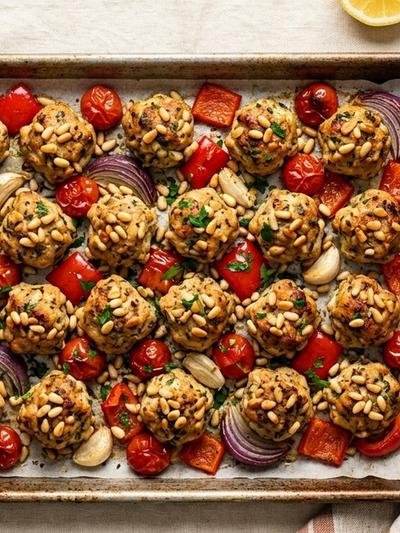
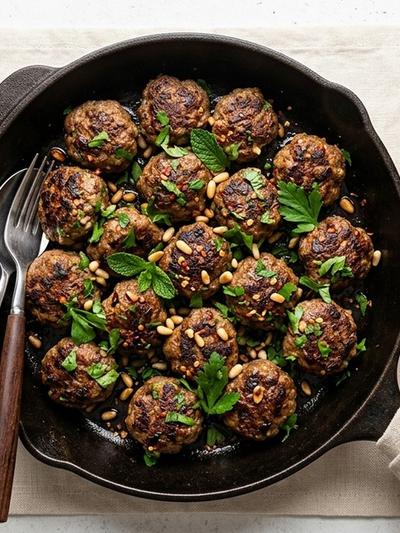
Each snack-sized serving of these baked kibbeh bites delivers 27 grams of protein from lean ground beef bound with fine bulgur wheat — a classic combination that's been a staple of Levantine cooking for centuries. At just 235 calories per portion of four bites, you get serious protein density without the caloric load of traditional fried kibbeh. The bulgur adds a pleasant nuttiness and a few grams of fiber while helping stretch the meat into satisfying, well-textured bites.
These kibbeh draw their flavor from a warmly spiced interior of toasted pine nuts, sweet onion, and a blend of allspice, cinnamon, and cumin — the unmistakable backbone of Eastern Mediterranean seasoning. The outside bakes to a lightly crisp shell while staying tender inside, and a quick mint yogurt dip adds brightness and cool contrast. It's the kind of snack that tastes like you spent an afternoon in a Lebanese kitchen but actually takes about 30 minutes start to finish.
For GLP-1 users, these bites solve a common problem: the need for a high-protein snack that's genuinely satisfying in small quantities without being heavy or greasy. Each bite is compact and flavorful enough that three or four feel like a complete snack. Baking instead of deep-frying keeps the fat content moderate and avoids the digestive discomfort that fried foods can cause when gastric emptying is slowed.
Why This Works on GLP-1
Preserving lean muscle mass is one of the most important nutritional goals during GLP-1-assisted weight loss, and that requires consistent protein intake throughout the day — not just at meals. These kibbeh bites provide 27 grams of complete protein per serving, making them one of the most protein-dense snacks you can keep on hand. For people on Mounjaro or similar GLP-1 medications who find their appetite reduced to the point where full meals feel overwhelming, a high-protein snack like this can help bridge the gap between meals without forcing large volumes of food.
The bulgur wheat in the kibbeh shell offers a gentle source of fiber and complex carbohydrates that digest slowly, complementing the appetite-regulating effects of GLP-1 medications. Unlike snacks made with refined flour or heavy starches, bulgur has a low glycemic index and won't cause blood sugar spikes followed by crashes.
The baked preparation method keeps total fat under 9 grams per serving — roughly a third of what you'd get from traditionally fried kibbeh. This matters because high-fat foods can exacerbate the nausea and digestive sluggishness that some GLP-1 users experience, particularly in early weeks of treatment. The mint yogurt dip adds a small probiotic benefit that may support digestion as well.
Ingredients (serves 4)
For the kibbeh mixture:
- 1 lb (450g) lean ground beef, 93% lean
- ½ cup (85g) fine bulgur wheat (#1 grade)
- 1 small yellow onion, grated on a box grater
- 1 teaspoon ground allspice
- ½ teaspoon ground cinnamon
- ½ teaspoon ground cumin
- ½ teaspoon salt
- ¼ teaspoon black pepper
- 1 tablespoon ice water
For the filling:
- 2 tablespoons pine nuts, roughly chopped
- 1 small yellow onion, finely diced
- 1 teaspoon olive oil
- ¼ teaspoon ground allspice
- ¼ teaspoon ground cinnamon
- Pinch of salt
For the mint yogurt dip:
- ½ cup (120g) plain non-fat Greek yogurt
- 2 tablespoons fresh mint, finely chopped
- 1 teaspoon lemon juice
- 1 small garlic clove, minced
- Pinch of salt
Instructions
Prepare the bulgur:
- Place the fine bulgur in a small bowl and cover with ¾ cup (180ml) boiling water. Cover tightly and let stand for 15 minutes until the water is fully absorbed and the bulgur is soft. Drain any excess water and squeeze dry in a clean kitchen towel — excess moisture will make the kibbeh mixture too loose to shape.
Make the filling:
- While the bulgur soaks, heat the olive oil in a small skillet over medium heat. Add the diced onion and cook for 3–4 minutes until softened and translucent.
- Add the chopped pine nuts, allspice, cinnamon, and a pinch of salt. Toast for 1–2 minutes, stirring frequently, until the pine nuts are lightly golden. Transfer to a small bowl and set aside to cool.
Build the kibbeh mixture:
- Preheat your oven to 400°F (200°C) and line a sheet pan with parchment paper.
- In a large bowl, combine the soaked and squeezed bulgur, ground beef, grated onion, allspice, cinnamon, cumin, salt, pepper, and ice water. Mix thoroughly with your hands for 2–3 minutes until the mixture becomes smooth and slightly sticky — this kneading develops the texture that gives kibbeh its characteristic firm-yet-tender bite.
Shape and bake:
- Divide the kibbeh mixture into 16 equal portions (about 1½ tablespoons each). Roll each into a ball, then use your thumb to press a small well into the center. Place about ½ teaspoon of the pine nut filling into the well, then pinch the kibbeh closed and reshape into an oval or torpedo shape.
- Arrange the kibbeh bites on the prepared sheet pan, spacing them about an inch apart. Lightly mist the tops with cooking spray or brush with a thin film of olive oil — this promotes browning without adding significant fat.
- Bake for 18–20 minutes, turning once at the 10-minute mark, until the kibbeh are golden brown on the outside and cooked through. The internal temperature should reach 160°F (71°C).
Make the dip while kibbeh bake:
- Stir together the Greek yogurt, chopped mint, lemon juice, minced garlic, and salt. Taste and adjust lemon or salt as needed. Refrigerate until serving.
Serve:
- Let the kibbeh rest on the pan for 2–3 minutes before transferring to a plate. Serve four bites per person alongside the mint yogurt dip.
Nutrition per Serving
| Nutrient | Amount (approx.) |
|---|---|
| Calories | ~235 kcal |
| Protein | ~27g |
| Fat | ~8g |
| Carbohydrates | ~14g |
| Fiber | ~3g |
Estimates based on 93% lean ground beef, non-fat Greek yogurt, and fine bulgur wheat. Actual values may vary with specific brands and meat leanness.
Practical Notes
Meal prep and storage. These kibbeh bites refrigerate beautifully for up to 4 days in an airtight container. Reheat in a 350°F (175°C) oven for 8–10 minutes or in the microwave for 45 seconds. They're sturdy enough to pack in a lunchbox at room temperature for a few hours, making them a genuinely portable protein snack. Keep the yogurt dip in a separate small container.
Bulgur grade matters. Look for #1 (fine) bulgur, sometimes labeled "extra fine" — it hydrates quickly and creates the smooth, cohesive kibbeh texture you want. Medium or coarse bulgur won't break down enough and will give you a grainy, crumbly result. Most Middle Eastern grocery stores carry the correct grade, and it's increasingly available in regular supermarkets.
Freezing for long-term prep. Shaped but unbaked kibbeh bites freeze exceptionally well. Arrange them on a parchment-lined tray, freeze until solid (about 2 hours), then transfer to a freezer bag. Bake from frozen at 400°F for 22–25 minutes. This makes them a perfect batch-prep snack — shape 32 or 48 at once and have weeks of ready-to-bake protein on hand.
Pine nut substitution. Pine nuts can be expensive. Finely chopped walnuts or slivered almonds work well as substitutes and add a similar richness with slightly more fiber. If you have a tree nut allergy, toasted sunflower seeds are a reasonable alternative that keeps the crunch.
For very small appetites. If you're in the early weeks of Wegovy or another GLP-1 medication and finding even snack portions challenging, serve two bites instead of four — that still delivers about 14 grams of protein in a very small volume. The compact, flavorful format means you don't need to eat a large quantity to get meaningful nutrition.
Frequently Asked Questions
Can I eat these kibbeh bites if I'm experiencing nausea on my GLP-1 medication?
Can I use ground turkey or chicken instead of beef?
How long do these keep, and what's the best way to reheat them?
What if my appetite is too small for a full four-bite serving?
Do I need to soak the bulgur, or can I skip that step?
This article provides general food and nutrition guidance only. It does not constitute medical advice. Always consult your healthcare provider regarding your GLP-1 medication and individual nutritional needs.