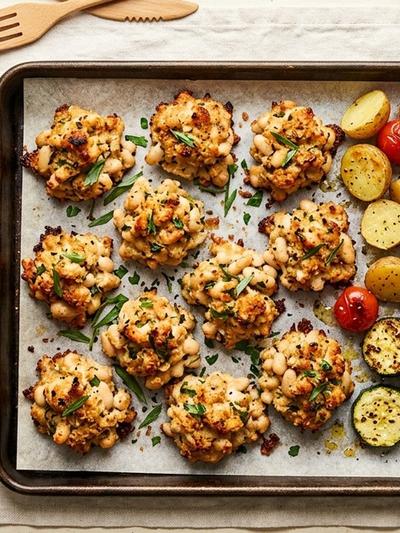
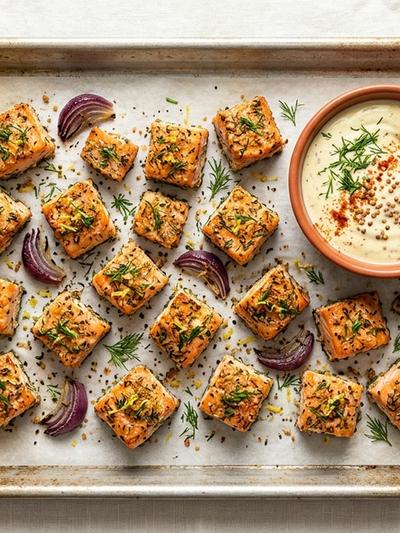
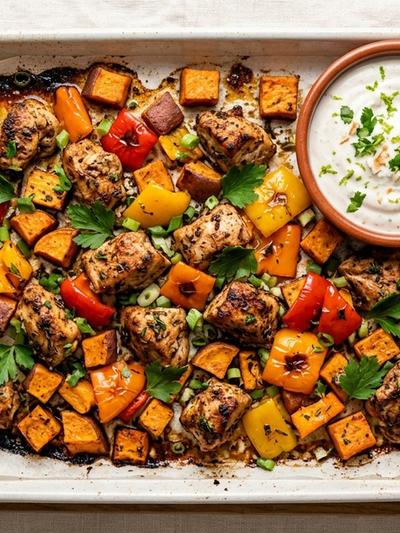
Each snack-sized serving of these roasted turkey and kohlrabi bites delivers 27 grams of protein and just 212 calories. Ground turkey seasoned with marjoram, crushed caraway seeds, and a whisper of nutmeg — the aromatic backbone of German home cooking — forms the base, while kohlrabi wedges roast alongside until their edges turn golden and sweet. The accompanying mustard-herb yogurt dip adds another 3 grams of protein per portion without tipping the fat balance.
The flavor here is quietly layered. Marjoram brings a warm, slightly piney note that deepens as it roasts, while crushed caraway adds the faintly anise-like warmth you would recognize from a good Thuringian bratwurst. The kohlrabi caramelizes on the sheet pan, turning its mild, turnip-like crunch into something nutty and almost buttery. Dipped into the cool, sharp mustard-herb yogurt, the warm bites hit every texture and temperature contrast that makes a snack genuinely satisfying.
For anyone on a GLP-1 medication, small-volume snacks that still deliver real protein matter more than a handful of crackers ever will. These bites are designed to batch-roast on a single pan, cool completely, and live in the refrigerator for up to four days — five portions of grab-and-go protein whenever appetite allows. The kohlrabi is gentle on digestion, and the portion stays well under 250 calories while keeping you fueled between meals.
Why This Works on GLP-1
Each serving provides 27 grams of complete animal protein from lean ground turkey, which is critical for preserving muscle mass during the accelerated weight loss that medications like Wegovy and Mounjaro can produce. Research consistently shows that higher protein intake — spread across meals and snacks, not loaded into one sitting — helps protect lean body tissue when overall calorie intake drops. A single snack portion here covers roughly half the minimum protein threshold most dietitians recommend per eating occasion for GLP-1 patients.
Kohlrabi is a smart vegetable choice for GLP-1 users because it provides gentle, soluble fiber without the gas-producing compounds found in cruciferous cousins like raw broccoli or cabbage. Roasting it further softens the fiber structure, reducing any digestive discomfort while keeping the 3 grams of fiber per serving intact. The Greek yogurt in the dip contributes probiotics that can support gut health — a relevant consideration when GLP-1 medications alter gastric motility.
Using 93% lean ground turkey keeps the fat content to just 8 grams per serving, which matters because high-fat foods slow gastric emptying further and can intensify the nausea some GLP-1 users experience. The caraway in these bites is not just for flavor — it has a long tradition in German folk medicine as a digestive aid, and modern research supports its carminative properties.
Ingredients (serves 4)
For the turkey bites:
- 1 lb (450g) ground turkey, 93% lean
- 1 large egg white
- 2 tablespoons (15g) whole wheat breadcrumbs
- 1 teaspoon dried marjoram
- 1/2 teaspoon caraway seeds, lightly crushed
- 1/4 teaspoon ground nutmeg
- 1/2 teaspoon fine sea salt
- 1/4 teaspoon freshly ground black pepper
- Olive oil cooking spray
For the roasted kohlrabi:
- 1 medium kohlrabi (about 10 oz / 280g), peeled and cut into 1/2-inch (1 cm) wedges
- 1 medium carrot (about 3 oz / 80g), cut into 1/4-inch (6 mm) rounds
- 1 teaspoon olive oil
- 1/4 teaspoon fine sea salt
For the mustard-herb yogurt dip:
- 1/2 cup (130g) plain Greek yogurt, 2% fat
- 1 tablespoon whole grain German-style mustard
- 1 tablespoon fresh dill, finely chopped
- 1 tablespoon fresh chives, finely chopped
- 1 teaspoon fresh lemon juice
- Pinch of salt
Instructions
Prepare the sheet pan and oven:
- Preheat your oven to 425°F (220°C) and line a large rimmed sheet pan with parchment paper. The high heat is necessary to get a sear on the turkey bites while keeping the interior juicy — lower temperatures would steam them and leave the kohlrabi soggy.
Form the turkey bites:
In a medium bowl, combine the ground turkey, egg white, breadcrumbs, marjoram, crushed caraway seeds, nutmeg, salt, and pepper. Mix gently with your hands until just combined — overworking the meat makes the bites dense and rubbery instead of tender.
Using damp hands to prevent sticking, shape the mixture into approximately 20 small bites, each about 1 inch (2.5 cm) across. They do not need to be perfectly round — slightly flattened bottoms help them roast evenly without rolling on the pan.
Prepare and arrange the vegetables:
Toss the kohlrabi wedges and carrot rounds with the olive oil and salt in a separate bowl. The thin coat of oil promotes browning but keeps added fat minimal.
Arrange the turkey bites in a single layer on one half of the prepared sheet pan. Spread the kohlrabi and carrots on the other half, ensuring pieces do not overlap. Crowding the pan traps steam and prevents the caramelization that gives both the meat and the vegetables their best flavor.
Lightly mist the turkey bites with olive oil cooking spray. This step is optional but helps them develop a lightly golden crust.
Roast everything together:
- Roast for 15 to 18 minutes without flipping. The turkey bites are done when they reach an internal temperature of 165°F (74°C) and the kohlrabi wedges have golden-brown edges. If the vegetables need another minute or two after the turkey is done, remove the bites to a plate and return the pan to the oven briefly.
Make the dip while everything roasts:
- Stir together the Greek yogurt, whole grain mustard, dill, chives, lemon juice, and salt. Cover and refrigerate until serving — the dip benefits from even a few minutes of rest as the herbs release their oils into the yogurt.
Serve or store:
- Let the turkey bites and vegetables cool for 2 to 3 minutes on the pan. Serve five bites and a quarter of the roasted vegetables per portion, with about 2 tablespoons of the mustard-herb yogurt on the side.
Nutrition per Serving
| Nutrient | Amount (approx.) |
|---|---|
| Calories | ~212 kcal |
| Protein | ~27g |
| Fat | ~8g |
| Carbohydrates | ~9g |
| Fiber | ~3g |
Estimates based on 93% lean ground turkey, 2% Greek yogurt, and measured olive oil. Actual values may vary slightly by brand.
Practical Notes
Batch and grab. These bites are designed for refrigerator snacking. Cool them completely on the sheet pan, then store the turkey bites and roasted vegetables in separate airtight containers for up to 4 days. Portion the yogurt dip into small jars or reusable cups so you can grab a complete snack without measuring anything.
Eat them cold or warm — both work. Cold from the fridge, the bites have a firm, almost jerky-like chew that pairs well with the creamy dip. If you prefer them warm, 30 seconds in the microwave brings them back without drying them out. The kohlrabi stays pleasantly firm either way.
Swap the kohlrabi if you cannot find it. Turnip wedges or peeled broccoli stems — cut into coins — roast at the same temperature and time. Both have a similar mild, slightly sweet flavor when caramelized. Avoid substituting harder root vegetables like raw beetroot, which need longer roasting and would throw off the timing.
If your appetite is very small, halve the portion. Two or three bites with a tablespoon of dip and a few kohlrabi wedges still delivers roughly 14 grams of protein in well under 120 calories. For GLP-1 users in their first weeks of treatment, this smaller portion often sits better than forcing a full snack serving.
Crush the caraway yourself for the best flavor. Pre-ground caraway loses its aromatic oils quickly. Place whole seeds in a zip-top bag and press them with the flat side of a heavy knife, or use a mortar and pestle. You want them cracked, not powdered — the small pieces give occasional bursts of flavor throughout each bite.
Frequently Asked Questions
Can I make these ahead and freeze them for longer storage?
Can I use ground chicken or another protein instead of turkey?
How should I store and transport these as a work or travel snack?
What if I am in the early weeks of GLP-1 treatment and feel full very quickly?
My oven runs hot and the bites browned too fast — what should I adjust?
This article provides general food and nutrition guidance only. It does not constitute medical advice. Always consult your healthcare provider regarding your GLP-1 medication and individual nutritional needs.