 By Gerald
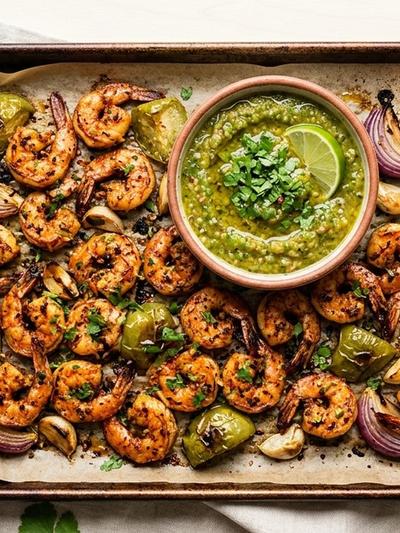
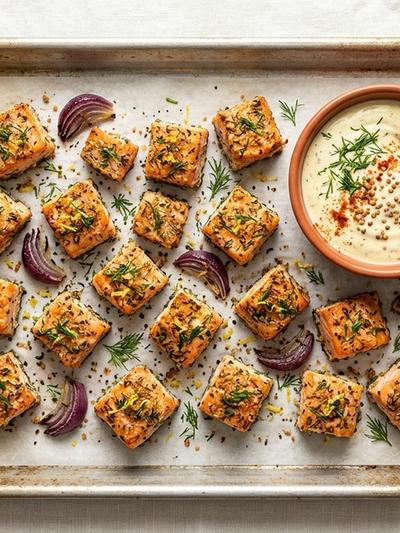
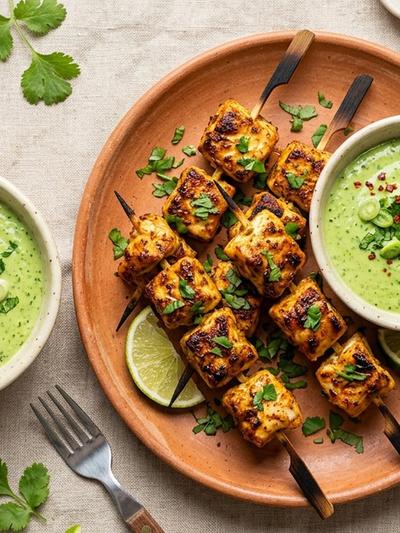
Each serving of these chile-lime salmon bites packs 26 grams of protein into a snack that comes in under 250 calories. The salmon provides a concentrated source of omega-3 fatty acids alongside its protein, while the ancho chile and cumin seasoning creates a flavor profile that earns the bite count. A cool avocado-cilantro yogurt dip adds 3 additional grams of protein per serving without adding bulk.
The combination of smoky ancho chile powder, bright lime zest, and earthy cumin transforms simple salmon cubes into something that tastes like the best parts of a fish taco without the tortilla or the heaviness. High-heat roasting caramelizes the edges of each piece while keeping the center tender, and the bell pepper and jalapeño on the same pan char just enough to add sweetness and subtle heat. The yogurt dip brings everything together — creamy avocado, sharp cilantro, and a second hit of lime that cuts through the richness of the fish.
For GLP-1 users, this is a snack that actually satisfies. The high protein content relative to the small portion means you get meaningful satiety from a few bites rather than grazing through a bag of something that leaves you wanting more. The salmon is gentle on digestion — no heavy breading, no frying, no dense carbohydrate load — and the yogurt dip adds probiotics that support gut comfort during medication adjustment.
Why This Works on GLP-1
With 26 grams of protein per serving, these salmon bites provide more than a third of the minimum daily protein target that most nutritionists recommend for people taking Ozempic, Wegovy, Mounjaro, or Zepbound. Muscle preservation is one of the central nutritional concerns during GLP-1-assisted weight loss, and snacks that deliver meaningful protein between meals help close the gap that smaller portions at mealtimes create. The protein here comes almost entirely from the salmon itself, making it a clean, complete source with all essential amino acids.
The fat content — roughly 13 grams per serving — is predominantly omega-3 fatty acids from the salmon, which support cardiovascular health and may help reduce the inflammation that some GLP-1 users experience during rapid weight loss. The carbohydrate content stays low at 6 grams, so this snack does not trigger the blood sugar fluctuations that can worsen nausea in the early weeks of medication adjustment.
Salmon is one of the few foods that combines high-quality protein with significant vitamin D, a nutrient that many people on calorie-restricted diets become deficient in over time. The B12 content in salmon also supports energy metabolism, which matters when overall food intake has dropped. These are not marketing claims — they are practical reasons to choose salmon over processed protein snacks.
Ingredients (serves )
For the salmon bites:
- 1 lb (450g) skinless salmon fillet, cut into 1-inch cubes
- 1 teaspoon ancho chile powder
- 1/2 teaspoon ground cumin
- 1/2 teaspoon smoked paprika
- 1/4 teaspoon garlic powder
- 1 tablespoon fresh lime juice
- 1 teaspoon lime zest
- 1/4 teaspoon fine sea salt
- 1/8 teaspoon black pepper
- Olive oil cooking spray
For the sheet pan vegetables:
- 1 large bell pepper (150g), cut into thin strips
- 1 medium jalapeño (14g), thinly sliced (seeds removed for less heat)
- 1/4 medium red onion (30g), thinly sliced
For the avocado-cilantro yogurt dip:
- 1/2 cup (120g) nonfat plain Greek yogurt
- 1/4 medium avocado (35g), mashed
- 2 tablespoons fresh cilantro, finely chopped
- 1 tablespoon fresh lime juice
- Pinch of ground cumin
- Pinch of fine sea salt
For serving:
- Lime wedges
- Fresh cilantro leaves
Instructions
Amounts in the method are for 4 servings.
Prepare the salmon and vegetables:
Preheat your oven to 425°F (220°C) and line a rimmed sheet pan with parchment paper. This temperature is high enough to caramelize the outside of the salmon cubes quickly while keeping the inside moist — lower temperatures will steam the fish and you will lose the charred edges that make these bites worth eating.
In a medium bowl, combine the ancho chile powder, cumin, smoked paprika, garlic powder, salt, and black pepper. Add the salmon cubes, lime juice, and lime zest, then toss gently until every piece is evenly coated. Handle the cubes carefully — salmon breaks apart easily and you want distinct pieces, not a paste.
Toss the bell pepper strips, jalapeño slices, and red onion in a separate small bowl with a light mist of cooking spray and a pinch of salt.
Roast everything on one pan:
Spread the vegetables in a single layer on one half of the prepared sheet pan. Arrange the salmon cubes on the other half, leaving a small gap between each piece so air circulates and the edges brown rather than steam.
Roast for 10 to 12 minutes, until the salmon is opaque throughout and the edges are lightly charred and golden. The vegetables should be tender with some blackened spots. Do not flip the salmon — the parchment prevents sticking, and a single side of caramelization is what you want.
Make the dip while the salmon roasts:
- While the oven does its work, mash the avocado in a small bowl until mostly smooth with a few small pieces remaining. Stir in the Greek yogurt, cilantro, lime juice, cumin, and salt. Taste and adjust the lime or salt. The dip should be bright and slightly tangy — it is the cool counterpoint to the warm, smoky salmon.
Serve:
- Transfer the salmon bites and roasted vegetables to a plate or divide among four snack containers. Serve with the yogurt dip on the side and lime wedges for squeezing over the top.
Nutrition per Serving
| Nutrient | Amount (approx.) |
|---|---|
| Calories | ~245 kcal |
| Protein | ~26g |
| Fat | ~13g |
| Carbohydrates | ~6g |
| Fiber | ~2g |
Estimates based on 4 oz raw salmon per serving, nonfat Greek yogurt, and minimal added fat from cooking spray. Values will vary slightly depending on whether you use wild or farmed salmon — wild tends to be leaner.
Practical Notes
Use wild salmon for leaner bites. Wild sockeye or pink salmon runs about 6 to 8 grams of fat per 4-ounce serving compared to 13 or more for farmed Atlantic. If you are watching fat intake closely during early GLP-1 dosing, wild salmon cuts the total calories closer to 210 per serving without changing the protein content. Either works — farmed just adds more omega-3s along with the extra fat.
Cut your cubes to a uniform size. Pieces of roughly one inch cook at the same rate and finish together. If some cubes are half an inch and others are two inches, the small ones will dry out before the large ones cook through. A sharp knife and a cold fillet make this easier — salmon that has been sitting at room temperature for a while gets soft and hard to cut cleanly.
These are strong meal-prep snacks for the week. Store the cooked salmon bites and roasted vegetables in airtight containers in the refrigerator for up to 3 days. Keep the yogurt dip in a separate small container. Eat the bites cold or reheat them gently in a 300°F (150°C) oven for 5 minutes — microwaving tends to make fish rubbery and pungent. The dip stays fresh for 2 days before the avocado starts to brown.
Start with two or three bites if your appetite is very small. One serving is four ounces of fish, which is a reasonable snack portion for most people, but GLP-1 medications can make even that feel like too much in the first weeks. Eat slowly, stop when you feel satisfied, and save the rest. The protein density means that even half a serving still delivers 13 grams.
Swap the jalapeño for mild Anaheim if heat is a problem. GLP-1 medications can make spicy food harder to tolerate, especially during dose increases. Removing the jalapeño entirely is also fine — the ancho chile powder provides a warm, smoky flavor without significant heat, so the bites are not bland without it.
Frequently Asked Questions
Can I eat these salmon bites if I'm experiencing nausea from my GLP-1 medication?
Can I use a different fish instead of salmon?
How long do the bites keep in the refrigerator, and can I freeze them?
What if I can only eat a very small amount right now — is half a serving worth making?
Why roast at 425°F instead of a lower temperature?
This article provides general food and nutrition guidance only. It does not constitute medical advice. Always consult your healthcare provider regarding your GLP-1 medication and individual nutritional needs.