 By Gerald
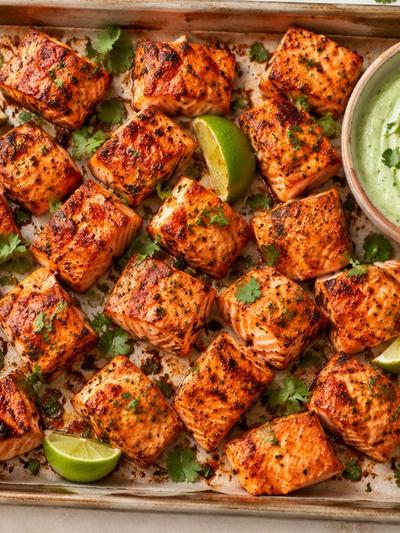
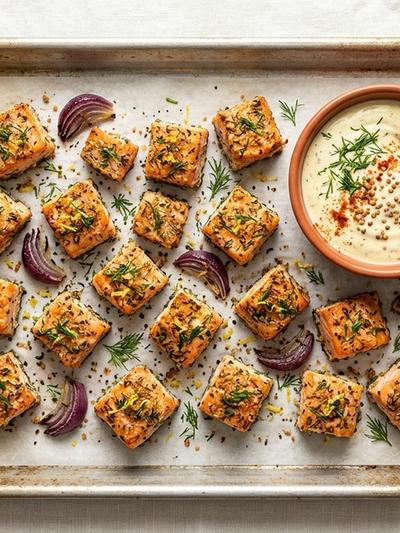
Each serving of these roasted salmon bites delivers 29 grams of complete protein along with omega-3 fatty acids from wild or farmed salmon, plus plant protein from edamame roasted right alongside on the same pan. A single sheet pan holds everything — cubed salmon glazed in a sesame-soy-ginger sauce, sugar snap peas, and shelled edamame — and the whole batch is done in about 22 minutes from cutting board to plate. The cool cucumber-scallion yogurt dip adds another 3 grams of protein per serving without any cooking at all.
The flavor here is rooted in three pillars of Korean home cooking: toasted sesame oil, fresh ginger, and soy sauce. The high oven heat caramelizes the soy-honey glaze on each salmon cube, creating golden edges with a savory-sweet depth that pairs naturally with the grassy snap of roasted peas and the nutty chew of edamame. A scatter of toasted sesame seeds ties everything together, and the cold, creamy dip cuts through the warmth with bright acidity from rice vinegar.
As a snack, this hits the mark for anyone on a GLP-1 medication: the portions are small but protein-dense, the textures are satisfying without being heavy, and nothing here is fried, greasy, or difficult to digest. You can eat a few bites, put the rest in the fridge, and come back for more when appetite returns. The sheet-pan format means cleanup is minimal, which matters on days when cooking energy is low.
Why This Works on GLP-1
Preserving lean muscle mass is one of the most important nutritional goals during GLP-1-assisted weight loss. Medications like Mounjaro and Ozempic reduce appetite significantly, and when total food intake drops, protein becomes the nutrient most at risk of falling short. At 29 grams per snack-sized serving, these salmon bites provide roughly half the protein many adults need at a single eating occasion — far more useful than a handful of crackers or a piece of fruit when your appetite window is narrow.
Salmon is one of the most digestible protein sources available, and the small cube format means less chewing and less volume in the stomach compared to a full fillet. The snap peas and edamame add gentle fiber — enough to support gut motility without the bloating that high-fiber legume dishes can cause when gastric emptying is already slowed.
The omega-3 fatty acids in salmon (EPA and DHA) support cardiovascular health and may help reduce the low-grade inflammation that some GLP-1 users experience during rapid weight change. Edamame adds iron, folate, and additional plant-based amino acids. The fat content stays moderate at 11 grams per serving, mostly from the salmon itself and a small amount of sesame oil — healthy unsaturated fats that aid nutrient absorption without overwhelming digestion.
Ingredients (serves )
For the salmon and vegetables:
- 1 lb (450g) skinless salmon fillet, cut into 1-inch cubes
- 6 oz (170g) sugar snap peas, strings removed
- 1/2 cup (75g) shelled edamame, thawed if frozen
- 1 tablespoon low-sodium soy sauce
- 1 teaspoon toasted sesame oil
- 1 teaspoon freshly grated ginger
- 1/2 teaspoon honey
- 1/2 teaspoon rice vinegar
- 1/4 teaspoon garlic powder
- Nonstick cooking spray
- 2 teaspoons toasted sesame seeds, for finishing
For the cucumber-scallion dip:
- 1/2 cup (120g) plain nonfat Greek yogurt
- 1/3 cup (50g) finely diced English cucumber
- 1 scallion, thinly sliced (white and light green parts)
- 1 teaspoon rice vinegar
- 1/4 teaspoon toasted sesame oil
- Pinch of fine sea salt
Instructions
Amounts in the method are for 4 servings.
Make the dip first:
- Stir together the Greek yogurt, diced cucumber, sliced scallion, rice vinegar, sesame oil, and salt in a small bowl. Refrigerate while you prepare the sheet pan — the dip improves as the cucumber releases a little moisture and the flavors meld, even in just 15 minutes.
Prepare the sheet pan:
Preheat your oven to 425°F (220°C) and line a rimmed sheet pan with parchment paper. Lightly coat the parchment with nonstick spray. The high heat is important — it caramelizes the glaze on the salmon quickly, keeping the interior moist rather than dried out.
Whisk together the soy sauce, sesame oil, grated ginger, honey, rice vinegar, and garlic powder in a medium bowl. This is your glaze and marinade in one step — the honey helps browning while the vinegar keeps the sweetness in check.
Add the salmon cubes to the bowl and toss gently to coat every surface. Let them sit in the glaze for 2–3 minutes while you arrange the vegetables — no longer marination needed since the cubes are small and absorb flavor quickly.
Assemble and roast:
Spread the snap peas and edamame in a single layer on one half of the prepared sheet pan. Arrange the glazed salmon cubes on the other half, leaving a little space between each piece so hot air circulates and the edges brown rather than steam. Pour any remaining glaze from the bowl over the salmon.
Roast for 10–12 minutes without flipping. The salmon is done when the edges are golden-brown and caramelized and the centers are just opaque — check the largest cube by pressing it gently with a fork. The snap peas should be bright green with a few charred spots, and the edamame will be lightly golden.
Finish and serve:
Remove the pan from the oven and sprinkle the toasted sesame seeds over everything while still warm — they stick better this way. Let the salmon rest on the pan for 2 minutes, which allows the glaze to set slightly and makes the bites easier to pick up.
Divide the salmon bites, snap peas, and edamame among four small plates or containers. Serve the chilled cucumber-scallion dip alongside for dunking. Eat with fingers, toothpicks, or chopsticks — these are snack bites, not a formal dinner.
Nutrition per Serving
| Nutrient | Amount (approx.) |
|---|---|
| Calories | ~245 kcal |
| Protein | ~29g |
| Fat | ~11g |
| Carbohydrates | ~9g |
| Fiber | ~2g |
Estimates based on 1 lb wild Atlantic salmon, shelled frozen edamame, and nonfat Greek yogurt. Values will vary slightly with salmon variety — sockeye runs leaner, farmed Atlantic runs higher in fat.
Practical Notes
Meal prep storage. These bites refrigerate well for up to 3 days in an airtight container. Store the dip separately to keep it from getting watery. The salmon tastes good cold straight from the fridge — no reheating needed, which makes it a genuine grab-and-go snack. If you prefer them warm, reheat uncovered at 350°F (175°C) for 4–5 minutes.
Salmon selection. Any salmon works, but skinless is important for easy cubing. If you can only find skin-on fillets, remove the skin with a sharp knife before cutting. Frozen salmon thawed overnight in the fridge is perfectly fine and often cheaper than fresh — just pat the cubes thoroughly dry with paper towels before glazing so they sear instead of steam.
Scaling for one. If you cook for yourself, roast the full batch and portion into four containers. Salmon bites are one of the few high-protein snacks that actually improve when made ahead because the glaze concentrates as it cools. This is far more practical than making a quarter batch, which barely fills a sheet pan and cooks unevenly.
Boosting fiber. If your digestion handles it well, swap the snap peas for 6 ounces of broccoli florets — they roast in the same time and push fiber to about 4 grams per serving. You can also serve the bites on a small bed of shredded napa cabbage for extra crunch and volume without significant calories.
Eating on a small-appetite day. Two or three salmon cubes with a few edamame and a dab of dip still delivers about 15 grams of protein. On days when even a snack-sized portion feels like too much, eat what you can and cover the rest. The protein density means every bite counts, so there is no pressure to finish the plate.
Frequently Asked Questions
Can I eat these salmon bites during the first weeks of Ozempic or Wegovy when my appetite is very low?
What can I use instead of salmon?
How long do these keep, and can I freeze them?
I am only eating very small portions right now. Is this still worth making?
Do I need to flip the salmon cubes while roasting?
This article provides general food and nutrition guidance only. It does not constitute medical advice. Always consult your healthcare provider regarding your GLP-1 medication and individual nutritional needs.