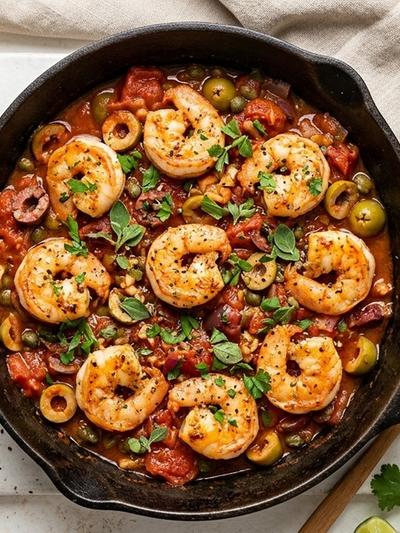
Each serving of these ancho-lime shrimp bites packs 29 grams of protein into just 185 calories, making them one of the most protein-dense snacks you can pull from your oven. Shrimp is naturally low in fat and high in selenium, a trace mineral that supports thyroid function during periods of caloric change. The tomatillo dip roasts right alongside the shrimp on the same pan, so you get a complete snack with zero extra dishes and minimal cleanup.
Ancho chili powder brings a warm, slightly smoky sweetness without aggressive heat, while fresh lime zest brightens everything on the pan. The tomatillos blister and soften in the oven, their natural tartness mellowing into a tangy base for the dip. Paired with a touch of cumin and roasted jalapeño, the flavor profile is unmistakably Mexican without overwhelming a sensitive stomach.
This recipe was designed specifically for between-meal moments when you need real nutrition in a small package. The portion is satisfying without the heaviness that can trigger discomfort on GLP-1 medications, and the shrimp are easy to eat slowly, one bite at a time. You can roast a batch on Sunday and grab a serving from the fridge throughout the week.
Why This Works on GLP-1
Protein preservation is one of the most important nutritional priorities during GLP-1-assisted weight loss, and these shrimp bites deliver 29 grams per snack-sized serving. Muscle tissue is metabolically active, meaning it burns calories at rest, so losing it during weight loss slows your metabolism over time. For people on Mounjaro or similar tirzepatide medications, the appetite suppression can make it easy to under-eat protein without realizing it. A high-protein snack like this fills that gap between meals without requiring a full sit-down plate.
Shrimp is among the gentlest proteins on the digestive system, which matters when GLP-1 medications slow gastric emptying. The low fat content (just 3 grams per serving) means your stomach processes this snack efficiently, reducing the risk of the nausea or bloating that fatty foods can trigger. The tomatillo dip adds a small amount of fiber and vitamin C without the bulk that raw vegetables sometimes cause.
At 185 calories per serving, these bites fit easily into any daily calorie target without displacing your main meals. The combination of lean protein and modest carbohydrates provides steady energy rather than a blood sugar spike, which complements the glucose-regulating effects that Zepbound and other GLP-1 medications already provide.
Ingredients (serves 4)
For the shrimp:
- 1 lb (450g) large shrimp, peeled and deveined (26/30 count)
- 1 tablespoon ancho chili powder
- 1 teaspoon ground cumin
- 1/2 teaspoon garlic powder
- 1/4 teaspoon fine sea salt
- Zest of 1 lime
- 1 teaspoon olive oil
For the charred tomatillo dip:
- 6 medium tomatillos (about 240g), husked, rinsed, and halved
- 1 jalapeño, halved and seeded
- 1/4 small red onion, cut into 2 wedges
- 1 teaspoon olive oil
- 1/4 cup (60g) plain nonfat Greek yogurt
- Juice of 1 lime (about 2 tablespoons)
- 2 tablespoons fresh cilantro, chopped
- Pinch of salt
For serving:
- 1 medium red bell pepper (about 150g), cut into thick strips for dipping
Instructions
Preheat and prepare the pan:
Position a rack in the upper third of your oven and preheat to 425°F (220°C). Line a large sheet pan with parchment paper. The upper rack position concentrates heat for faster charring on the tomatillos and a better sear on the shrimp.
Pat the shrimp thoroughly dry with paper towels. Dry shrimp roast rather than steam, which gives them a firmer, more snackable texture instead of a rubbery chew.
Season the shrimp:
- In a medium bowl, toss the shrimp with the ancho chili powder, cumin, garlic powder, salt, lime zest, and 1 teaspoon of olive oil. Make sure each shrimp is evenly coated. The ancho chili adds depth without the sharp burn of cayenne, so this stays gentle on a GLP-1 stomach.
Arrange the sheet pan:
Spread the shrimp in a single layer on one half of the prepared sheet pan, leaving space between each piece so they roast instead of steam.
On the other half, arrange the tomatillo halves cut-side down, the jalapeño halves, and the red onion wedges. Drizzle with 1 teaspoon of olive oil and season with a pinch of salt. Keeping the tomatillos cut-side down maximizes their contact with the hot pan, which creates the char that gives the dip its smoky flavor.
Roast:
- Roast for 12 to 15 minutes, until the shrimp are pink and opaque and the tomatillos are blistered with dark spots. The shrimp cook fast, so check at 12 minutes. If the tomatillos need more color but the shrimp are done, remove the shrimp to a plate and return the pan for 2 to 3 more minutes.
Make the dip:
Transfer the roasted tomatillos, jalapeño, and onion to a small bowl. Mash with a fork until you have a chunky sauce. You can also pulse briefly in a small food processor if you prefer a smoother texture, but a rustic, fork-mashed dip has better body.
Stir in the Greek yogurt, lime juice, cilantro, and a pinch of salt. Taste and adjust the lime or salt as needed. The yogurt tempers the tomatillo's acidity and adds creaminess without significant fat or calories.
Serve:
- Arrange the shrimp bites on a plate alongside the red bell pepper strips and the charred tomatillo dip. Eat at room temperature or chilled straight from the fridge if you prepped ahead.
Nutrition per Serving
| Nutrient | Amount (approx.) |
|---|---|
| Calories | ~185 kcal |
| Protein | ~29g |
| Fat | ~3g |
| Carbohydrates | ~8g |
| Fiber | ~2g |
Estimates based on 26/30 count raw shrimp, fresh tomatillos, nonfat Greek yogurt, and measured olive oil. Actual values may vary by shrimp size and brand.
Practical Notes
Batch prep for the week. Roast a double batch and store shrimp and dip separately in airtight containers. The shrimp keep well in the refrigerator for up to 3 days and are excellent cold. The tomatillo dip stays fresh for 4 days. This gives you 8 ready-to-grab snack servings with no daily effort.
Adjust the heat level to your tolerance. If even seeded jalapeño feels like too much, leave it out entirely and the dip will still taste bright and tangy from the tomatillos and lime. If you prefer more warmth, leave a few seeds in. GLP-1 medications can heighten sensitivity to spicy foods, so start mild and increase next time if you tolerate it well.
Swap the shrimp for other lean seafood. Firm white fish like cod or tilapia can be cut into bite-sized cubes and roasted the same way, though they may need 2 to 3 extra minutes in the oven. Scallops also work beautifully here, but reduce the roasting time to 10 minutes since they dry out quickly.
Eat slowly, one bite at a time. This snack naturally encourages mindful eating because each shrimp is a separate piece you pick up and dip. For GLP-1 users who struggle with eating too quickly, this format creates built-in pauses between bites. Try setting the plate down between every third or fourth shrimp.
Serve with extra raw vegetables for volume. The recipe includes red bell pepper strips for dipping, but you can add cucumber rounds, jicama sticks, or celery alongside if you want more crunch without adding significant calories. The tomatillo dip pairs well with almost any raw vegetable.
Frequently Asked Questions
I feel nauseous after eating shrimp on my GLP-1 medication. Is there a way to make this easier to tolerate?
Can I use canned tomatillos instead of fresh?
How should I store and reheat leftovers?
What if I can only eat a very small amount right now on my GLP-1 medication?
Do I need to devein the shrimp, or can I buy them already prepped?
This article provides general food and nutrition guidance only. It does not constitute medical advice. Always consult your healthcare provider regarding your GLP-1 medication and individual nutritional needs.